Dataconomy
  • News
    • Artificial Intelligence
    • Cybersecurity
    • DeFi & Blockchain
    • Finance
    • Gaming
    • Startups
    • Tech
  • Industry
  • Research
  • Resources
    • Articles
    • Guides
    • Case Studies
    • Whitepapers
    • AI Models Leaderboard
  • AI toolsNEW
  • Newsletter
  • + More
    • Glossary
    • Conversations
    • Events
    • About
      • Who we are
      • Contact
      • Imprint
      • Legal & Privacy
      • Partner With Us
Subscribe
No Result
View All Result
  • AI
  • Tech
  • Cybersecurity
  • Finance
  • DeFi & Blockchain
  • Startups
  • Gaming
Dataconomy
  • News
    • Artificial Intelligence
    • Cybersecurity
    • DeFi & Blockchain
    • Finance
    • Gaming
    • Startups
    • Tech
  • Industry
  • Research
  • Resources
    • Articles
    • Guides
    • Case Studies
    • Whitepapers
    • AI Models Leaderboard
  • AI toolsNEW
  • Newsletter
  • + More
    • Glossary
    • Conversations
    • Events
    • About
      • Who we are
      • Contact
      • Imprint
      • Legal & Privacy
      • Partner With Us
Subscribe
No Result
View All Result
Dataconomy
No Result
View All Result

Artemis II Moon mission delayed as NASA rolls SLS back for repairs

Engineers discovered the interrupted helium flow on February 21, following a wet dress rehearsal for the Space Launch System (SLS).

byKerem Gülen
February 23, 2026
in Industry
Home Industry
Share on FacebookShare on TwitterShare on LinkedInShare on WhatsAppShare on e-mail
Google Preferred Source

Artemis II, the first crewed mission to the moon’s vicinity since the Apollo program, will not launch in March as originally scheduled. The delay stems from a helium flow issue observed on February 21 at Kennedy Space Center, necessitating a rollback of the Space Launch System (SLS) rocket to the Vehicle Assembly Building (VAB) for diagnosis and repair. The mission involves sending four astronauts around the moon inside the Orion spacecraft.

Engineers detected an interrupted flow of helium to the SLS rocket’s interim cryogenic propulsion stage during normal operations following the conclusion of a wet dress rehearsal on February 19. The upper stage relies on helium to maintain environmental conditions for its engine and to pressurize liquid hydrogen and liquid oxygen propellant tanks. While these systems functioned correctly during the rehearsal, they failed during subsequent reconfiguration procedures. Operators employed a backup method to preserve the environmental conditions for the upper stage engines and the rocket, maintaining the vehicle in a safe configuration.

Following the identification of the helium flow anomaly, NASA determined the rocket must be transported four miles from the launch pad back to the VAB. This rollback is scheduled for February 24 and will require several hours to move the massive SLS rocket and the Orion spacecraft safely. The move is necessary to allow engineers to access the hardware, diagnose the root cause of the helium flow interruption, and perform required repairs. A media briefing is planned for the current week to discuss the problem and the path forward.

Stay Ahead of the Curve!

Don't miss out on the latest insights, trends, and analysis in the world of data, technology, and startups. Subscribe to our newsletter and get exclusive content delivered straight to your inbox.

NASA Administrator Jared Isaacman confirmed via a post on the social media platform X that the rollback effectively removes the March launch window from consideration. The agency stated on its official blog that the current efforts “potentially preserve the April launch window, pending the outcome of data findings, repair efforts, and how the schedule comes to fruition in the coming days and weeks.” The timeline for any potential April launch remains contingent on the speed and success of the diagnostic and repair processes.

As an update to my earlier post.

– The ICPS helium bottles are used to purge the engines, as well as for LH2 and LOX tank pressurization. The systems did work correctly during WDR1 and WDR2.

– Last evening, the team was unable to get helium flow through the vehicle. This… https://t.co/Qte3nEXwQb

— NASA Administrator Jared Isaacman (@NASAAdmin) February 21, 2026

The Artemis II crew consists of Commander Reid Wiseman, Pilot Victor Glover, Mission Specialist Christina Koch, and Canadian Space Agency astronaut Jeremy Hansen. The astronauts had entered quarantine one day prior to the discovery of the helium issue on February 20. NASA confirmed that the crew has since exited quarantine following the postponement of the launch. The mission is planned as a 10-day flight and represents the first crewed flight of the SLS rocket, designed to carry astronauts on a trajectory around the moon in the Orion spacecraft.

Earlier in 2025, NASA announced an accelerated timeline for Artemis II, moving the launch date up from its previous target of April 2026. The mission had already experienced schedule adjustments, shifting from an initial early February launch window to March due to issues identified during the wet dress rehearsal. The current helium problem represents another obstacle in the preparation for the first human spaceflight to lunar vicinity since the final Apollo mission more than 50 years ago. The timeline for a potential April launch depends entirely on the resolution of the current technical issues.


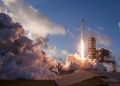
Featured image credit

Tags: artemis IINASASpace

Related Posts

Orbio raises  million to bring AI agents to frontline hiring

Orbio raises $21 million to bring AI agents to frontline hiring

June 15, 2026
NASA’s X-59 reaches Mach 1.4 ahead of community supersonic tests

NASA’s X-59 reaches Mach 1.4 ahead of community supersonic tests

June 15, 2026
Whale bets .3 million on SpaceX pre-IPO token as hype surges

Whale bets $22.3 million on SpaceX pre-IPO token as hype surges

June 12, 2026
Ubisoft to close Winnipeg and Belgrade studios, cutting 380 jobs

Ubisoft to close Winnipeg and Belgrade studios, cutting 380 jobs

June 11, 2026
Warner Music to acquire Sureel AI to track unauthorized AI music use

Warner Music to acquire Sureel AI to track unauthorized AI music use

June 11, 2026
Google expands Preferred Sources to boost loyal publisher visibility

Google expands Preferred Sources to boost loyal publisher visibility

June 11, 2026

LATEST NEWS

OpenAI unveils first official partner program with $150M backing

Apple is preparing three major new features for iOS 27

Google files lawsuit over AI-assisted phishing operation abusing Gemini

“Free robots are an illusion”: Why we’ll pay for system intelligence, not delivery workers

How Henrique Schmaiske led Meteor.js through its biggest transformation

Proven privacy: Why ‘no-log’ claims need real evidence today

BEST AI MODELS LEADERBOARD

See the best AI models, ranked by intelligence, benchmark results, speed and token price. Find the most suitable LLMs, Text-to-Image, Image Editing, Text-to-Speech, Text-to-Video and Image-to-Video  artificial intelligence model for your tasks and business.

LATEST TOOLS

Stratup.ai

Roboto AI

Pickaxe

Pfpmaker

MindPal

Syllaby

ScreenApp

FinanceBrain

GitHub Spark

Hints

Dataconomy

COPYRIGHT © DATACONOMY MEDIA GMBH, ALL RIGHTS RESERVED.

  • About
  • Imprint
  • Contact
  • Legal & Privacy

Follow Us

  • News
    • Artificial Intelligence
    • Cybersecurity
    • DeFi & Blockchain
    • Finance
    • Gaming
    • Startups
    • Tech
  • Industry
  • Research
  • Resources
    • Articles
    • Guides
    • Case Studies
    • Whitepapers
    • AI Models Leaderboard
  • AI tools
  • Newsletter
  • + More
    • Glossary
    • Conversations
    • Events
    • About
      • Who we are
      • Contact
      • Imprint
      • Legal & Privacy
      • Partner With Us
No Result
View All Result
Subscribe

This website uses cookies to improve your experience. You can choose to accept or reject them. Visit our Privacy Policy.