Dataconomy
  • News
    • Artificial Intelligence
    • Cybersecurity
    • DeFi & Blockchain
    • Finance
    • Gaming
    • Startups
    • Tech
  • Industry
  • Research
  • Resources
    • Articles
    • Guides
    • Case Studies
    • Whitepapers
    • AI Models Leaderboard
  • AI toolsNEW
  • Newsletter
  • + More
    • Glossary
    • Conversations
    • Events
    • About
      • Who we are
      • Contact
      • Imprint
      • Legal & Privacy
      • Partner With Us
Subscribe
No Result
View All Result
  • AI
  • Tech
  • Cybersecurity
  • Finance
  • DeFi & Blockchain
  • Startups
  • Gaming
Dataconomy
  • News
    • Artificial Intelligence
    • Cybersecurity
    • DeFi & Blockchain
    • Finance
    • Gaming
    • Startups
    • Tech
  • Industry
  • Research
  • Resources
    • Articles
    • Guides
    • Case Studies
    • Whitepapers
    • AI Models Leaderboard
  • AI toolsNEW
  • Newsletter
  • + More
    • Glossary
    • Conversations
    • Events
    • About
      • Who we are
      • Contact
      • Imprint
      • Legal & Privacy
      • Partner With Us
Subscribe
No Result
View All Result
Dataconomy
No Result
View All Result

Why doctors believe this new AI system will end MRI wait times

The system demonstrated superior diagnostic performance across more than 50 major neurological disorders.

byEmre Çıtak
February 11, 2026
in Research
Home Research
Share on FacebookShare on TwitterShare on LinkedInShare on WhatsAppShare on e-mail
Google Preferred Source

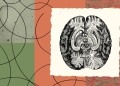
A new artificial intelligence system, named Prima, developed at the University of Michigan, can diagnose neurological conditions from brain MRI scans within seconds.

The system achieved 97.5% accuracy in identifying neurological conditions and could also assess the urgency of medical care required by patients. This technology aims to redefine brain imaging practices within U.S. health systems.

The findings regarding Prima were published in the journal Nature Biomedical Engineering.

Stay Ahead of the Curve!

Don't miss out on the latest insights, trends, and analysis in the world of data, technology, and startups. Subscribe to our newsletter and get exclusive content delivered straight to your inbox.

Dr. Todd Hollon, a neurosurgeon at University of Michigan Health and assistant professor of neurosurgery at U-M Medical School, led the research team. Dr. Hollon is also a senior author of the study.

Over a one-year period, Dr. Hollon’s team evaluated Prima using more than 30,000 MRI studies. The system demonstrated superior diagnostic performance compared to other advanced AI models across over 50 different radiologic diagnoses of major neurological disorders.

Prima can identify conditions such as strokes and brain hemorrhages, which require immediate medical attention. In these instances, the system can automatically alert healthcare providers, including subspecialists like stroke neurologists or neurosurgeons, for rapid intervention. Feedback becomes available immediately after a patient completes imaging.

Yiwei Lyu, a co-first author and postdoctoral fellow of Computer Science and Engineering at U-M, noted that timely diagnosis is critical for improved patient outcomes.

Prima is classified as a vision language model (VLM), capable of processing images, video, and text in real time. Unlike earlier AI models trained on limited MRI subsets for narrow tasks, Prima was trained on a broad dataset encompassing over 200,000 MRI studies and 5.6 million imaging sequences collected since radiology records were digitized at University of Michigan Health.

The model also incorporated patients’ clinical histories and the reasons physicians ordered each imaging study.

Samir Harake, a co-first author and data scientist in Hollon’s Machine Learning in Neurosurgery Lab, explained that Prima integrates patient medical history and imaging data, similar to a radiologist, to provide a comprehensive understanding of a patient’s health.

Millions of MRI scans are performed globally each year, with a rising demand for neuroradiology services. This increasing demand, coupled with shortages in neuroradiology staff, contributes to diagnostic delays and errors. Patients often experience wait times of days or longer for MRI results.

Dr. Vikas Gulani, co-author and chair of the Department of Radiology at U-M Health, stated that innovative technologies are necessary to improve access to radiology services in both large health systems and rural hospitals with limited resources.

Researchers consider Prima to be in an early evaluation phase. Future research will focus on integrating more detailed patient information and electronic medical record data to enhance diagnostic accuracy.

This approach mirrors how radiologists and physicians interpret medical imaging studies in clinical settings. Dr. Hollon compares Prima to “ChatGPT for medical imaging,” suggesting similar technology could be adapted for other imaging types, including mammograms, chest X-rays, and ultrasounds.


Featured image credit

Tags: AIbrainMRI

Related Posts

Anthropic research introduces GRAM for isolating dangerous AI knowledge

Anthropic research introduces GRAM for isolating dangerous AI knowledge

July 9, 2026
Global PC shipments fall 5% as AI-driven memory crisis hits supply chains

Global PC shipments fall 5% as AI-driven memory crisis hits supply chains

July 9, 2026
Only 6% of Singapore desk workers use AI daily, says Salesforce

Only 6% of Singapore desk workers use AI daily, says Salesforce

July 8, 2026
Anthropic J-lens reveals hidden workspace inside Claude

Anthropic J-lens reveals hidden workspace inside Claude

July 7, 2026
Gartner: Customers prefer ChatGPT over company chatbots

Gartner: Customers prefer ChatGPT over company chatbots

July 6, 2026
Alibaba framework allegedly cuts AI agent token use by 99%

Alibaba framework allegedly cuts AI agent token use by 99%

July 3, 2026

LATEST NEWS

OpenAI launches ChatGPT Work productivity app

Meta files patent for AI-powered emotional monitoring device

Xiaomi 18 Pro to debut in September with Snapdragon 8 Elite Gen 6 chip

Google rolls out ‘How this ad was made’ for AI ads

OpenAI launches GPT-5.6 with Sol, Terra, and Luna models

SpaceXAI launches Grok 4.5 as new flagship AI model

BEST AI MODELS LEADERBOARD

See the best AI models, ranked by intelligence, benchmark results, speed and token price. Find the most suitable LLMs, Text-to-Image, Image Editing, Text-to-Speech, Text-to-Video and Image-to-Video  artificial intelligence model for your tasks and business.

LATEST TOOLS

Capmonster

Superhuman

Pixelvibe

Punchlines

Leadfwd

AI RoastBot

Bit.ai

Pikzels

Aflow

Chai AI

Dataconomy

COPYRIGHT © DATACONOMY MEDIA GMBH, ALL RIGHTS RESERVED.

  • About
  • Imprint
  • Contact
  • Legal & Privacy

Follow Us

  • News
    • Artificial Intelligence
    • Cybersecurity
    • DeFi & Blockchain
    • Finance
    • Gaming
    • Startups
    • Tech
  • Industry
  • Research
  • Resources
    • Articles
    • Guides
    • Case Studies
    • Whitepapers
    • AI Models Leaderboard
  • AI tools
  • Newsletter
  • + More
    • Glossary
    • Conversations
    • Events
    • About
      • Who we are
      • Contact
      • Imprint
      • Legal & Privacy
      • Partner With Us
No Result
View All Result
Subscribe

This website uses cookies to improve your experience. You can choose to accept or reject them. Visit our Privacy Policy.