Dataconomy
  • News
    • Artificial Intelligence
    • Cybersecurity
    • DeFi & Blockchain
    • Finance
    • Gaming
    • Startups
    • Tech
  • Industry
  • Research
  • Resources
    • Articles
    • Guides
    • Case Studies
    • Whitepapers
    • AI Models Leaderboard
  • AI toolsNEW
  • Newsletter
  • + More
    • Glossary
    • Conversations
    • Events
    • About
      • Who we are
      • Contact
      • Imprint
      • Legal & Privacy
      • Partner With Us
Subscribe
No Result
View All Result
  • AI
  • Tech
  • Cybersecurity
  • Finance
  • DeFi & Blockchain
  • Startups
  • Gaming
Dataconomy
  • News
    • Artificial Intelligence
    • Cybersecurity
    • DeFi & Blockchain
    • Finance
    • Gaming
    • Startups
    • Tech
  • Industry
  • Research
  • Resources
    • Articles
    • Guides
    • Case Studies
    • Whitepapers
    • AI Models Leaderboard
  • AI toolsNEW
  • Newsletter
  • + More
    • Glossary
    • Conversations
    • Events
    • About
      • Who we are
      • Contact
      • Imprint
      • Legal & Privacy
      • Partner With Us
Subscribe
No Result
View All Result
Dataconomy
No Result
View All Result

Scientists build autonomous robots smaller than a grain of salt

Each unit costs only one cent to produce and can operate for several months using light as a power source.

byAytun Çelebi
February 9, 2026
in Research
Home Research
Share on FacebookShare on TwitterShare on LinkedInShare on WhatsAppShare on e-mail
Google Preferred Source

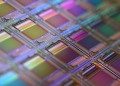
Researchers have developed microscopic, light-powered robots capable of thought, movement, and prolonged survival. These robots, measuring approximately 200 by 300 by 50 micrometers, are smaller than a grain of salt and can operate for months. They represent the first truly autonomous robots at this scale.

The robots function without wires, magnetic fields, or external controls. They can swim by manipulating electric fields, detect temperature changes, and collaboratively execute tasks. Each unit costs approximately $0.01 to produce.

Unlike conventional robots that rely on gravity and inertia, these microscopic devices navigate environments where surface-related forces, such as drag and viscosity, dominate. Their propulsion method involves generating an electrical field that moves charged particles in the surrounding liquid, thereby creating a localized current that propels the robot.

Stay Ahead of the Curve!

Don't miss out on the latest insights, trends, and analysis in the world of data, technology, and startups. Subscribe to our newsletter and get exclusive content delivered straight to your inbox.

The University of Pennsylvania and University of Michigan teams collaborated on this project. The University of Michigan’s contribution focused on integrating computing capabilities onto the miniature scale. The robots include microcomputers that allow them to follow programmed paths and adjust their movement. They can reach speeds of up to one body length per second.

Power is supplied by light from an LED, generating 75 nanowatts. Specialized circuits were designed to operate at extremely low voltages, reducing power consumption by over 1000 times compared to conventional electronics. The robots’ software was re-engineered to fit into a minimal memory space.

These robots contain electronic temperature sensors capable of detecting changes as small as one-third of a degree Celsius. This allows them to identify warmer regions or report temperature values. Communication of these measurements occurs through programmed “dances” that encode data, which is then decoded via microscopic observation.

The same light source that powers the robots also programs them. Each robot has a unique address, enabling researchers to upload specific instructions to individual units.


Featured image credit

Tags: robotics

Related Posts

Researchers unlock 20-fold enhancement in ultrafast laser experiments

Researchers unlock 20-fold enhancement in ultrafast laser experiments

June 3, 2026
NASA tests next-gen radiation-hardened space computer chip

NASA tests next-gen radiation-hardened space computer chip

May 29, 2026
Penn physicists use light-matter particles to boost AI chip speeds

Penn physicists use light-matter particles to boost AI chip speeds

May 29, 2026
Global AI spending to hit .59 trillion in 2026, says Gartner forecast

Global AI spending to hit $2.59 trillion in 2026, says Gartner forecast

May 28, 2026
New CHEEM framework helps AI learn new tasks without forgetting old ones

New CHEEM framework helps AI learn new tasks without forgetting old ones

May 27, 2026
Data centers raise local Arizona temperatures by 4 degrees, study finds

Data centers raise local Arizona temperatures by 4 degrees, study finds

May 27, 2026

LATEST NEWS

Why Telegram Mini Apps have become the optimal ecosystem for launching AI SaaS products

Crypto investors are watching one date closely in 2026

How Telegram Creators test post visibility before running growth campaigns

Does your AI clock in without you?

Why secure software delivery depends on better release management

Sony reveals God of War: Laufey for PS5

BEST AI MODELS LEADERBOARD

See the best AI models, ranked by intelligence, benchmark results, speed and token price. Find the most suitable LLMs, Text-to-Image, Image Editing, Text-to-Speech, Text-to-Video and Image-to-Video  artificial intelligence model for your tasks and business.

LATEST TOOLS

Veed.io

Paper Pilot

IsOn24

Magnific

DADABOTS

Rosebud AI

Prome

Pageon AI

Vyond

Centauri AI

Dataconomy

COPYRIGHT © DATACONOMY MEDIA GMBH, ALL RIGHTS RESERVED.

  • About
  • Imprint
  • Contact
  • Legal & Privacy

Follow Us

  • News
    • Artificial Intelligence
    • Cybersecurity
    • DeFi & Blockchain
    • Finance
    • Gaming
    • Startups
    • Tech
  • Industry
  • Research
  • Resources
    • Articles
    • Guides
    • Case Studies
    • Whitepapers
    • AI Models Leaderboard
  • AI tools
  • Newsletter
  • + More
    • Glossary
    • Conversations
    • Events
    • About
      • Who we are
      • Contact
      • Imprint
      • Legal & Privacy
      • Partner With Us
No Result
View All Result
Subscribe

This website uses cookies to improve your experience. You can choose to accept or reject them. Visit our Privacy Policy.