Many process manufacturing owner-operators in this next phase of a digital shift have engaged in technology pilots to explore options for reducing costs, meeting regulatory compliance, and/or increasing overall equipment effectiveness (OEE).
Despite this transformation, the adoption of advanced analytics tools still presents certain challenges. The extensive and complicated tooling landscape can be daunting, and many end users lack fundamental understanding of process data analytics. Combined with a lack of awareness of the practical benefits that analytics offer, this leaves many engineers stuck in day-to-day tasks, using spreadsheets and basic trend analysis tools for the bulk of their daily analysis.
In this article we discuss the need for improved analytics awareness for the modern process engineer. We also explore key considerations in creating such awareness and the capabilities that state-of-the-art self-service analytics tools offer for process performance optimization.
Connected IIoT and Data
Today factories are producing more data than ever, forming an Industrial Internet of Things (IIoT) that enables smart factories where data can be visualized from the highest level to the smallest detail. The key to this digital revolution is the network of connected sensors, actors and machines in a plant generating trillions of samples per year.
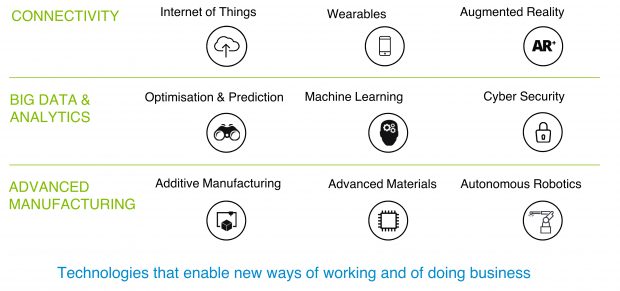
This digital revolution offers unprecedented opportunities for improving efficiency and real-time process management – but it also presents new challenges that require innovative solutions and a new way of thinking.
Technology has evolved rapidly in response to the scale of data generated, with systems for business intelligence and data lakes now an essential part of operational excellence. However, for many engineers little has changed. They use the same systems and experience few benefits from the digital transformation taking place in their plants as they are unable to directly access the insights this new data provides.
Complexities in Analytics Options
Engineers now face a complex landscape populated with a variety of analytics tools, all of which promise to make sense of the newly available data, including tools from traditional historians and MES (manufacturing execution system) vendors, generic big data systems such as Hadoop and independent analytics applications. These tools address a variety of business needs, but are not necessarily designed to meet the specific needs of engineers in the process industry.
The sheer number of business systems leads to issues with integration and increased reliance on IT and big data experts. The corporate analytics vision is often based on one big data lake for all data, and proof of concepts are launched to store finance data, marketing data, quality data and limited amounts of production data in such lakes. However, companies frequently struggle to fit in the massive time series data from processes in these exercises.
In response, many organizations create central analytics teams to address the most critical process questions affecting profitability. Data scientists create advanced algorithms and data models to combine data from multiple sources and deliver insights to optimize production processes. These analytics experts lead the way in translating time series data into actionable information.
While the insights gained from analytics teams are essential, this approach alone is insufficient to enable engineers to leverage analytics in their daily tasks. Engineers are time-poor, with little room to learn new tools; they are more concerned with meeting the immediate needs of the plant than the promise of new and perhaps unproven technologies. They may be skeptical that they will gain practical benefits from investing time in the analytics system(s). If past analytics projects have failed to meet their expectations, there may also be frustration and disappointment. With the pressing need to ensure optimal processes, it is natural that they will revert to their current systems and tools as proven ways to get the job done.
Educating Users to Build the Perfect Beast
Just as technology has evolved to create connected plants, so engineers must be empowered to manage these factories. This is a critical shift in business culture as the entire organization must be educated and made aware of the potential of analytics as it applies to their role.
Instead of relying solely on a central analytics team that owns all the analytics expertise, subject matter experts such as process engineers should be empowered to answer their own day-to-day questions. Not only will this spread the benefits to the engineers involved in process management, it will also free the data scientists to focus on the most critical business issues.
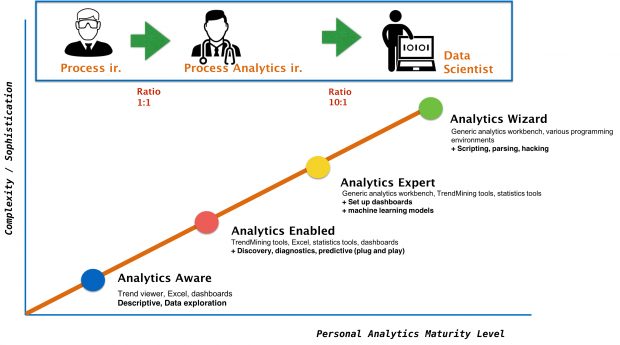
Enabling engineers does not mean asking them to become data scientists – it means providing them with access to the benefits of process data analytics. Process engineers will not (easily) become data scientists because the education background is different (computer science versus chemical engineering). However, they can become analytics aware and enabled.
By bringing engineers closer in their understanding of analytics, they can solve more day-to-day questions independently and enhance their own effectiveness. They will in turn provide their organizations with new insights based on their specific expertise in engineering. This delivers value to the owner-operator at all levels of the organization and leverages (human) resources more efficiently.
To bring an organization to this modern approach requires the addition of a self-service analytics platform tailored to the subject matter expert users’ needs and the education of users.
Self-service analytics tools are designed with end users in mind. They incorporate robust algorithms and familiar interfaces to maximize ease of use without requiring in-depth knowledge of data science. No model selection, training and validation are required; instead users can directly query information from their own process historians and get one-click results. Immediate access to answers encourages adoption of the analytics tool as the value is proven instantly: precious time is saved and previously hidden opportunities for improvement are unlocked.
This self-service approach to analytics results in heightened efficiency and greater comfort with use of analytics information for the engineers, allows data scientists to focus on the questions most critical to the entire organization, and delivers enhanced profitability for owner-operators.
Like this article? Subscribe to our weekly newsletter to never miss out!