Enterprise transformations are not just about migrating databases or updating legacy systems—they are about fundamentally reshaping how organizations operate, make decisions, and innovate.
With unparalleled expertise in enterprise transformation, Jatinder Singh, a veteran architect with over 20 years of experience, has been transforming complex banking and financial systems across the globe.
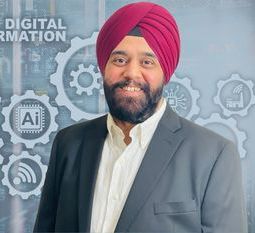 Jatinder has led enterprise-scale modernization programs for global banking corporations, U.S. Global Systemically Important Banks (G-SIBs), specializing in Amazon Web Services (AWS), the world’s leading cloud platform. From core infrastructure to real-time platforms, his career has been defined by building predictive, secure, and event-driven systems that transform reactive institutions into proactive, AI-enabled organizations.
We sat down with Jatinder to unpack the evolution of enterprise architecture, the role of cloud-native systems, and what the future holds with the rise of generative AI.
With over 20 years of experience, what inspired your focus on architecting transformative enterprise systems?
My journey started in mainframe development at a major tech company. But I quickly realized that the future belonged to organizations ready to embrace transformation. I gravitated toward financial institutions—especially large global banks—because of their scale and complexity. Over time, I saw the recurring issue: reactive systems that couldn’t adapt to market changes or operational bottlenecks.
That realization shaped my focus. I began guiding enterprises from reactive operations toward predictive, intelligent systems that enable real-time decisions, resilience, and growth. Today, as a strategic advisor, I work directly with C-suite executives to bridge business objectives with technology strategy, particularly in highly regulated industries like banking and finance.
Your work with data lake technologies and real-time analytics has been particularly impactful. What is the role of these in organizational change?
Modern data lake architectures are critical for organizations dealing with diverse and high-volume data. Unlike traditional warehouses that only handle structured data, data lakes can unify structured, semi-structured, and unstructured data into one ecosystem.
In one implementation, I designed an intelligent analytics platform that optimized data lake performance by analyzing access patterns. We built a smart tiering engine that automatically classified data into “hot” and “cold” tiers, migrating lesser-used datasets to cost-efficient storage. This not only reduced storage costs but also gave business units visibility into data usage, improving governance and cost allocation.
But the real power emerges when you combine data lakes with real-time streaming platforms. For a major retail bank, we implemented a predictive transaction monitoring system. Machine learning models trained on historical transaction data could anticipate traffic surges and proactively scale infrastructure ahead of time. The result? A 30% reduction in infrastructure costs and zero downtime during peak hours.
This shift also impacts organizational culture. Real-time dashboards gave executives and operations teams instant access to performance KPIs. Quarterly planning cycles gave way to dynamic, data-driven decision-making. The speed and confidence with which teams began operating fundamentally changed how the organization responded to the market.
Cloud-native architectures are central to your methodology. What makes them particularly suited for modern systems?
Cloud-native architectures are essential for creating intelligent, scalable systems. Unlike traditional infrastructure, which is rigid and slow to adapt, cloud-native systems are modular, self-healing, and dynamic.
I often design solutions around Kubernetes-based container orchestration. One system I architected dynamically adjusted infrastructure based on predictive analytics—allocating compute resources and scaling services based on forecasted demand. These systems integrate with machine learning models that analyze historical usage patterns to predict future behavior.
Another enabler is infrastructure as code (IaC). When infrastructure is written as version-controlled code, it can be deployed, tested, and scaled just like application software. This allows systems to self-optimize based on usage patterns and business requirements.
For example, at a multinational financial services company, we deployed an integrated suite of managed databases, ML platforms, and enterprise search tools. This drastically reduced system complexity, improved maintainability, and cut operational costs, all while boosting agility.
These cloud-native systems have enabled us to move from reactive response to proactive orchestration—a fundamental shift in enterprise capability.
You’ve been instrumental in developing microservices architectures and DevOps practices. How do these technologies contribute to building predictive systems?
Microservices architectures are crucial to building predictive systems. By decomposing monolithic applications into modular services, we gain granular observability and control. Each service can be monitored, scaled, and optimized independently.
My approach includes implementing intelligent observability frameworks that monitor service-level behavior in real time. These systems use ML algorithms to detect anomalies, forecast failure points, and trigger interventions before users are impacted.
DevOps practices take this further by automating the feedback loop between monitoring, prediction, and action. Our CI/CD pipelines incorporate real-time analytics and predictive risk models that pause deployments or adjust configurations when risk thresholds are exceeded. For example, if a service shows signs of performance degradation under new traffic patterns, the system can delay rollouts or re-route traffic dynamically.
These mechanisms reduce outages, optimize performance, and most importantly, establish a culture of continuous improvement fueled by data.
You have had a lot of experience with Fortune 500 companies. Which are the greatest obstacles to changing legacy enterprise environments?
The hardest part is not the technology—it’s the culture.
Many large institutions have spent decades operating on reactive systems. Shifting mindsets from “keep the lights on” to “build the future” takes time. Leadership is often skeptical of change unless they see measurable business impact.
That’s why I always start with pilot projects. At one bank, we implemented predictive monitoring on a handful of mission-critical applications. When we showed how it prevented revenue loss through early issue detection, it unlocked wider executive buy-in.
Technically, legacy system integration is another challenge. Most legacy systems weren’t designed for APIs or real-time data exchange. I developed transitional integration patterns—wrappers, adapters, and streaming proxies—that allow modernization without disrupting business continuity.
Finally, there’s the skills gap. Building predictive, AI-driven systems requires knowledge in both traditional IT and modern data science. To bridge this, I’ve led organization-wide mentorship programs, internal training modules, and built cross-functional task forces that accelerate capability development.
Looking ahead, where do you see enterprise architecture evolving, particularly with emerging technologies like generative AI?
Generative AI is a paradigm shift. We’re moving from predictive systems that optimize existing processes to intelligent systems that design solutions themselves.
In future architectures, AI will autonomously monitor performance, predict optimizations, and generate new configurations or services—without human intervention. For example, these systems won’t just alert when a database needs tuning—they’ll execute and validate the optimization plan, learning continuously from the results.
The convergence of generative AI and cloud-native patterns will result in self-evolving enterprise platforms. Systems will dynamically adapt not only to infrastructure demands but also to shifting business objectives.
However, this requires robust governance frameworks. As systems become more autonomous, enterprise architects must ensure that AI operates within regulatory bounds, business goals, and ethical standards. Governance, transparency, and control will become as important as scalability and speed.
The next wave of enterprise architecture will be defined by how well we balance autonomy with accountability.
Your final advice to enterprise leaders beginning their transformation journey?
Transformation doesn’t begin with technology—it begins with a shift in mindset. It’s about seeing your entire digital ecosystem as a strategic asset, not just a cost center.
Start with the business problem, not the platform. Prove value quickly with focused pilots. Build talent alongside systems. And always align your architecture with the evolving rhythms of your market and industry.
The future isn’t just cloud-based. It’s real-time, predictive, intelligent, and self-improving.
Leading organizations have moved beyond project-based thinking to embrace architecture as a living, evolving strategy that drives value every day.