Social media platforms are the new railroads in the age of information. However, looking at the developments in recent years, one can only question whether they truly serve the purpose they were designed to deliver at the very beginning.
As per the latest statistics, there are slightly over 5.17 billion social media users globally, with Facebook commanding the largest share at 3 billion monthly active users. What’s disturbing though is that this growth may seem significant, but there are still so many people who are not able to express their opinions through Twitter, Facebook, or TikTok, among other social media platforms.
The reason? Several regimes across the world have imposed censorship measures to eliminate vocal dissent.
Centralized social media: The weak link!
By design, the social media platforms that exist today are built on centralized infrastructures. What this means is that they have control over which posts or whom to allow and can de-platform anyone they deem unfit in a few clicks. This was the case when the former U.S. President and now Republican presidential candidate Donald Trump was permanently banned by Twitter.
Of course, it is debatable whether Twitter was right to make that move, and in most cases, the argument depends on which side of the political divide one stands. Nonetheless, one cannot help but notice an emerging trend by governments to limit access to social media platforms, again, thanks to their centralized nature.
If, for instance, a country’s telco providers block access to specific social media sites, then these platforms have no way to circumnavigate the hurdles. This is because users’ access to the platform is dependent on their ability to connect to the central servers, and if that connection is severed by telecom providers, the platform cannot operate within that country.
A good example is Nigeria’s 7-month Twitter ban in 2022 when the platform pulled down a tweet by former President Muhammud Buhari. The government retaliated by directing Telcos to block access to Twitter, which at the time was one of the leading social platforms that activists and journalists were using to channel their dissent.
Meanwhile, in China, western social media platforms, including Facebook and Twitter, have not been operational since 2009. The country’s anti-foreign media stance has come to be popularly known as ‘the Great Firewall of China.’ Instead, Chinese locals use government-supervised social media ecosystems, most notably WeChat, which is under the obligation to share users’ data with the authorities.
There are also more radical regimes such as North Korea, which has not only banned Facebook and Twitter but also punished anyone who tries to gain access to these sites through backdoors or distribute anti-republic information.
Besides curtailing human freedoms, social media censorship has an economic impact. A 2024 report by Top10VPN revealed that the global economy suffered a $9.01 billion loss in 2023 alone as a result of major internet shutdowns. Sub-Saharan Africa had the highest downturn, with a cumulative of 30,785 hours.
So, what can be done to avoid the censorship limitations of social media platforms?
Decentralizing the future of social interactions
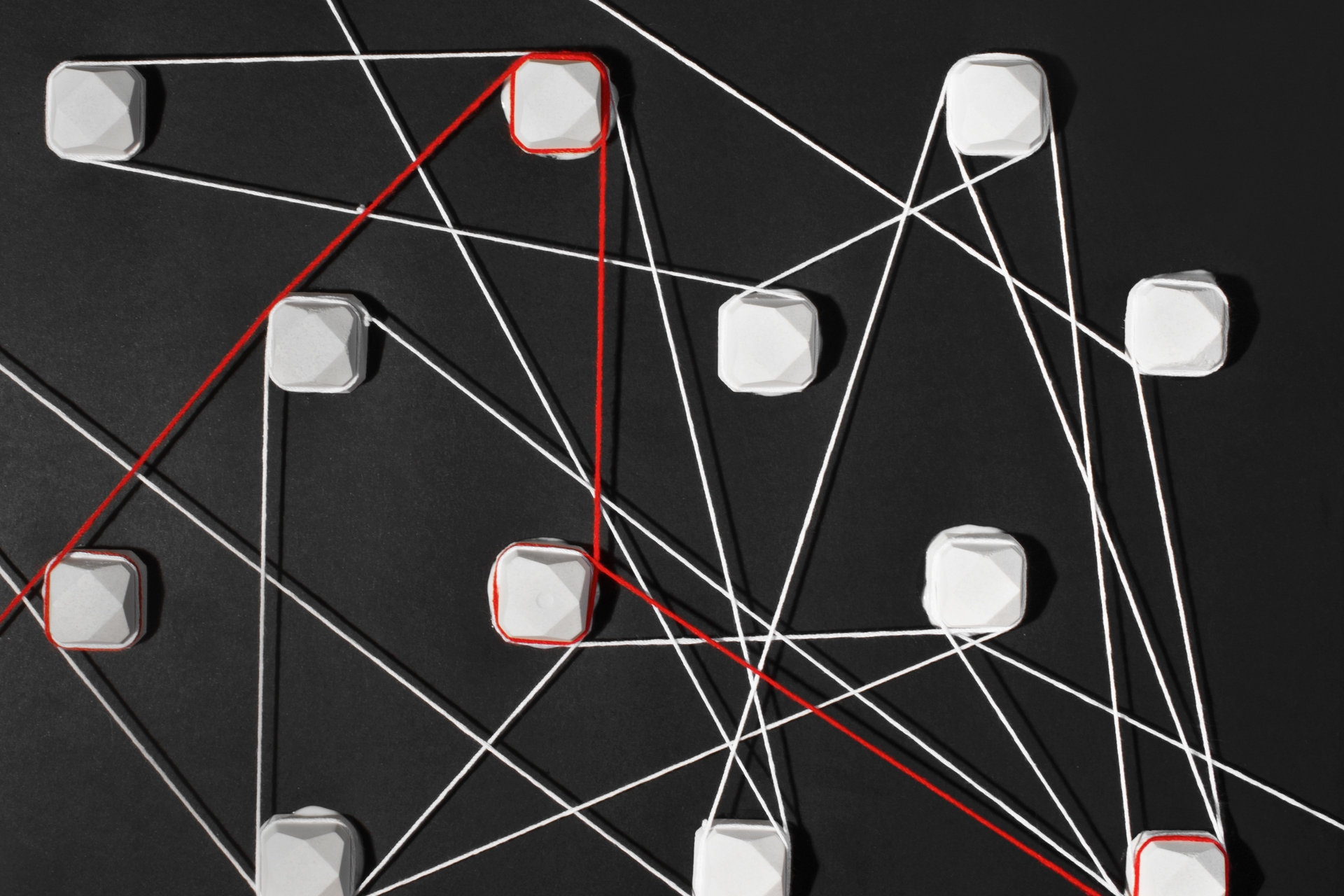
There are several ways through which today’s civilization can achieve the true promise of social media platforms. One of the options that is emerging as a formidable solution is by embracing decentralized social media infrastructures, which are censorship-resistant.
Similar to Bitcoin’s goal of decentralizing the monetary system, decentralized or Web 3.0 social media ecosystems aim to give power back to the users, instead of the norm where big tech and governments control everything.
Phaver is a great example of Web 3.0 innovations that are building decentralized social media ecosystems based on the fundamentals of blockchain technology. Built with multi-protocol capabilities, this Web3 social app allows users to own their data through what is known as an on-chain social graph as well as operate across multiple decentralized social network ecosystems, including Lens and CyberConnect.
Unlike centralized social media ecosystems, Web3 social apps are free from government intervention given that they don’t rely on centralized servers to function. The network is instead governed by a decentralized community, who in return receive incentives in the form of tokens for their contribution, be it on-chain validation, contributing by posting a platform like Phaver, or simply engaging with other creators’ content.
Another reason why decentralized social media ecosystems are bound to forge the future of social interactions is the flexibility of having one’s social graph across various protocols. In Web2, the likes of Twitter and Facebook operate in siloed environments which means one cannot leverage the social profile they built on one platform to grow bigger in another.
However, with Web3 social graphs, you can seamlessly transfer your value (personal profile) from one social media platform to another.
Conclusion
Human beings are, by nature, driven by interactions, which makes social media platforms a critical part of today’s society. That said, interference by governments is a big threat in terms of how civilizations will develop in the coming years.
Will our thoughts be limited simply because there were no independent platforms facilitated by the people? The answer to this question can only be known in a distant future, but what’s promising is that emerging technologies such as Web 3.0 are providing a platform to build censorship-resistant social media ecosystems for current and future generations.
Featured image credit: Freepik.