Artificial Intelligence (AI) advancement is accelerating rapidly. Companies like Anthropic, Google, and OpenAI are continually pushing the boundaries of what’s possible with AI. However, beneath the steady release of model upgrades, another trend is taking shape: the introduction of AI-native operating systems.
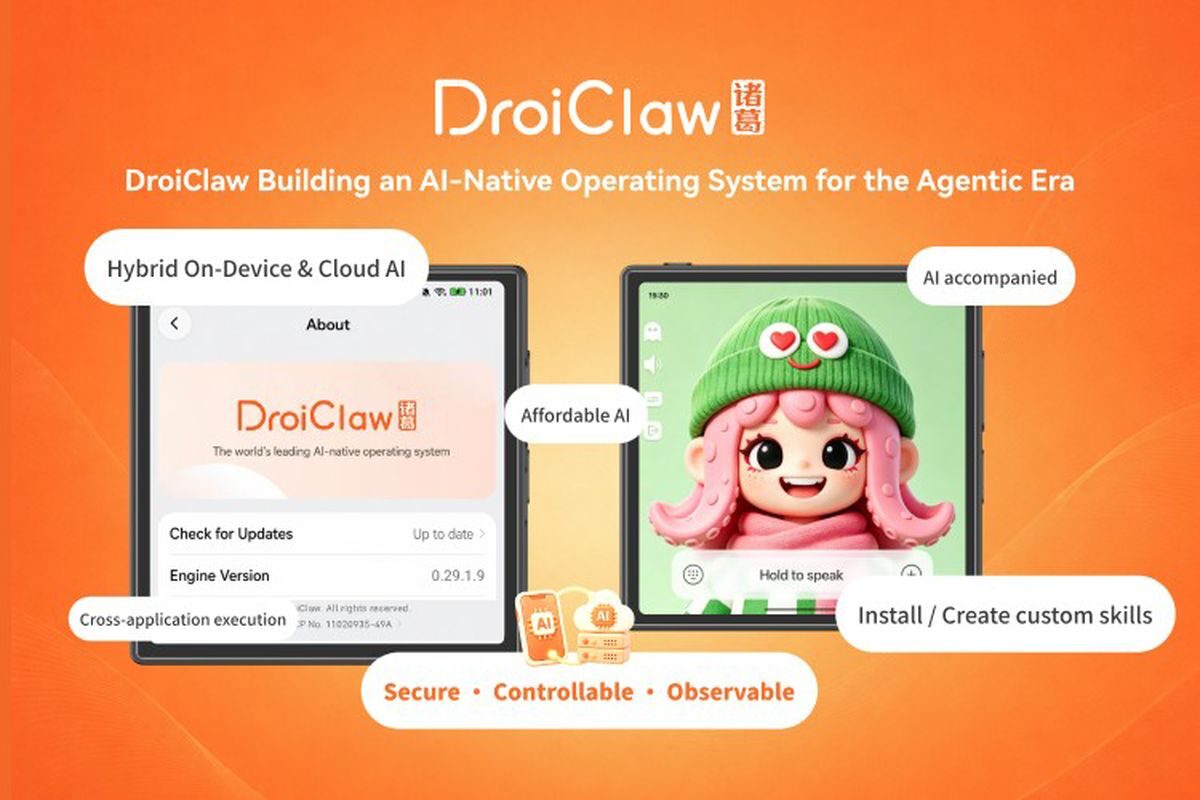
This new trend aims to reduce user friction by creating a more intuitive way to interact with AI and technology. DroiClaw, an AI-native operating system developed by Shanghai Droi Technology, is an example of this next-generation approach to AI development and advancement.
Read on to learn what an AI-native operating system is and how DroiClaw is reshaping the agentic OS landscape.
 What makes an operating system AI-native?
In a conventional operating system, the artificial intelligence layer typically exists as a separate application or feature layer. To access it, a user has to open different apps (that have AI features built in) and then type in their requests. In essence, this means the AI is restricted to operating within that specific app and cannot execute complex workflows. So here, AI functions as an “add-on” rather than a core element. In a truly AI-native operating system, the intelligence is built directly into the underlying infrastructure, not at the app level.
Because of this system-level integration, AI can draw on data, coordinate tasks, and operate across the entire system rather than remain confined within isolated “app silos.” As industry attention shifts toward more intuitive and intent-driven AI, Shanghai Droi Technology is positioning DroiClaw as an AI-native operating system designed for next-generation smart terminals.
From apps to an agentic OS
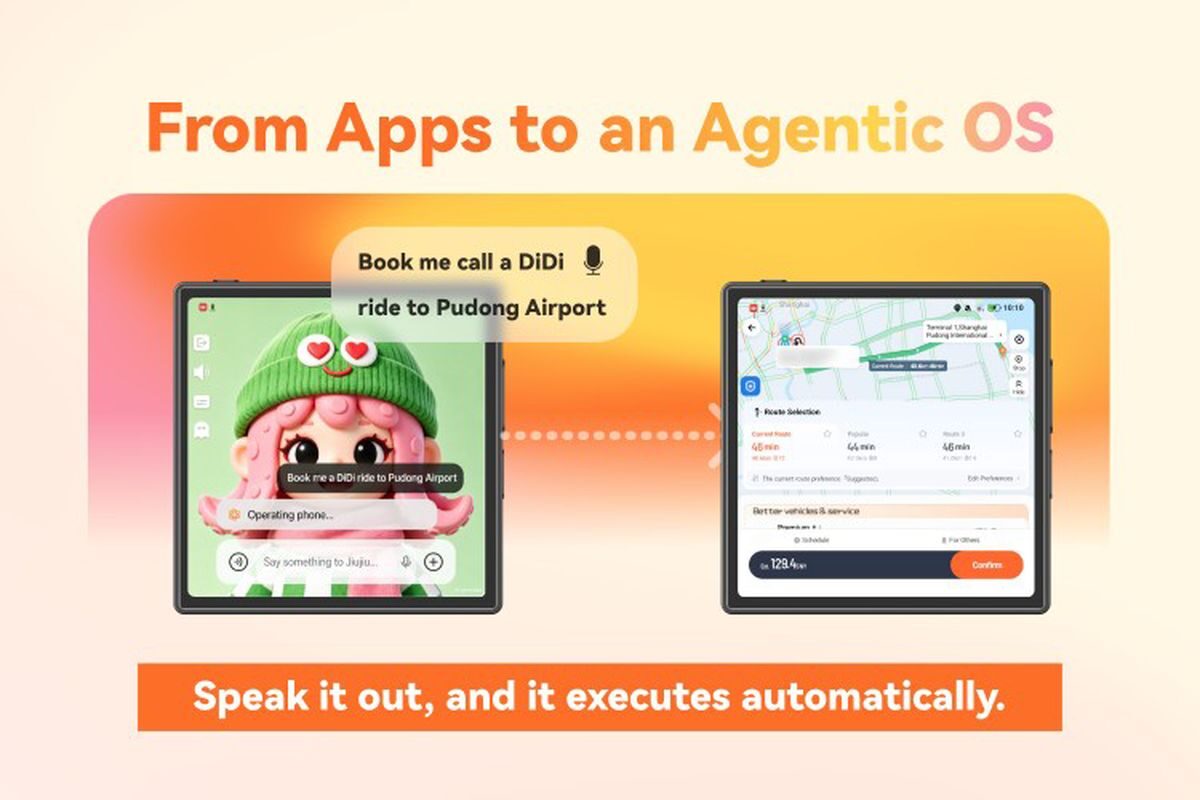
Traditional smartphone devices are built around an app-centric model. To complete a task, users will have to find the right application, open it, and navigate through different pages or interfaces. While this approach seems straightforward at first, it quickly becomes complex when users must coordinate tasks across multiple apps and interfaces. DroiClaw’s long-term vision is to solve these inefficiencies by building an app-free, agentic OS ecosystem.
Here, AI becomes the primary interface between users and their tasks. So instead of searching through multiple apps, users simply describe what they want to accomplish to the system. Then, DroiClaw uses natural language understanding and its AI agent ecosystem to break requests into steps before autonomously coordinating the functions and services required for successful execution. This significantly reduces the number of manual steps a user needs to take to complete a task.
In addition, DroiClaw supports multimodal interaction, allowing it to process text, files, images, and visual information to enable more natural and efficient agentic workflows. It also includes a library of installable skills that users can access for different tasks. In addition to installing skills already available in the skill library, users can also create custom skills based on their own needs.
The system can record which skills a user frequently relies on and prioritize those skills in future interactions, helping make skill invocation more convenient and relevant over time.
 Hybrid on-device and cloud AI
DroiClaw’s Agentic OS uses a hybrid architecture that combines an on-device AI model with cloud-based large models.
Under normal conditions, users primarily rely on cloud-based large models, which support more advanced capabilities such as multimodal interactions, AIGC, complex reasoning, scheduled tasks, and skill execution. DroiClaw is compatible with mainstream large models, and also supports customized or privately deployed models.
The local model serves as a fallback option in specific situations. When network access is unavailable or cloud service credits have been exhausted, the system can automatically switch to the on-device model without requiring users to make the change manually. It mainly supports basic question-and-answer functions.
A secure, controllable, and observable agent ecosystem
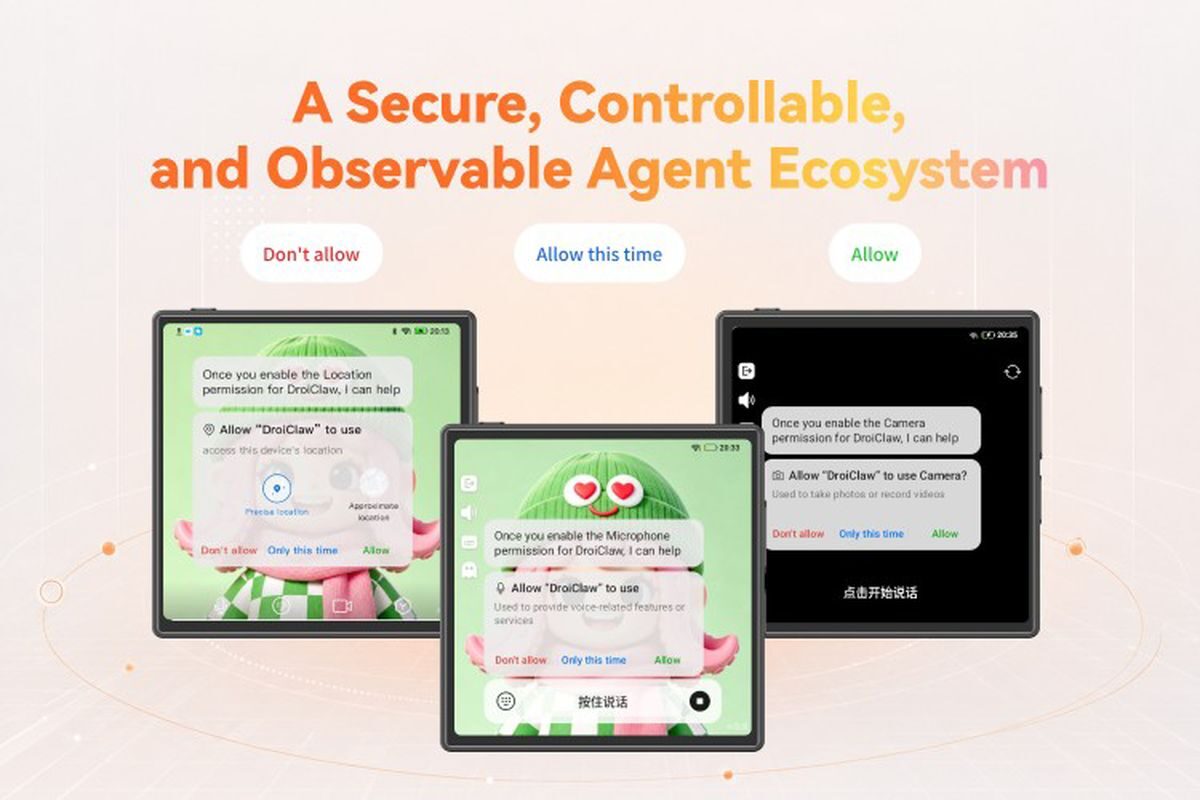
Running a truly open ecosystem requires AI agents to be able to operate autonomously. However, as agents take on more autonomy, trust becomes essential. Users and ecosystem partners should have greater visibility into their AI agents’ actions. They should also retain sufficient control over their actions in case intervention becomes necessary.
DroiClaw aims to build a secure, controllable, and observable AI agent ecosystem that prioritizes providing users and partners with visibility into what the AI system is doing or has done. It will also include features such as mandatory user authorization before sensitive operations, operational permission management, and controllable execution of automated tasks.
In addition, DroiClaw is integrating layered data protection and local processing for privacy-sensitive information into its foundational infrastructure. This approach reflects a detailed response to a wider industry need for AI agents that are trustworthy and manageable.
 Affordable AI and an open ecosystem
Accessibility will play a major role in determining whether AI-native operating systems like DroiClaw will be truly successful. This is because if AI-native OS experiences remain limited to premium hardware or closed platforms, adoption will be restricted. DroiClaw aims to build affordable AI with model flexibility and hardware neutrality in mind.
DroiClaw’s system is built to support different device manufacturers, hardware platforms, and service providers. Its architecture can accommodate a broad range of AI models and developers. The system also allows for switching between different AI models and adding custom models. This helps to lower the cost of production and deployment, thereby providing greater flexibility for AI democratization and innovation.
According to the company, the first smartphones equipped with DroiClaw are priced at approximately RMB 1,099. The democratization and flexibility of AI could be further accelerated through partnerships across the broader open AI-agent ecosystem, such as OpenClaw.
Company background and conclusion
Shanghai Droi Technology, the developer of DroiClaw, was founded in 2008 and specializes in operating-system development and mobile internet ecosystem services. According to the company, its FreemeOS platform has been installed on more than 200 million devices across dozens of countries and regions.
Shanghai Droi Technology also states that it works with more than 1,000 hardware and software ecosystem partners and serves markets including Europe, Russia, India, Southeast Asia, and Latin America. DroiClaw represents a further step in the company’s AI-native operating-system development, building on its experience in OS development and mobile ecosystem services.