Dataconomy
  • News
    • Artificial Intelligence
    • Cybersecurity
    • DeFi & Blockchain
    • Finance
    • Gaming
    • Startups
    • Tech
  • Industry
  • Research
  • Resources
    • Articles
    • Guides
    • Case Studies
    • Whitepapers
    • AI Models Leaderboard
  • AI toolsNEW
  • Newsletter
  • + More
    • Glossary
    • Conversations
    • Events
    • About
      • Who we are
      • Contact
      • Imprint
      • Legal & Privacy
      • Partner With Us
Subscribe
No Result
View All Result
  • AI
  • Tech
  • Cybersecurity
  • Finance
  • DeFi & Blockchain
  • Startups
  • Gaming
Dataconomy
  • News
    • Artificial Intelligence
    • Cybersecurity
    • DeFi & Blockchain
    • Finance
    • Gaming
    • Startups
    • Tech
  • Industry
  • Research
  • Resources
    • Articles
    • Guides
    • Case Studies
    • Whitepapers
    • AI Models Leaderboard
  • AI toolsNEW
  • Newsletter
  • + More
    • Glossary
    • Conversations
    • Events
    • About
      • Who we are
      • Contact
      • Imprint
      • Legal & Privacy
      • Partner With Us
Subscribe
No Result
View All Result
Dataconomy
No Result
View All Result

Penn physicists use light-matter particles to boost AI chip speeds

Lead researcher Bo Zhen and assistant professor Li He officially published their breakthrough architecture in Physical Review Letters.

byKerem Gülen
May 29, 2026
in Research
Home Research
Share on FacebookShare on TwitterShare on LinkedInShare on WhatsAppShare on e-mail
Google Preferred Source

Eighty years after the launch of the ENIAC computer, researchers at the University of Pennsylvania are developing a novel approach to enhance computing efficiency. Physicists led by Bo Zhen are investigating the use of photons, which have no mass and carry information quickly, to address the limitations faced by traditional electronic computing.

According to Li He, a co-first author of the research published in *Physical Review Letters*, electrons show several shortcomings due to their charge, including energy loss as heat and resistance, which complicates the handling of large amounts of data. This limitation is increasingly critical as artificial intelligence (AI) demands more from computing hardware in terms of processing and cooling capabilities.

Zhen’s team has created exciton-polaritons, quasiparticles formed by coupling photons with electrons in a thin semiconductor layer. These exciton-polaritons enable strong interactions necessary for effective signal switching in computation, a process that photons alone struggle to perform due to their charge-neutral nature.

Stay Ahead of the Curve!

Don't miss out on the latest insights, trends, and analysis in the world of data, technology, and startups. Subscribe to our newsletter and get exclusive content delivered straight to your inbox.

This advancement is particularly significant for AI applications. Zhen noted that while many photonic AI chips can perform basic calculations using light, they still require conversion of light signals into electronic ones for complex operations, which hinders speed and efficiency.

The team achieved all-light switching using exciton-polaritons at 4 quadrillionths of a joule—much less energy than is needed to power a tiny LED. If this technology can be scaled, it may allow photonic chips to directly process light from cameras, reducing energy demands in large AI systems.

Moreover, the research could also facilitate the development of basic quantum computing capabilities on semiconductors. Bo Zhen serves as the Jin K. Lee Presidential Associate Professor in the Department of Physics and Astronomy at the University of Pennsylvania. Li He, formerly a postdoctoral researcher in the Zhen Lab, is now an assistant professor at Montana State University.

The research included contributions from authors Zhi Wang and Bumho Kim from the University of Pennsylvania and received backing from the US Office of Naval Research and the Sloan Foundation.


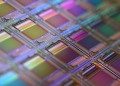
Featured image credit

Tags: artificial intelligenceFeaturedoptical computing

Related Posts

New dark matter theory proposes two particle types

New dark matter theory proposes two particle types

July 14, 2026
Google Dialogflow CX flaw let researchers create rogue agents

Google Dialogflow CX flaw let researchers create rogue agents

July 14, 2026
Penn State researchers build battery-free solar computing chip

Penn State researchers build battery-free solar computing chip

July 14, 2026
Anthropic research introduces GRAM for isolating dangerous AI knowledge

Anthropic research introduces GRAM for isolating dangerous AI knowledge

July 9, 2026
Global PC shipments fall 5% as AI-driven memory crisis hits supply chains

Global PC shipments fall 5% as AI-driven memory crisis hits supply chains

July 9, 2026
Only 6% of Singapore desk workers use AI daily, says Salesforce

Only 6% of Singapore desk workers use AI daily, says Salesforce

July 8, 2026

LATEST NEWS

OpenAI retires Atlas browser to focus on new ChatGPT superapp

Microsoft tests Copilot’s new PC insights feature in Windows 11

Xiaomi unveils SkyNomad N90 range-extender SUV

X algorithm update aims to make replies feel friendlier

Windows 11 Search Box gets less clutter and more control

Pixel 11 leak shows bold magenta and peach colors

BEST AI MODELS LEADERBOARD

See the best AI models, ranked by intelligence, benchmark results, speed and token price. Find the most suitable LLMs, Text-to-Image, Image Editing, Text-to-Speech, Text-to-Video and Image-to-Video  artificial intelligence model for your tasks and business.

LATEST TOOLS

Amanda AI

InterviewBot

VernAI

MyLoans

Essay Grader AI

Cover Letter AI

Animate Old Photos

Resume.io

MonAI

AIEngine Plugin

Dataconomy

COPYRIGHT © DATACONOMY MEDIA GMBH, ALL RIGHTS RESERVED.

  • About
  • Imprint
  • Contact
  • Legal & Privacy

Follow Us

  • News
    • Artificial Intelligence
    • Cybersecurity
    • DeFi & Blockchain
    • Finance
    • Gaming
    • Startups
    • Tech
  • Industry
  • Research
  • Resources
    • Articles
    • Guides
    • Case Studies
    • Whitepapers
    • AI Models Leaderboard
  • AI tools
  • Newsletter
  • + More
    • Glossary
    • Conversations
    • Events
    • About
      • Who we are
      • Contact
      • Imprint
      • Legal & Privacy
      • Partner With Us
No Result
View All Result
Subscribe

This website uses cookies to improve your experience. You can choose to accept or reject them. Visit our Privacy Policy.