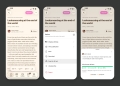
Figma has established partnerships with Anthropic and OpenAI to integrate AI command-line interface tools, such as Claude Code and Codex, into its design software. The introduction of an in-house AI agent will enable users to employ natural language prompts to create new designs, modify existing ones, or automate design tasks within Figma’s collaborative canvas. Users will also have the capability to activate multiple AI agents to perform varying tasks simultaneously.
The AI assistant is designed to comprehend design elements and contexts, utilizing models specifically fine-tuned for design applications. “As building software gets easier, what matters most is setting direction: deciding what to work on, how it should function, what the experience should feel like,” stated Loredana Crisan, Figma’s chief design officer. She emphasized that teams can now collaborate with AI agents to visualize concepts and refine ideas while minimizing time spent on repetitive tasks.
The AI agent is initially launching within Figma Design, with plans for expansive integration across other products in the future. Figma aims to merge design and programming more closely within its applications over time. The company faces competition from Canva, Adobe, Flora, Krea, and Dessn. To bolster its position, Figma acquired the node-based design tool Weavy last year and has introduced new image-editing features to enhance its offerings.
Despite concerns regarding AI potentially diminishing design jobs, Figma reported $333.4 million in revenue for the first quarter of 2026, marking a 46% increase from the previous year.