Dataconomy
  • News
    • Artificial Intelligence
    • Cybersecurity
    • DeFi & Blockchain
    • Finance
    • Gaming
    • Startups
    • Tech
  • Industry
  • Research
  • Resources
    • Articles
    • Guides
    • Case Studies
    • Whitepapers
    • AI Models Leaderboard
  • AI toolsNEW
  • Newsletter
  • + More
    • Glossary
    • Conversations
    • Events
    • About
      • Who we are
      • Contact
      • Imprint
      • Legal & Privacy
      • Partner With Us
Subscribe
No Result
View All Result
  • AI
  • Tech
  • Cybersecurity
  • Finance
  • DeFi & Blockchain
  • Startups
  • Gaming
Dataconomy
  • News
    • Artificial Intelligence
    • Cybersecurity
    • DeFi & Blockchain
    • Finance
    • Gaming
    • Startups
    • Tech
  • Industry
  • Research
  • Resources
    • Articles
    • Guides
    • Case Studies
    • Whitepapers
    • AI Models Leaderboard
  • AI toolsNEW
  • Newsletter
  • + More
    • Glossary
    • Conversations
    • Events
    • About
      • Who we are
      • Contact
      • Imprint
      • Legal & Privacy
      • Partner With Us
Subscribe
No Result
View All Result
Dataconomy
No Result
View All Result

Tesla files patent to integrate Starlink antennas directly into vehicle roofs

A newly published Tesla patent describes a roof structure designed to allow satellite signals to pass through, signaling potential groundwork for integrating space-based connectivity into its vehicles.

byEmre Çıtak
December 19, 2025
in Tech
Home News Tech
Share on FacebookShare on TwitterShare on LinkedInShare on WhatsAppShare on e-mail
Google Preferred Source

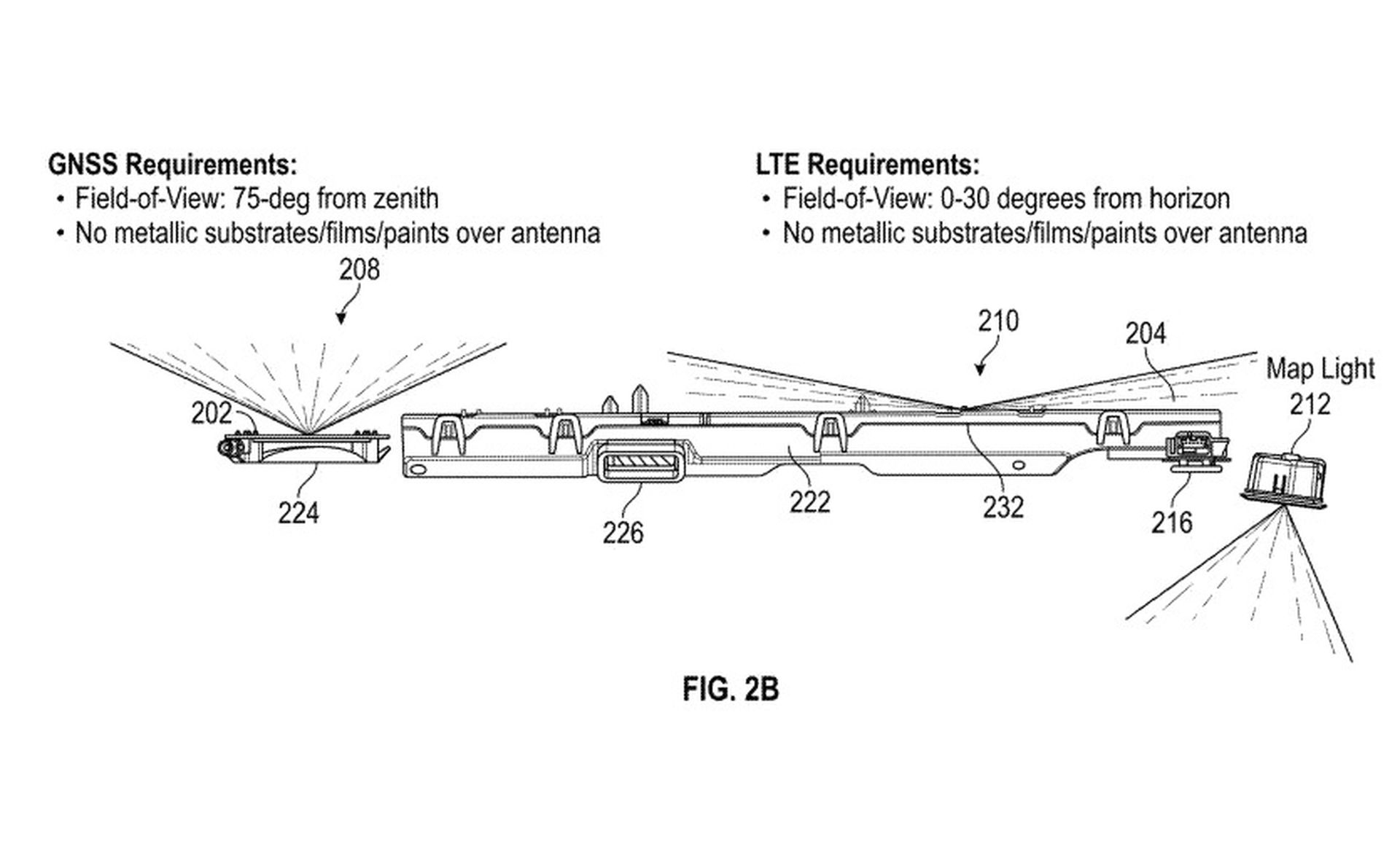
Tesla is preparing for a convergence of automotive and space technology. According to a recent patent filing published on December 4, 2025, the electric vehicle giant is exploring ways to integrate satellite antennas—likely for SpaceX’s Starlink—directly into the roofs of its cars. The patent, titled “Vehicle Roof Assembly with Radio Frequency Transparent Material,” outlines a method to hide satellite receivers within the car’s structure without compromising aesthetics or aerodynamics.

Metal and glass block signals are a problem for the Tesla Starlink antennas

Tesla vehicles are already among the most connected machines on the planet, relying heavily on cellular networks for features ranging from Autopilot data collection to over-the-air software updates. However, cellular coverage has its limits, especially in rural areas.
Tesla files patent to integrate Starlink antennas directly into vehicle roofs
(Image credit)

The patent filing notes a specific engineering challenge: traditional vehicle roofs made of metal or standard glass often block or weaken satellite signals. This makes it difficult to conceal an antenna inside the cabin. To solve this, Tesla proposes using a “radio frequency transparent” construction.

Stay Ahead of the Curve!

Don't miss out on the latest insights, trends, and analysis in the world of data, technology, and startups. Subscribe to our newsletter and get exclusive content delivered straight to your inbox.

A high-tech hidden antenna is the solution

Tesla’s solution involves a multi-layered roof design that utilizes specific polymer blends, such as Polycarbonate (PC) and Acrylonitrile Styrene Acrylate (ASA). These materials provide a robust structural integrity similar to standard car roofs but allow radio frequencies to pass through unimpeded.

By using these materials, Tesla can integrate antennas directly into the roof structure. This means the car could maintain communication with satellites and external devices without requiring a visible, external dish that would ruin the car’s aerodynamics or design.

Starlink integration and always-on connectivity

While the patent document does not explicitly name “Starlink,” the implication is clear. Integrating SpaceX’s high-bandwidth, low-latency satellite internet would offer Tesla drivers distinct advantages:

  • Seamless connectivity: Vehicles could switch smoothly between 5G cellular networks and the Starlink satellite network, ensuring the car remains online even in dead zones or during natural disasters.
  • Enhanced autonomy: Continuous connectivity is vital for the future of autonomous driving systems and Tesla’s planned Robotaxi network, which requires constant data streams for real-time traffic and mapping updates.
  • Entertainment: High-speed satellite internet would support high-definition video streaming and online gaming for passengers, regardless of location.

This move aligns with broader developments at SpaceX. Recent trademark filings have revealed the company’s intent to use the name “STARLINK MOBILE” for services involving the “two-way real-time transmission” of voice, video, and data via wireless devices. SpaceX has already signed deals with carriers like T-Mobile US and Ukrainian telecom giant Kyivstar to offer direct-to-cell technology.

For Tesla, this technology could provide a competitive edge at a time when the company faces market challenges, including sales fluctuations and regulatory scrutiny in California regarding its Full Self-Driving marketing. By effectively turning its cars into mobile satellite nodes, Tesla continues to leverage Elon Musk’s cross-company synergy to push EV technology forward.

Tags: ConnectivitystarlinkTesla

Related Posts

Meta files patent for AI-powered emotional monitoring device

Meta files patent for AI-powered emotional monitoring device

July 10, 2026
Xiaomi 18 Pro to debut in September with Snapdragon 8 Elite Gen 6 chip

Xiaomi 18 Pro to debut in September with Snapdragon 8 Elite Gen 6 chip

July 10, 2026
DuckDuckGo browser now blocks most YouTube video ads

DuckDuckGo browser now blocks most YouTube video ads

July 9, 2026
Samsung Galaxy Z Flip 8 and Z Fold 8 renders leak

Samsung Galaxy Z Flip 8 and Z Fold 8 renders leak

July 9, 2026
X to DM users when their posts receive a Community Note

X to DM users when their posts receive a Community Note

July 9, 2026
iPhone 18 Pro Max battery capacity appears in 3C filings

iPhone 18 Pro Max battery capacity appears in 3C filings

July 8, 2026

LATEST NEWS

OpenAI launches ChatGPT Work productivity app

Meta files patent for AI-powered emotional monitoring device

Xiaomi 18 Pro to debut in September with Snapdragon 8 Elite Gen 6 chip

Google rolls out ‘How this ad was made’ for AI ads

OpenAI launches GPT-5.6 with Sol, Terra, and Luna models

SpaceXAI launches Grok 4.5 as new flagship AI model

BEST AI MODELS LEADERBOARD

See the best AI models, ranked by intelligence, benchmark results, speed and token price. Find the most suitable LLMs, Text-to-Image, Image Editing, Text-to-Speech, Text-to-Video and Image-to-Video  artificial intelligence model for your tasks and business.

LATEST TOOLS

Capmonster

Superhuman

Pixelvibe

Punchlines

Leadfwd

AI RoastBot

Bit.ai

Pikzels

Aflow

Chai AI

Dataconomy

COPYRIGHT © DATACONOMY MEDIA GMBH, ALL RIGHTS RESERVED.

  • About
  • Imprint
  • Contact
  • Legal & Privacy

Follow Us

  • News
    • Artificial Intelligence
    • Cybersecurity
    • DeFi & Blockchain
    • Finance
    • Gaming
    • Startups
    • Tech
  • Industry
  • Research
  • Resources
    • Articles
    • Guides
    • Case Studies
    • Whitepapers
    • AI Models Leaderboard
  • AI tools
  • Newsletter
  • + More
    • Glossary
    • Conversations
    • Events
    • About
      • Who we are
      • Contact
      • Imprint
      • Legal & Privacy
      • Partner With Us
No Result
View All Result
Subscribe

This website uses cookies to improve your experience. You can choose to accept or reject them. Visit our Privacy Policy.