Lisbon is a collision point. Sometimes the real summit does not happen on the main stage. It happens in the margins, in the quiet studios and the back rooms where the actual builders talk about what they are shipping, not what they are promising.
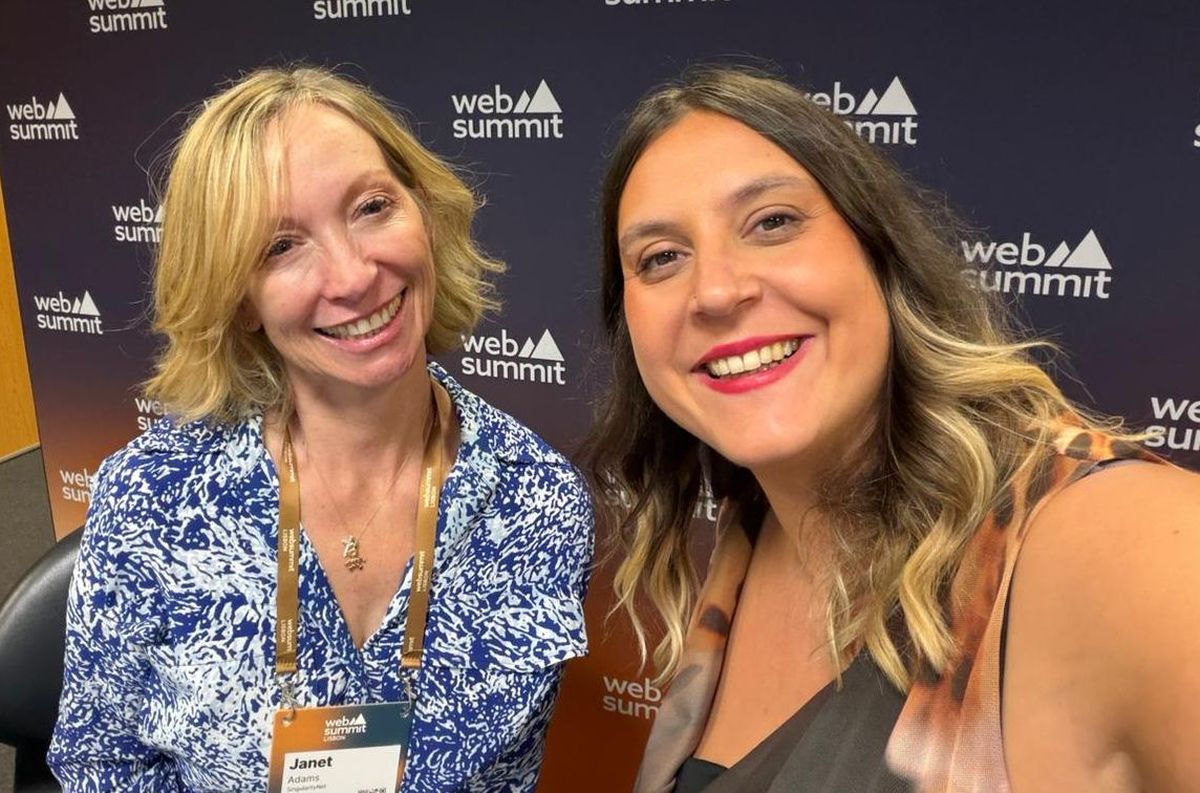
While the crowds at the Meo Arena were focused on the noise of the moment, I spent my time in private conversations tracking a different signal. I sat down with Joleen Liang, the co-founder of Squirrel Ai, and Janet Adams, the COO of SingularityNET.
On the surface, they have nothing in common. Joleen is revolutionizing education in China. Janet is building decentralized AGI on the blockchain.
But if you listen to the logic underneath their products, they are solving the exact same problem.
The centralized institutions we rely on—traditional schools and global banks—are mathematically incapable of serving the individual. They are built for the average. They fail the edge cases. And as it turns out, the “edge” is actually the majority of the planet.
Here is what the conversations in Lisbon revealed about the future of agency.
Read also: Web Summit 2025 Lisbon: The age of the sovereign builder
Decoupling knowledge from the teacher
We have always assumed that to personalize education, you need more humans.
Joleen Liang disagrees. She argues that scaling human attention is impossible. You cannot clone a teacher. But you can clone the logic of attention.
In our conversation, Joleen broke down the mechanics of “China speed” in ed-tech. Squirrel Ai didn’t just digitize textbooks; they restructured the classroom entirely. “We found out that adaptive learning was the only solution for personalized learning,” she told me.
The model she described is a radical unbundling of the teacher’s role. In her view, the classroom of the future is a “mixed grade” environment. You might have 50 students of different ages in one room. They spend 50% of their time with an AI tutor that knows their specific knowledge gaps, and 50% with human mentors who focus on social skills, critical thinking, and confidence.
This is not about replacing the human. It is about removing the human from the bottleneck.
Joleen was clear about the roadmap: within three to ten years, every learner will have an “AI virtual pal” that understands them better than they understand themselves.
The implication for leaders is severe. We are moving from a model of “teaching knowledge” to “managing growth.” The AI handles the syntax. The human handles the intent.

When the system is the bottleneck
If Joleen is using AI to bypass the limits of the classroom, Janet Adams is using it to bypass the limits of the financial system.
Janet is the COO of SingularityNET, and she is building the infrastructure for the next generation of AGI. But her focus wasn’t on the coolness of the tech. It was on the failure of the current establishment.
“Big tech has a stranglehold on the planet,” she said. Her argument is that if we let AGI be built solely by profit-driven monopolies, the inequalities we see today will simply be hard-coded into the future.
The data she put on the table was sobering.
- The gender gap: At the current rate of progress, it will take 134 years to close the gender pay gap.
- The unbanked: There are 1.4 billion adults globally who are unbanked, and another billion who are underbanked.
- The working poor: 600 million women are in paid jobs but do not earn a living wage.
The legacy financial system cannot serve these people because it is too expensive to verify them. This is where Janet’s technical strategy comes in. She detailed their new “ASI Chain,” a blockchain infrastructure based on Rho Calculus that can handle 100,000 transactions per second.
That number matters. It rivals the speed of the Visa network, but without the centralized gatekeeper.
By lowering the cost of verification to near zero, you make it profitable to serve the unbanked. You create a financial system that works for the edge, not just the center. As Janet put it, “The AGI has to serve the many, not the few.”
The common thread
What connects a classroom in Shanghai with a blockchain developer in Lisbon.
It is the refusal to accept “average” as the standard.
In the traditional education system, if you learn differently, you fail. In the traditional banking system, if you have no credit history, you are excluded.
Both Joleen and Janet are using AI to lower the cost of serving the individual.
- Squirrel Ai lowers the cost of personalized instruction.
- SingularityNET lowers the cost of financial sovereignty.
This is the redistribution of agency. We are moving from a world where you need permission (from a bank, from a school district) to a world where you have tools.
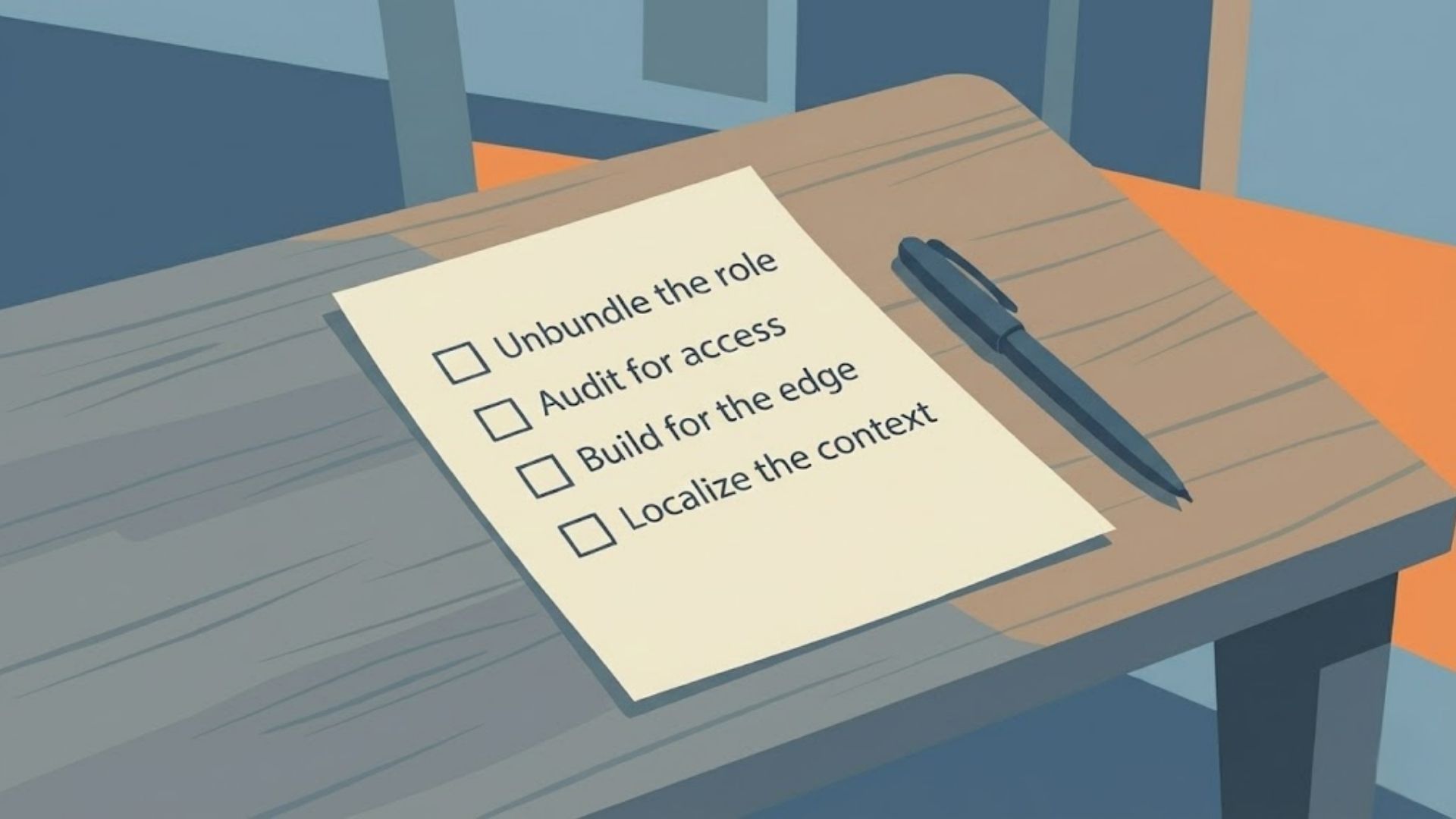
A checklist for the edge
My takeaway from these conversations is that we are asking the wrong question about AI. We ask “will it replace us.” We should be asking “who will it empower.”
If you are looking for the next growth engine, stop looking at the center. Look at the edge.
- Unbundle the role. Just as Joleen split the teacher into “AI tutor” and “human mentor,” look at your own organization. What parts of your workflow are knowledge transfer (AI) and what parts are judgment (Human).
- Audit for access. Janet’s warning about big tech is a warning for all of us. If your product is only accessible to the top 10% of users, you are leaving the biggest market on the table.
- Trust the math, not the institution. Whether it is Rho Calculus or adaptive algorithms, the new trust layer is code. Ensure your teams understand the logic, not just the brand.
- Localize the context. Joleen mentioned that while the AI engine is universal, the content must be local. You cannot scale globally without respecting local reality.
The technology is neutral. The application is not.
Build for the edge. That is where the growth is.