Dataconomy
  • News
    • Artificial Intelligence
    • Cybersecurity
    • DeFi & Blockchain
    • Finance
    • Gaming
    • Startups
    • Tech
  • Industry
  • Research
  • Resources
    • Articles
    • Guides
    • Case Studies
    • Whitepapers
    • AI Models Leaderboard
  • AI toolsNEW
  • Newsletter
  • + More
    • Glossary
    • Conversations
    • Events
    • About
      • Who we are
      • Contact
      • Imprint
      • Legal & Privacy
      • Partner With Us
Subscribe
No Result
View All Result
  • AI
  • Tech
  • Cybersecurity
  • Finance
  • DeFi & Blockchain
  • Startups
  • Gaming
Dataconomy
  • News
    • Artificial Intelligence
    • Cybersecurity
    • DeFi & Blockchain
    • Finance
    • Gaming
    • Startups
    • Tech
  • Industry
  • Research
  • Resources
    • Articles
    • Guides
    • Case Studies
    • Whitepapers
    • AI Models Leaderboard
  • AI toolsNEW
  • Newsletter
  • + More
    • Glossary
    • Conversations
    • Events
    • About
      • Who we are
      • Contact
      • Imprint
      • Legal & Privacy
      • Partner With Us
Subscribe
No Result
View All Result
Dataconomy
No Result
View All Result

Sandia Labs uses neuromorphic chips to solve partial differential equations

The breakthrough relies on a new algorithm called NeuroFEM, which translates the finite element method into a network of spiking neurons.

byAytun Çelebi
February 18, 2026
in Research
Home Research
Share on FacebookShare on TwitterShare on LinkedInShare on WhatsAppShare on e-mail
Google Preferred Source

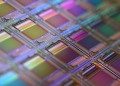
Brain-inspired computers have demonstrated the ability to solve complex mathematical equations previously associated with supercomputers. This development, detailed in a study published in Nature Machine Intelligence, was led by computational neuroscientists Brad Theilman and Brad Aimone of Sandia National Laboratories.

It was reported that these “neuromorphic” computers can efficiently solve partial differential equations (PDEs). PDEs are crucial for modeling various phenomena, including fluid dynamics, electromagnetic fields, and structural mechanics, which are used in weather forecasting, material stress analysis, and nuclear simulations.

The research suggests a path toward energy-efficient supercomputers. The National Nuclear Security Administration, which uses supercomputers for nuclear system simulations and other critical applications, could potentially reduce its energy consumption significantly through this technology.

Stay Ahead of the Curve!

Don't miss out on the latest insights, trends, and analysis in the world of data, technology, and startups. Subscribe to our newsletter and get exclusive content delivered straight to your inbox.

The development involved a new algorithm based on a computational neuroscience model. This algorithm allows neuromorphic hardware to address mathematical problems that traditionally require substantial computing power from energy-intensive supercomputers.

The project received funding from the Department of Energy’s Office of Science through the Advanced Scientific Computing Research and Basic Energy Sciences programs, and the National Nuclear Security Administration’s Advanced Simulation and Computing program.

Beyond engineering applications, this research contributes to understanding how the human brain performs computations. The algorithm’s structure and behavior closely resemble cortical networks, suggesting a link between neuroscience and applied mathematics. This connection could eventually aid in understanding and treating neurological disorders.

The researchers believe this work marks a significant step in neuromorphic computing, fostering collaboration across mathematics, neuroscience, and engineering for further advancements.



Featured image credit

Tags: AIsandia labs

Related Posts

Researchers create AI worm that adapts attacks without human input

Researchers create AI worm that adapts attacks without human input

June 4, 2026
Researchers unlock 20-fold enhancement in ultrafast laser experiments

Researchers unlock 20-fold enhancement in ultrafast laser experiments

June 3, 2026
NASA tests next-gen radiation-hardened space computer chip

NASA tests next-gen radiation-hardened space computer chip

May 29, 2026
Penn physicists use light-matter particles to boost AI chip speeds

Penn physicists use light-matter particles to boost AI chip speeds

May 29, 2026
Global AI spending to hit .59 trillion in 2026, says Gartner forecast

Global AI spending to hit $2.59 trillion in 2026, says Gartner forecast

May 28, 2026
New CHEEM framework helps AI learn new tasks without forgetting old ones

New CHEEM framework helps AI learn new tasks without forgetting old ones

May 27, 2026

LATEST NEWS

Amazon adds AI-generated product previews to search results

Meta launches AI business agents on WhatsApp, Instagram and Messenger

Nintendo will release a repair-friendly Switch 2 in Europe

Google rolls out Ask Gemini in Drive to eligible Workspace users

Google Wallet to add digital IDs from select EU countries this summer

Why Telegram Mini Apps have become the optimal ecosystem for launching AI SaaS products

BEST AI MODELS LEADERBOARD

See the best AI models, ranked by intelligence, benchmark results, speed and token price. Find the most suitable LLMs, Text-to-Image, Image Editing, Text-to-Speech, Text-to-Video and Image-to-Video  artificial intelligence model for your tasks and business.

LATEST TOOLS

Roboto AI

Pickaxe

Pfpmaker

MindPal

Syllaby

ScreenApp

FinanceBrain

GitHub Spark

Hints

VisionStory AI

Dataconomy

COPYRIGHT © DATACONOMY MEDIA GMBH, ALL RIGHTS RESERVED.

  • About
  • Imprint
  • Contact
  • Legal & Privacy

Follow Us

  • News
    • Artificial Intelligence
    • Cybersecurity
    • DeFi & Blockchain
    • Finance
    • Gaming
    • Startups
    • Tech
  • Industry
  • Research
  • Resources
    • Articles
    • Guides
    • Case Studies
    • Whitepapers
    • AI Models Leaderboard
  • AI tools
  • Newsletter
  • + More
    • Glossary
    • Conversations
    • Events
    • About
      • Who we are
      • Contact
      • Imprint
      • Legal & Privacy
      • Partner With Us
No Result
View All Result
Subscribe

This website uses cookies to improve your experience. You can choose to accept or reject them. Visit our Privacy Policy.