Dataconomy
  • News
    • Artificial Intelligence
    • Cybersecurity
    • DeFi & Blockchain
    • Finance
    • Gaming
    • Startups
    • Tech
  • Industry
  • Research
  • Resources
    • Articles
    • Guides
    • Case Studies
    • Whitepapers
    • AI Models Leaderboard
  • AI toolsNEW
  • Newsletter
  • + More
    • Glossary
    • Conversations
    • Events
    • About
      • Who we are
      • Contact
      • Imprint
      • Legal & Privacy
      • Partner With Us
Subscribe
No Result
View All Result
  • AI
  • Tech
  • Cybersecurity
  • Finance
  • DeFi & Blockchain
  • Startups
  • Gaming
Dataconomy
  • News
    • Artificial Intelligence
    • Cybersecurity
    • DeFi & Blockchain
    • Finance
    • Gaming
    • Startups
    • Tech
  • Industry
  • Research
  • Resources
    • Articles
    • Guides
    • Case Studies
    • Whitepapers
    • AI Models Leaderboard
  • AI toolsNEW
  • Newsletter
  • + More
    • Glossary
    • Conversations
    • Events
    • About
      • Who we are
      • Contact
      • Imprint
      • Legal & Privacy
      • Partner With Us
Subscribe
No Result
View All Result
Dataconomy
No Result
View All Result

New discovery: Deep ocean dark oxygen doesn’t need sunlight

byEray Eliaçık
July 24, 2024
in News
Home News
Share on FacebookShare on TwitterShare on LinkedInShare on WhatsAppShare on e-mail
Google Preferred Source

Deep ocean dark oxygen is a groundbreaking discovery that challenges our traditional understanding of oxygen production. Unlike the oxygen we are familiar with, which is primarily produced through photosynthesis by plants and algae, dark oxygen is generated in the absence of light, deep within the ocean.

The mysterious world: What is deep ocean dark oxygen?

Deep ocean dark oxygen is oxygen produced through a unique electrochemical process involving polymetallic nodules on the ocean floor. These nodules, which have formed over millions of years, contain a rich mixture of metals such as manganese, iron, copper, and nickel. These nodules are capable of splitting water molecules into hydrogen and oxygen in the complete absence of sunlight.

What are polymetallic nodules? Polymetallic nodules are small, potato-sized lumps of minerals scattered across the ocean floor. They are composed of layers of iron and manganese hydroxides around a core, which might be a small piece of shell, rock, or even a shark tooth. These nodules are valuable not only for their metal content but also for their unique ability to produce dark oxygen.

Stay Ahead of the Curve!

Don't miss out on the latest insights, trends, and analysis in the world of data, technology, and startups. Subscribe to our newsletter and get exclusive content delivered straight to your inbox.

Explore the groundbreaking discovery of deep ocean dark oxygen: how underwater nodules create oxygen without sunlight?
A polymetallic nodule under analysis (Camille Bridgewater/Northwestern University)

Dark oxygen is found in the deep ocean, at depths where sunlight cannot penetrate. These areas are characterized by extreme pressure and low temperatures, making them some of the most challenging environments on Earth to explore.

How is deep ocean dark oxygen produced?

The oxygen production process involves an electrochemical reaction where these nodules act like natural batteries. When seawater comes into contact with these nodules, an electrochemical process occurs, splitting water molecules (H₂O) into hydrogen (H₂) and oxygen (O₂) without the need for sunlight.

This process is similar to electrolysis but occurs naturally due to the nodules’ unique properties and the deep ocean conditions.
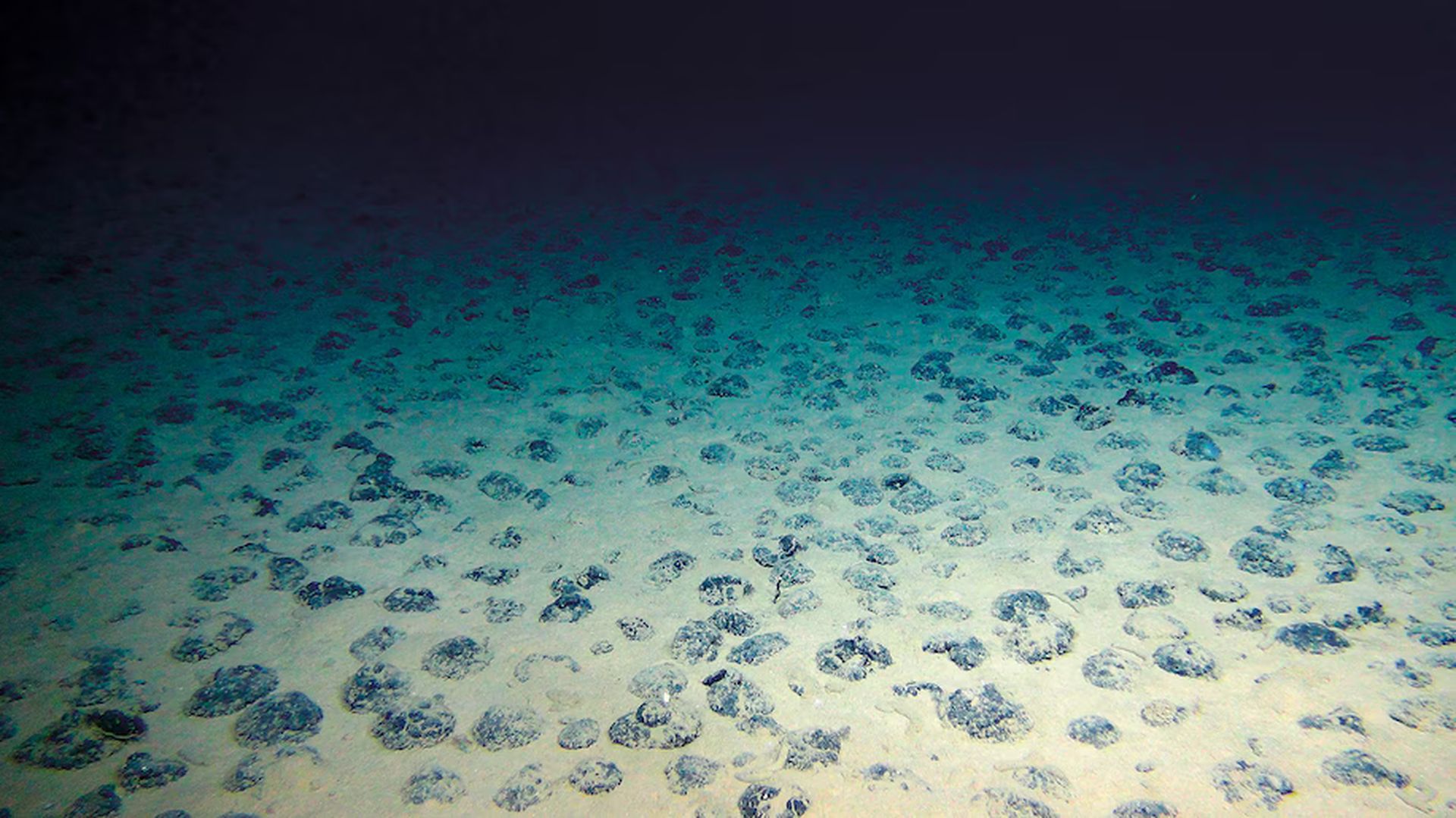
Explore the groundbreaking discovery of deep ocean dark oxygen: how underwater nodules create oxygen without sunlight?
(Credit: NOC/NHM/NERC SMARTEX)

Why does it matter?

The discovery of dark oxygen has significant implications for deep-sea ecosystems. Previously, it was thought that life in the deep ocean depended solely on oxygen transported from surface waters. However, the presence of dark oxygen suggests that there might be self-sustaining ecosystems in the deep sea, potentially supporting life forms that have adapted to these unique conditions.

The presence of deep ocean dark oxygen raises intriguing questions about the evolution of early life on Earth. It’s possible that dark oxygen played a crucial role in sustaining primitive life forms before photosynthesis became widespread.

Challenges for deep-sea mining

The discovery of dark oxygen adds complexity to the debate over deep-sea mining. As the demand for metals used in green technologies grows, these nodules are seen as a valuable resource. However, their role in oxygen production means that mining them could disrupt deep-sea ecosystems that rely on this oxygen source.

Scientists are urging for more research to fully understand the impact of extracting these nodules.


Generative AI sparks a drug discovery renaissance


Future

The discovery of dark oxygen is just the beginning. Scientists are now eager to explore how widespread this phenomenon is and whether similar processes might be occurring on other planets or moons. The potential for discovering new, self-sustaining ecosystems in the deep ocean is an exciting prospect for marine biologists and ecologists.

Advances in deep-sea exploration technology will be crucial for furthering our understanding of dark oxygen. Innovations in remotely operated vehicles (ROVs) and submersibles will allow scientists to explore these extreme environments more thoroughly and safely.


Featured image credit:  Eray Eliaçık/Bing

Tags: trends

Related Posts

Bitcoin climbs above ,000 as sentiment improves

Bitcoin climbs above $65,000 as sentiment improves

July 27, 2026
X to open-source full codebase in August, Musk says

X to open-source full codebase in August, Musk says

July 27, 2026
God of War Laufey launches on February 16th

God of War Laufey launches on February 16th

July 27, 2026
Apple delays smart glasses over privacy concerns

Apple delays smart glasses over privacy concerns

July 27, 2026
Huawei expected to unveil new devices in August

Huawei expected to unveil new devices in August

July 27, 2026
Apple prepares biggest iPhone redesign since iPhone X

Apple prepares biggest iPhone redesign since iPhone X

July 27, 2026

LATEST NEWS

Bitcoin climbs above $65,000 as sentiment improves

X to open-source full codebase in August, Musk says

God of War Laufey launches on February 16th

Apple delays smart glasses over privacy concerns

Huawei expected to unveil new devices in August

Apple prepares biggest iPhone redesign since iPhone X

BEST AI MODELS LEADERBOARD

See the best AI models, ranked by intelligence, benchmark results, speed and token price. Find the most suitable LLMs, Text-to-Image, Image Editing, Text-to-Speech, Text-to-Video and Image-to-Video  artificial intelligence model for your tasks and business.

LATEST TOOLS

Amanda AI

InterviewBot

VernAI

MyLoans

Essay Grader AI

Cover Letter AI

Animate Old Photos

Resume.io

MonAI

AIEngine Plugin

Dataconomy

COPYRIGHT © DATACONOMY MEDIA GMBH, ALL RIGHTS RESERVED.

  • About
  • Imprint
  • Contact
  • Legal & Privacy

Follow Us

  • News
    • Artificial Intelligence
    • Cybersecurity
    • DeFi & Blockchain
    • Finance
    • Gaming
    • Startups
    • Tech
  • Industry
  • Research
  • Resources
    • Articles
    • Guides
    • Case Studies
    • Whitepapers
    • AI Models Leaderboard
  • AI tools
  • Newsletter
  • + More
    • Glossary
    • Conversations
    • Events
    • About
      • Who we are
      • Contact
      • Imprint
      • Legal & Privacy
      • Partner With Us
No Result
View All Result
Subscribe

This website uses cookies to improve your experience. You can choose to accept or reject them. Visit our Privacy Policy.