
Unnoticed by many, Ukraine has been experiencing a world-class digital renaissance since 2014. It introduced one of the world’s first holistic e-government systems (business registration or marriage in 3 clicks, anyone?). It ranks #1 in the United Nation’s global E-Participation Index. It’s the first country in the world to give the same legal power to a digital ID as a physical one. In general, the Ukraine of 2026 has an affinity for digital commerce, one-tap payments, and cashless shopping as strong as its affinity for Borscht and fierce independence.
This culture of digital innovation was pioneered by a wave of IT and fintech companies that rose to prominence in 2014-2020. They have influenced societal habits, online business, and even state efficiency. Notably, innovation and growth has not only persisted but actually increased in times of war for many of these tech holdings. As a major part of Ukraine’s digital environment and its first fintech unicorn – we can lift the curtain a little on the hows and whys from our own company perspective.
How it all began: One friendly cat, dozens of high-tech systems
 Fintech-IT Group is lucky enough to have been at ground zero of the modern Ukrainian tech boom. Since our company’s inception in 2017, we’ve seen the country’s economy and commerce come a long way. Here’s a slice of life example: the distant memory of Kyiv’s massive subway running on plastic entry tokens bought in long queues… compared to the turnstiles of today beeping all day long with the sound of digital payments. To someone coming out of a coma from the year 2012, the country’s economy would be unrecognizable. We were there at the outset of this digital revolution – launching the first major neobank service in Ukraine.
8 years after its inception, monobank has become Ukraine’s 2nd largest bank in terms of card holders in the country, right after the state-owned one. What was once a newcomer has become an industry innovator, which feels like a humbling responsibility. We launched as a completely online banking product (zero physical branches) which was unheard of at the time. This was a digital-first strategy with an emphasis on remaining lean and agile, despite operating in a fairly old-school banking environment. Today, we’re no longer the ‘only game in town’, other banks have put digital transformation first among their priorities. So, we’re spurred even further to innovate within our lean branchless model, even as we’ve grown to a much larger scale.
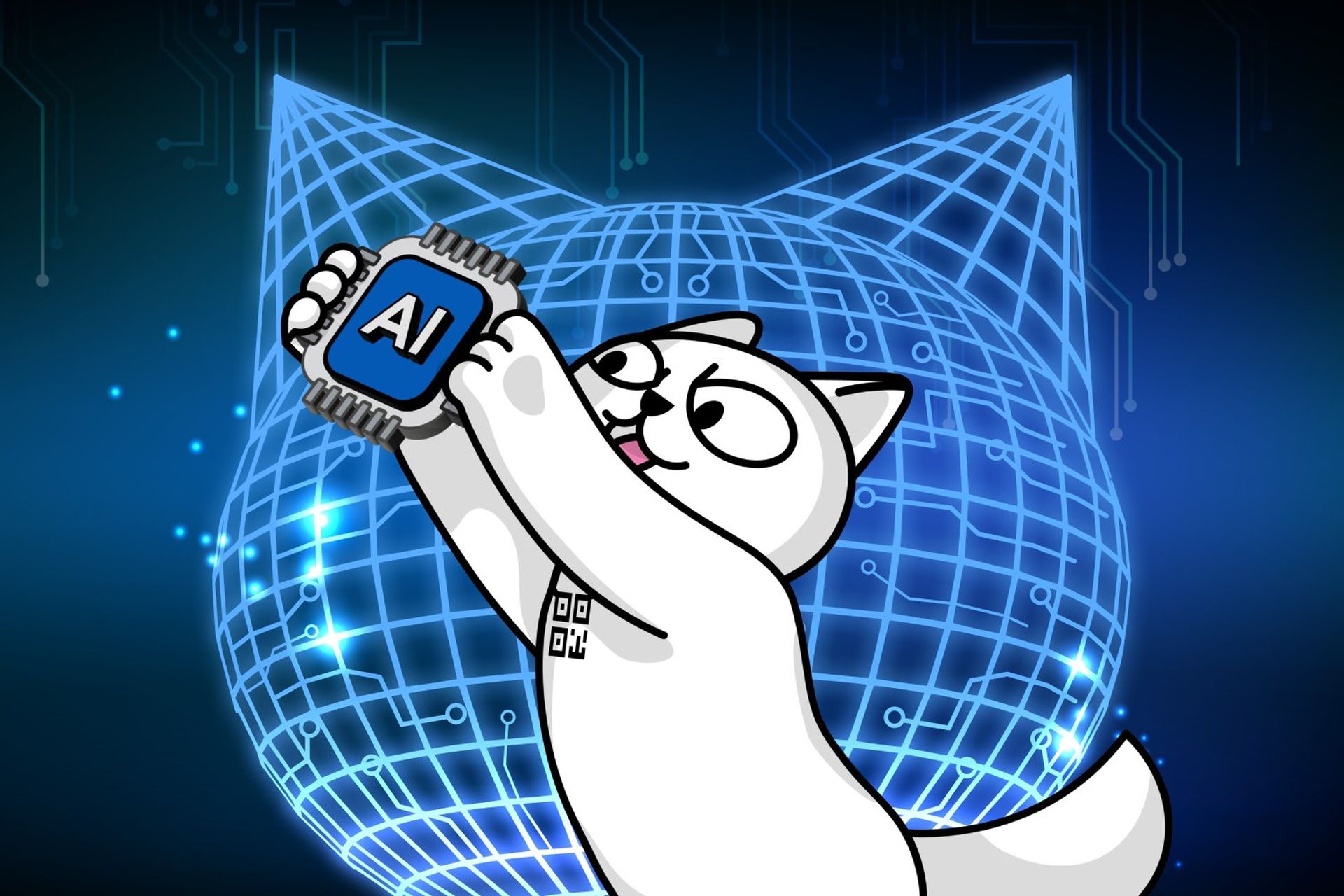
And while the face of the company is an animated cat that makes the bank feel approachable to anyone from a college student to a pensioner, what enabled success behind the scenes was an ecosystem approach. Dozens of internal and external products were integrated into a seamless environment. It started with a banking app that was ahead of its time and continues today with newer products being launched constantly: Expirenza (digital checkout and accounting for HoReCa), Base (a monetization platform for content-creators), monomarket (an in-app consumer marketplace), and monobazar (a resale platform). The complexity of the ecosystem has grown by orders of magnitude, as has Ukraine’s entire fintech sector. It’s an environment that demands constant care and a thoughtful touch to keep your products purring. And that’s the moment where AI enters the scene.
AI adoption: Marrying disruptive tech with an established brand
AI has been a definite growth factor in the mono ecosystem’s product strategy. While the temptation of generalized AI integration swept the globe, we stuck with our core philosophy: identifying and addressing real customer needs within the products. Essentially, we used AI to address pre-existing issues or opportunities. Complicated bank transfers that confuse or annoy clients are now auto-filled by AI; sellers on the monobazar can use AI to generate compelling sales-driven descriptions; monomarket provides AI assistance in creating marketing templates, etc.
A key element of our AI approach is to ensure it’s non-intrusive and doesn’t sour the existing relationship of the user and the product. The newer of our two marketplaces – monobazar is a resale platform designed to emulate trading between friends. It has a robust feature list that requires us to design user interactions thoughtfully: it offers AI assistance in sales copy, has bidding functionality, bookmarks for favorite sellers, and more. We made a purposeful effort to make sure the AI component doesn’t overload an already complex environment, and that the assistance functionality doesn’t override our trademark friendly unobtrusive communication.
Overall, the philosophy driving mono product development is to give more value than one would expect from competitors on the market. It’s a short statement, but a big ask. So, we have to balance fairly ambitious R&D with a digital environment that customers view as familiar and comfortable. It’s a philosophy coincidentally reflected in Will Guidara’s bestselling book referenced by mono co-founder Mykhailo Rogalskyi:
“…the answer to some of the most pernicious business dilemmas is to give more — not less…”
– Will Guidara, The Remarkable Power of Giving People More Than They Expect
Historically, the tech holding behind the mono ecosystem is no stranger to AI integration: even before the current advent of LLMs, we used Big Data-based AI for credit analytics. Both then and now, the approach has been surgical rather than broad. The company has a formalized AI strategy, and each of its integration instances has a clearly defined goal and application — be it in product development, marketing or HR. In the era of burnout and external stressors, offering both your employees and your clients AI assistance needs to be targeted. Specifically, at addressing extant friction.
AI impacts: Market trends and integration practices
Beneath every customer-facing product there’s always a larger iceberg of tech infrastructure and human effort. With monobank, internal efficiency has always been the “secret sauce” of the product. It’s why customers came in the first place: to get a card, create an account, and resolve any issue digitally within minutes. But how do you retain this competitive advantage in a world that’s getting faster every day? You keep moving.
The mono ecosystem relies to this day on automation and team cohesion to satisfy client expectations. Introducing something as powerful as AI into the equation always has a risk of disrupting a delicate balance. In a market like fintech, built both on service excellence and tech disruption – we can neither afford the “why fix what’s not broken” nor the “move fast and break things” philosophies. Innovation in this space is an art of threading the needle.
We’ve rolled out our AI integrations selectively and in a targeted manner to satisfy the tension between service and innovation. Goals are carefully defined by strategic planning and the integration itself is curated by human managers. As a result, we’ve managed to achieve better process optimization rather than treat our operational environment as a petri dish with AI as an experimental variable.
Internally, Fintech-IT Group has been integrating AI assistance into numerous facets of the company: development, marketing, financial analysis, HR and more. This ranges from drier tasks in data streamlining, to the more human area of team support. Additionally, the holding has a platform for the creation of AI agents that’s in an earlier stage of integration. It’s being worked on within the company with an outlook toward increasing future capabilities.
Perhaps unusually, our company doesn’t see AI as a factor that will push the market towards less human work. We already expect the need for AI-engineers and MLOPs specialists to rise considerably in 2026. It’s about rebalancing labor rather than reducing it.The Overlooked Pillar Of Digital Success: Community Engagement
Ukraine has always been a country of horizontal innovation. It was a low-expense IT talent hub all the way back in the 90s, and leads the world in drone tech breakthroughs under the pressures of war. The country has proven time and again that it thrives on community know-how – something that isn’t owned by any one tech giant. The country’s IT holdings have always made an effort to engage with that tech community, to the benefit of all involved.
The mono ecosystem has grown to be one of the pillars of Ukraine’s tech industry. As such, we have strong ties to educational programmes, and even have some of our own. A recent example is our AI internship initiative. It was launched as an experiment in 2025, and has since shown that there’s an incredible interest and thirst among young specialists to master the practical applications of AI in business.
The program reached out to professionals and college students with at least a basic grasp of Python, Java, Go, and/or data science. The premise was simple: compete in creating the most innovative AI projects under the mentorship of senior mono ecosystem developers. To the up-and-comers of the industry, it offered a chance to work in one of the cutting-edge Ukrainian tech environments. To the industry innovator (us) it was a chance to engage the country’s tech community to enrich our teams with a young vibrant talent pool, and eventually – scale up our AI ecosystem. In 2025, we received more than 1250 applications. The amount of applications nearly tripled in 2026. The program is now ramping up, with plans to hold it multiple times per year.
Resilience powering innovation
In a country at war, resilience equals community. This is a lesson that’s been learned by every citizen and nearly every business in Ukraine. Being at the top imparts a responsibility — both to your employees and the country at large. Regular fundraising for air defense, de-mining, and humanitarian aid is a constant reality for Ukraine’s IT firms, but instead of being a burden, it has become a superpower.
Dozens of charity drives since February 2022, high standards of employee support, and an unbeatable positive outlook on the future of tech, business and human connection — that’s what has powered resilience in the Ukrainian tech scene.
An example we can personally be proud of is monobank’s ‘Jar’ group-funding feature (also known as ‘Banka’). It has without exaggeration become the most ubiquitous fundraising tool among Ukrainian volunteers. The feature has enabled growth of donations and volunteer campaigns, providing steady engagement of civil society.
When it comes to commercial development, the Ukrainian IT sector has not only weathered the storm and survived, but has also kept up product innovation at a remarkable pace.
To us, this proves that innovation in a business with strong ties to its society isn’t only possible, but — nearly unstoppable. Being part of a larger cause — makes a client feel like more than just a consumer. Being part of a resilient business — makes an employee feel like more than just a worker. That’s part of building a sustainable brand. One that thrives even during war.