The AI market still has extraordinary valuations, but the investor conversation is changing. The next test is not whether startups can tell a big story. It is whether they can turn experiments into enterprise deployment.
The AI market is still hot, but the questions are changing
Infrastructure spending is rising AI investment has not slowed into caution. If anything, the market is still moving at extraordinary speed. Infrastructure spending is rising, agentic tools are becoming a larger software category, and major AI companies continue to attract capital at valuations that would have seemed difficult to imagine even two years ago.
But the investor question is starting to change.
The first phase of the generative AI boom rewarded possibility. The next phase is more demanding. Investors still want frontier technology, but they also want to know where the product fits, how it reaches enterprise customers, whether it aligns with real workflows, and whether proof-of-concepts can become contracts.
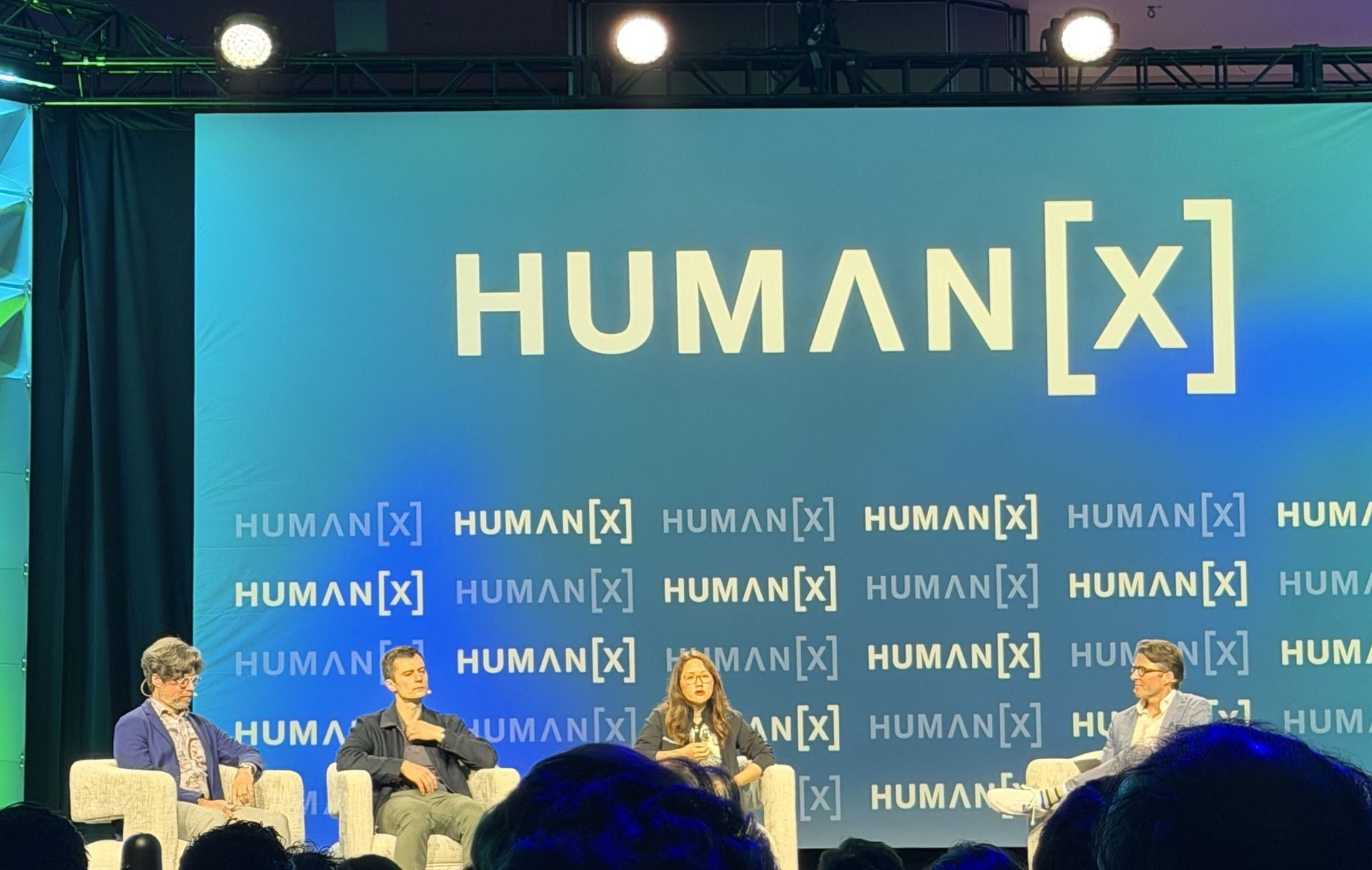
That is why the IBM Ventures conversation at HumanX San Francisco felt especially useful. It captured an evolution in AI investing: from chasing demos to testing strategic fit, enterprise readiness, and measurable deployment.
HumanX as an investor market
Emily Fontaine, Head of IBM Ventures, described HumanX as a strong environment for investors to meet startups, but not necessarily as the best place for enterprise customer acquisition.
That distinction is important. Some AI events are built around buyers. HumanX, in Fontaine’s view, was more focused on startups, investors, and ecosystem-building. It was a place to see companies, scan the market, and continue follow-up conversations.
For IBM Ventures, that matters because the purpose is not only financial exposure. The venture arm is part of IBM’s strategy machine. It looks for companies that can fill gaps, enhance current capabilities, become ecosystem partners, or create opportunities for collaboration with IBM Research.
That makes the investor lens different from a purely financial VC. IBM Ventures still wants strong returns, but it is also looking for alignment: where the market is going, where IBM needs capabilities, and which startups can help drive commercial growth through the portfolio.
The $500 million enterprise AI lens
Fontaine pointed to IBM’s $500 million AI fund as the center of that strategy. The fund focuses on B2B startups driving enterprise AI responsibly and at scale, across the stack: hardware, infrastructure, software, and increasingly vertical AI.
That last point is notable. In the early generative AI boom, much of the attention went to horizontal tools: general assistants, generic copilots, broad productivity layers. Now, investors are looking more closely at vertical use cases and infrastructure layers that solve specific enterprise problems.
Fontaine mentioned portfolio companies including Unstructured, Writer, Ceramic, Commodore, Atolio, Not Diamond, and Reality Defender. The examples suggest a broad thesis: enterprise AI needs data infrastructure, model optimization, security, deepfake detection, and applications that fit business environments rather than consumer behavior.
Unstructured data was one example. Fontaine noted that a majority of data is now unstructured, making it a strategic imperative for enterprise AI architecture. That connects directly to IBM’s broader activity in enterprise data, including acquisitions and product moves around governed, real-time, AI-ready data.
The pattern is clear: the companies that matter to strategic investors are not only building models. They are building missing pieces of the enterprise AI operating system.
For IBM Ventures, the question is not only whether an AI startup can grow fast. It is whether the company fits a strategic enterprise need: filling a capability gap, strengthening IBM’s ecosystem, opening commercial opportunities, or connecting with IBM Research.
Quantum is part of the same ecosystem logic
The conversation also moved into quantum, which is especially relevant for the European market. Fontaine said IBM Ventures is mapping the quantum startup landscape, investing in early-stage companies, and looking for gaps where IBM can help build the ecosystem.
She mentioned Qedma, which works on error mitigation, as one recent investment. IBM has also continued to invest heavily in quantum infrastructure and ecosystem development, including recent announcements around quantum foundry capacity and long-term quantum computing investment.
That may seem separate from AI, but it follows the same strategic logic. IBM Ventures is not only looking at what is monetizable this quarter. It is looking at where capabilities need to exist for the next enterprise computing cycle.
In both AI and quantum, the venture thesis is ecosystem-first: identify missing layers, support technical startups, connect them to research and enterprise channels, and build around long-term capability gaps.
From experimentation to execution
The most important part of the interview was Fontaine’s view of enterprise AI timing.
She described 2025 as the year of experimentation. Companies ran proofs of concept, tested use cases, and tried to understand what AI could do. But in 2026, she argued, the market has to move toward execution.
“I do think 2026 is going to be the year for enterprise AI,” she said. Companies, in her view, are starting to find ROI and convert pilots into actual client engagements and contracts.
That conversion is the signal investors care about. A proof of concept is not enough. A good demo is not enough. The question is whether the capability matters enough for an enterprise customer to put it into production, pay for it, and build workflows around it.
This is also where valuations become more complicated. Fontaine was direct: “The valuations are crazy.” But she did not frame that as a reason to stop investing. Instead, she framed it as a reason for better diligence.
The investor has to understand the assumptions, the risks, the strategic fit, and the reason for the bet. For a strategic investor, the question is not only whether a startup can become valuable. It is whether the company aligns with where the enterprise market is going.
Strategic capital has to do more than buy exposure
That is why Fontaine emphasized founder fit and strategic value. IBM Ventures does not require startups to commercialize with IBM, but its value comes from opening doors: global clients, partners, mentors, go-to-market opportunities, and collaboration across the ecosystem.
Her advice to startups was clear: they should interview the strategic investor as much as the investor interviews them. The relationship has to work for both sides. If IBM is not the right strategic partner to help fuel revenue and growth, then the deal may not be right for either side.
That is a useful way to understand the post-hype AI investment market. Capital alone is abundant, at least for the right companies. What is scarcer is the ability to turn capability into deployment.
The best strategic investor is not only buying a seat on the cap table. It is helping a startup reach the enterprise systems, buyers, researchers, and commercial relationships that make the technology real.
What investors are really looking for now
The AI hype cycle is not over. But the market is becoming more selective about what kind of hype deserves capital.
Investors are looking for companies that can survive the move from experiment to production. They want enterprise relevance, defensible technology, data strategy, security, responsible deployment, and a clear path from pilot to contract. They want companies that can answer not only why the technology is impressive, but why it belongs inside a real enterprise workflow.
That is what made the IBM Ventures conversation useful beyond HumanX. It showed the investor lens transforming from excitement to execution.
The next generation of AI startups will still need ambition. But ambition is no longer enough. The winners will be the companies that can turn AI capability into enterprise trust, commercial value, and systems that work when the demo is over.