In the early stages of digital voice recording, the goal was simple: capture sound and play it back. For decades, voice recorders functioned as passive tools—repositories of raw audio that users later had to review manually. As artificial intelligence advanced, transcription emerged as the first major improvement in digital note-taking.
However, even transcription remained largely static, focused on converting audio to text without understanding the meaning behind the content.
Today, devices like the Mobvoi TicNote AI represent a new paradigm. They are no longer limited to recording and transcription, they incorporate contextual AI that interprets and connects information. This article explores how AI recorders have moved beyond passive listening and toward a more active, multimodal form of understanding.
The shift from transcription to interpretation
Traditional voice recorders offered limited utility beyond archival purposes. Their job was to capture sound; the burden of making sense of that sound remained on the user. As AI-based transcription became mainstream, users began to experience improved workflows: journalists could transcribe interviews faster, students could revisit lectures in text format, and professionals could skim meetings more efficiently.
But transcription alone is not intelligence. True context-aware systems need to recognize what is being said, who is speaking, and which segments carry importance. This forms the basis of agentic AI—a class of tools that take initiative, surface meaning, and link information across multiple modalities.
The Mobvoi TicNote AI reflects this progression by introducing capabilities that move well beyond basic voice-to-text conversion.
Shadow & projects: Multimodal capture with AI understanding
One of the key indicators of this transition is Shadow AI, Mobvoi’s embedded assistant that not only transcribes audio but categorizes and analyzes it across different projects. Whether it’s voice, images, or uploaded documents, Shadow brings these sources together to generate concise summaries and highlight key themes.
This is a notable step forward in human-AI collaboration. Instead of a user having to manually organize notes after a meeting or lecture, Shadow categorizes them into structured formats. It recognizes tasks, highlights key points, and provides suggestions on related content—a process akin to having a real-time research assistant.
By managing Projects, users can track long-term threads across conversations and documents. The result is an assistant that supports the user’s thinking process rather than simply capturing information.
Deep Research: AI as a cognitive extension
Another shift in AI capability is represented by the Deep Research feature. With this, the TicNote AI doesn’t just transcribe or summarize content—it allows the user to ask questions across all recorded and uploaded material.
This means a user can ask, “What did Dr. Chen say about market risk in the last board meeting?” or “Summarize my conversations about product launch strategy,” and the AI will retrieve relevant excerpts, contextually linked to specific times and sources.
This type of interaction positions the AI as a practical extension of the user’s knowledge workflow rather than a simple device. In effect, it narrows the gap between stored information and meaningful understanding by providing context-aware retrieval.
Aha moments: From linear notes to nonlinear discovery
Human thinking is rarely linear. A comment made in a meeting might connect with a detail from a previous interview or relate to a concept in a document uploaded weeks ago. TicNote’s Aha Moments feature reflects this pattern by identifying hidden relationships and emerging connections across stored content.
This approach contrasts sharply with traditional recording tools that operate in chronological isolation. Instead, Mobvoi’s AI framework actively surfaces new associations, offering users contextual suggestions that often go unnoticed in manual reviews.
This feature supports researchers, strategists, and innovators who depend on cross-referencing varied data to identify trends or inconsistencies. It’s a form of AI-powered intuition.

Voiceprint Recognition and organization by speaker
One of the most practical—and intelligent—features of the TicNote AI is AI Voiceprint Recognition. It identifies and labels speakers automatically, a task that typically requires manual tagging or pre-set instructions in other tools.
This is particularly useful in team meetings, multi-speaker interviews, or panel discussions, where it’s important to track who said what. Combined with transcription and deep search, this speaker-level tagging turns recorded conversations into structured, searchable records rather than unstructured audio files.
The result is a significant increase in retrieval efficiency and organizational clarity, helping users maintain better records without extra effort.
AI Podcast Mode: Voice as a format, not just a file
TicNote AI introduces a unique capability through its AI Podcast Mode, which transforms raw recordings into narrative-style audio. Users can select different voices for narration, allowing for creative expression or privacy control.
This redefines what a “recording” can become. Instead of being limited to static playback, a voice memo can evolve into a produced segment, useful for podcasters, educators, or professionals who want to repurpose meetings into internal communications.
While this feature may not be central to all users, it illustrates how AI can reformat content dynamically, expanding its usability and reach.
Contextual intelligence in practice: Who benefits?
The evolution from recorder to thinker is not abstract—it aligns with the concrete needs of specific user groups:
- Business professionals benefit from structured meeting notes, searchable archives, and speaker-level transcription.
- Students and academics gain from voiceprint tagging, contextual summaries, and AI-generated study materials.
- Media professionals can accelerate content production through instant podcast conversion and interview analysis.
- Researchers and knowledge workers use deep search and insight mapping to connect ideas across timelines.
- Global travelers make use of compact, low-profile recording with high-accuracy transcription across 120+ languages.
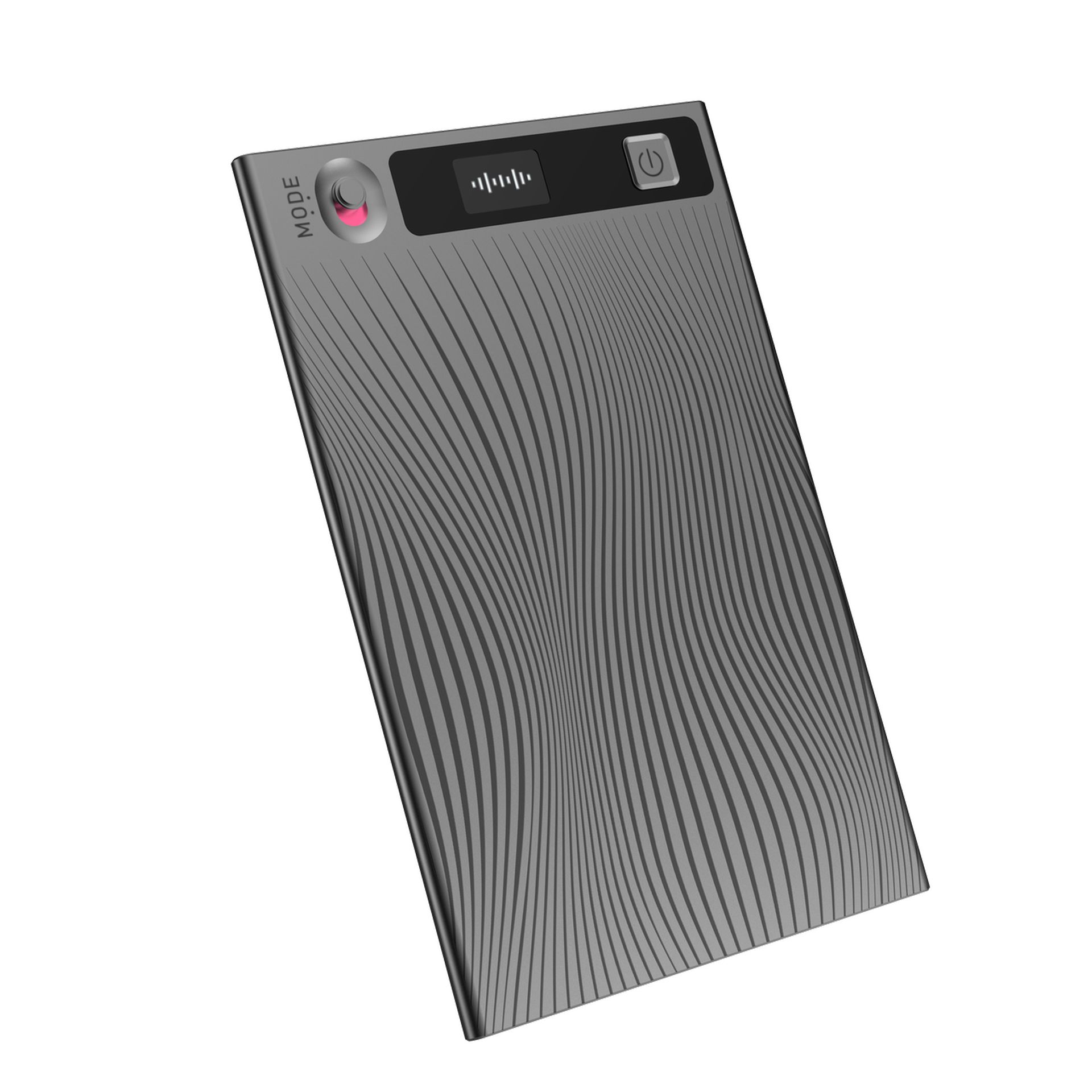
These use cases reflect a growing need for devices that go beyond recording, tools that help users understand, discover, and apply information across complex workflows.
The new standard for smart recording
The Mobvoi TicNote AI is not just a device, it’s a reflection of where AI voice technology is headed. Tools like this show how recording is evolving beyond simple capture and moving into more agentic, context-aware forms of cognition.
As AI becomes more integrated into everyday productivity, the expectation is no longer just speed or accuracy. It’s about intelligence, the ability to surface meaning, assist decision-making, and turn raw data into structured insight.
This transition marks an important stage in how digital tools evolve toward more contextual, intelligent behavior. And the TicNote AI, in many ways, sits at the frontier of that transformation.