Anthropic has launched Claude 3.7, the world’s first AI model capable of producing either standard output or a controllable amount of “reasoning” to address complex problems. This hybrid model is designed to enhance user and developer interaction by allowing a balance between instinctive responses and methodical reasoning.
Anthropic unveils Claude 3.7: The first hybrid reasoning AI model
Michael Gerstenhaber, product lead at Anthropic, stated, “The [user] has a lot of control over the behavior—how long it thinks, and can trade reasoning and intelligence with time and budget.” Claude 3.7 introduces a “scratchpad” feature that displays the model’s reasoning process, drawing inspiration from the popular Chinese AI model DeepSeek. This functionality aids users in comprehending the model’s approach to problem-solving, facilitating prompt adjustments.
Dianne Penn, product lead of research at Anthropic, emphasized the effectiveness of the scratchpad in tandem with the adjustable reasoning capability. Users may instruct the model to allocate more time for problem resolution if initial attempts do not yield the desired breakdown.
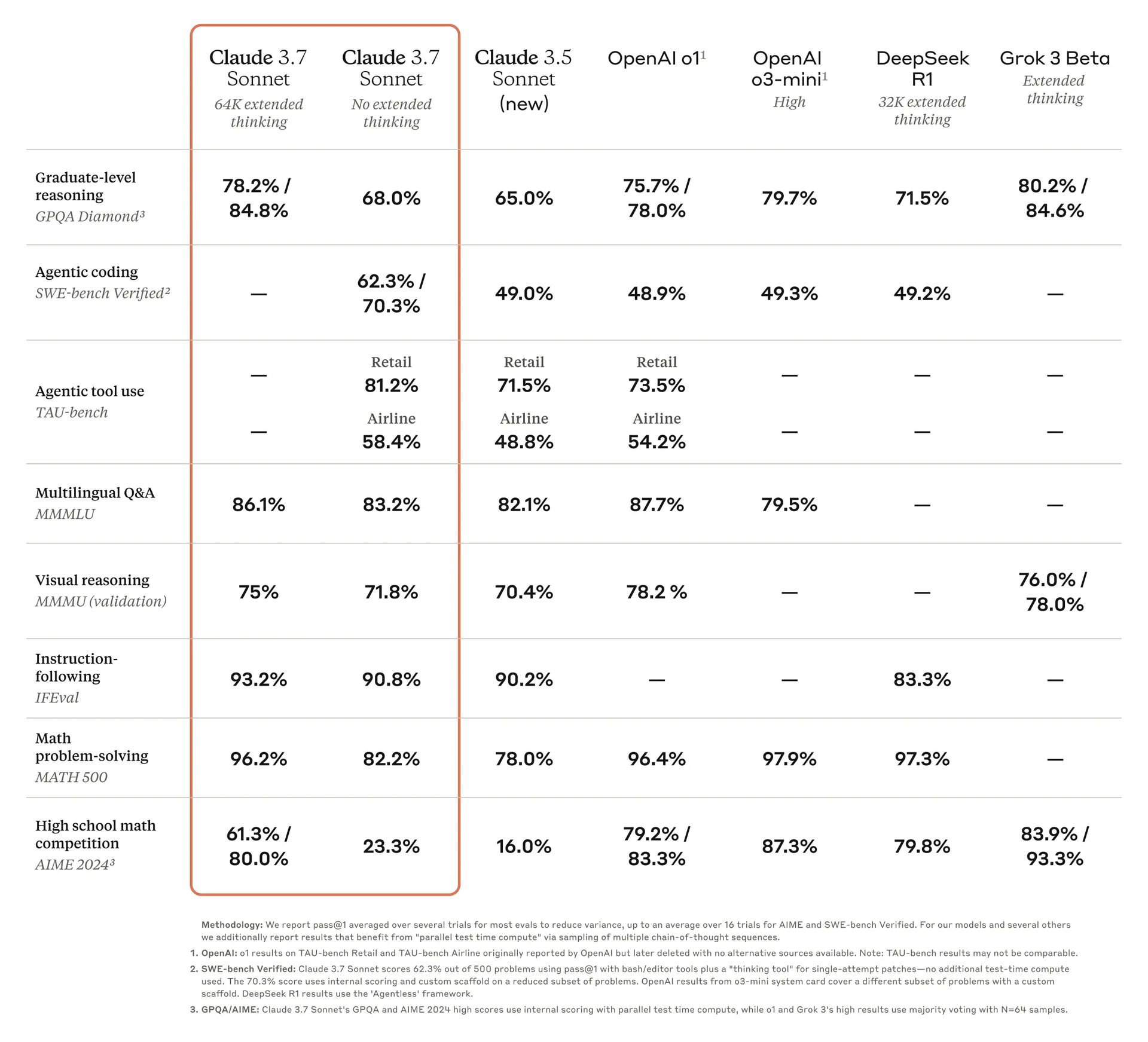
Claude 3.7’s hybrid structure distinguishes it from competitors. While OpenAI released a reasoning model called o1 in September 2024, and later a more robust version named o3, both require users to switch between models to access reasoning features. Anthropic’s Claude 3.7 allows for seamless toggling between conventional responses and extended reasoning, a significant advantage.
The hybrid model aligns with the reasoning frameworks described by Nobel-prize-winning economist Daniel Kahneman in his book “Thinking, Fast and Slow,” offering both instinctive and deliberate cognitive processes. Standard models, such as large language models (LLMs), typically generate instant responses but may falter in tasks requiring thorough reasoning, such as arithmetic calculations.
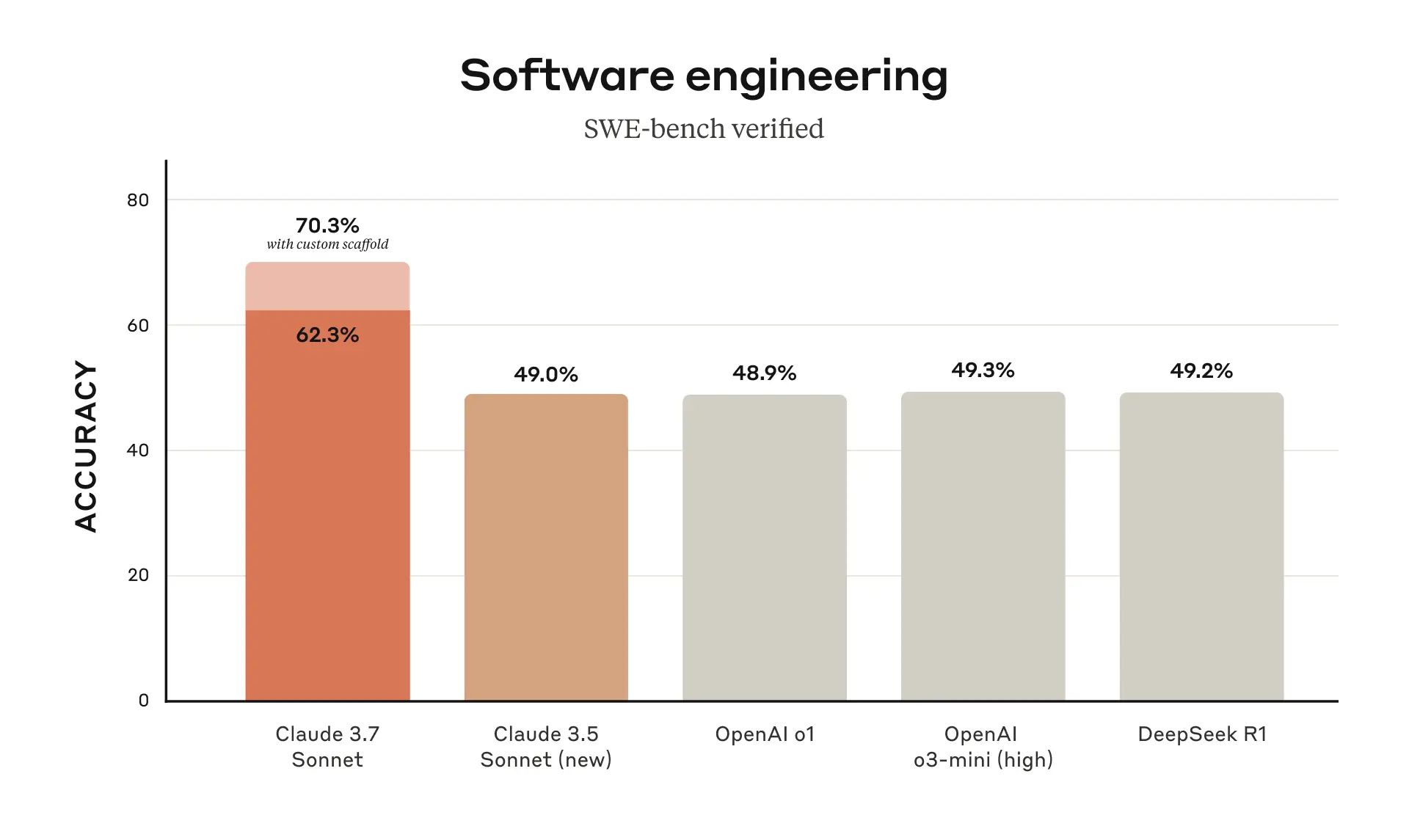
To enhance Claude 3.7’s capabilities, Anthropic employed reinforcement learning to train the model with additional data focusing on business applications like coding and legal inquiries. Penn noted that “the things that we made improvements on are […] technical subjects or subjects which require long reasoning.” The model has outperformed OpenAI’s o1 in specific frameworks like SWE-bench when tackling complex coding challenges.
Claude AI can now mirror your writing style perfectly
Claude Code
The company has introduced Claude Code, a new tool designed to assist with AI-driven coding tasks, which performs well in complex scenarios. “The model is already good at coding,” Penn added. “[But] additional thinking would be good for cases that might require very complex planning—say you’re looking at an extremely large code base for a company.”
Claude 3.7 Sonnet is available across all Claude plans—Free, Pro, Team, and Enterprise—as well as through the Anthropic API, Amazon Bedrock, and Google Cloud’s Vertex AI. The model maintains the same pricing structure as its predecessors: $3 per million input tokens and $15 per million output tokens, which includes thinking tokens.
Anthropic has developed Claude 3.7 Sonnet with a philosophy that integrates reasoning as a core component of the model. It functions both as an upgraded ordinary LLM and a reasoning model, allowing users to choose when they want direct responses or longer, more reflective answers. In extended thinking mode, Claude 3.7 refines its responses, enhancing performance on tasks in math, physics, instruction-following, and coding.
Using Claude 3.7 Sonnet through the API, users can control their “thinking” budget by specifying a maximum number of tokens. This flexibility allows users to prioritize speed versus the quality of the result.
Claude’s recent evaluations indicate leadership in coding capabilities across multiple platforms. Cursor recognized Claude as being best-in-class for real-world coding tasks, with advancements in managing intricate codebases. Cognition reported superior performance in planning code alterations, while Vercel noted its accuracy in navigating complex agent workflows. Replit has effectively employed Claude for the development of sophisticated web applications, and tests conducted by Canva revealed that Claude consistently delivers production-ready code with improved design quality and significantly fewer errors.
Claude Code, currently in limited research preview, functions as a collaborative tool that can read, edit code, run tests, and interact with GitHub, streamlining the coding process. Early tests have shown that Claude Code can accomplish tasks in a single session that usually require extensive manual effort. Future enhancements will focus on tool reliability, long command support, and improved performance.
Anthropic has emphasized its commitment to developing Claude 3.7 Sonnet with a focus on security, safety, and reliability. Claude 3.7 has made discernible distinctions between benign and harmful requests, achieving a 45% reduction in unnecessary refusals compared to its predecessor. The accompanying system card details safety evaluations that could benefit other AI research initiatives and addresses emerging risks, including prompt injection attacks.
Claude 3.7 Sonnet and Claude Code represent significant advancements toward AI systems that can effectively support human capabilities by integrating deep reasoning and autonomous collaboration.
Featured image credit: Anthropic