Dataconomy
  • News
    • Artificial Intelligence
    • Cybersecurity
    • DeFi & Blockchain
    • Finance
    • Gaming
    • Startups
    • Tech
  • Industry
  • Research
  • Resources
    • Articles
    • Guides
    • Case Studies
    • Whitepapers
    • AI Models Leaderboard
  • AI toolsNEW
  • Newsletter
  • + More
    • Glossary
    • Conversations
    • Events
    • About
      • Who we are
      • Contact
      • Imprint
      • Legal & Privacy
      • Partner With Us
Subscribe
No Result
View All Result
  • AI
  • Tech
  • Cybersecurity
  • Finance
  • DeFi & Blockchain
  • Startups
  • Gaming
Dataconomy
  • News
    • Artificial Intelligence
    • Cybersecurity
    • DeFi & Blockchain
    • Finance
    • Gaming
    • Startups
    • Tech
  • Industry
  • Research
  • Resources
    • Articles
    • Guides
    • Case Studies
    • Whitepapers
    • AI Models Leaderboard
  • AI toolsNEW
  • Newsletter
  • + More
    • Glossary
    • Conversations
    • Events
    • About
      • Who we are
      • Contact
      • Imprint
      • Legal & Privacy
      • Partner With Us
Subscribe
No Result
View All Result
Dataconomy
No Result
View All Result

V-JEPA: Meta’s answer to complex video understanding

A new approach to understanding visual data, enhancing efficiency, adaptability, and versatility across various applications

byEray Eliaçık
February 16, 2024
in Artificial Intelligence
Home News Artificial Intelligence
Share on FacebookShare on TwitterShare on LinkedInShare on WhatsAppShare on e-mail
Google Preferred Source

Meta’s latest innovation, the V-JEPA model, is here to change how computers comprehend videos. Unlike traditional methods, V-JEPA focuses on understanding the bigger picture, making it easier for machines to interpret interactions between objects and scenes.

What is Meta’s new V-JEPA model?

Meta’s new V-JEPA model, or Video Joint Embedding Predictive Architecture, is a cutting-edge technology developed to understand videos in a way that’s similar to how humans do. Unlike traditional methods that focus on tiny details, V-JEPA looks at the bigger picture, like understanding interactions between objects and scenes.

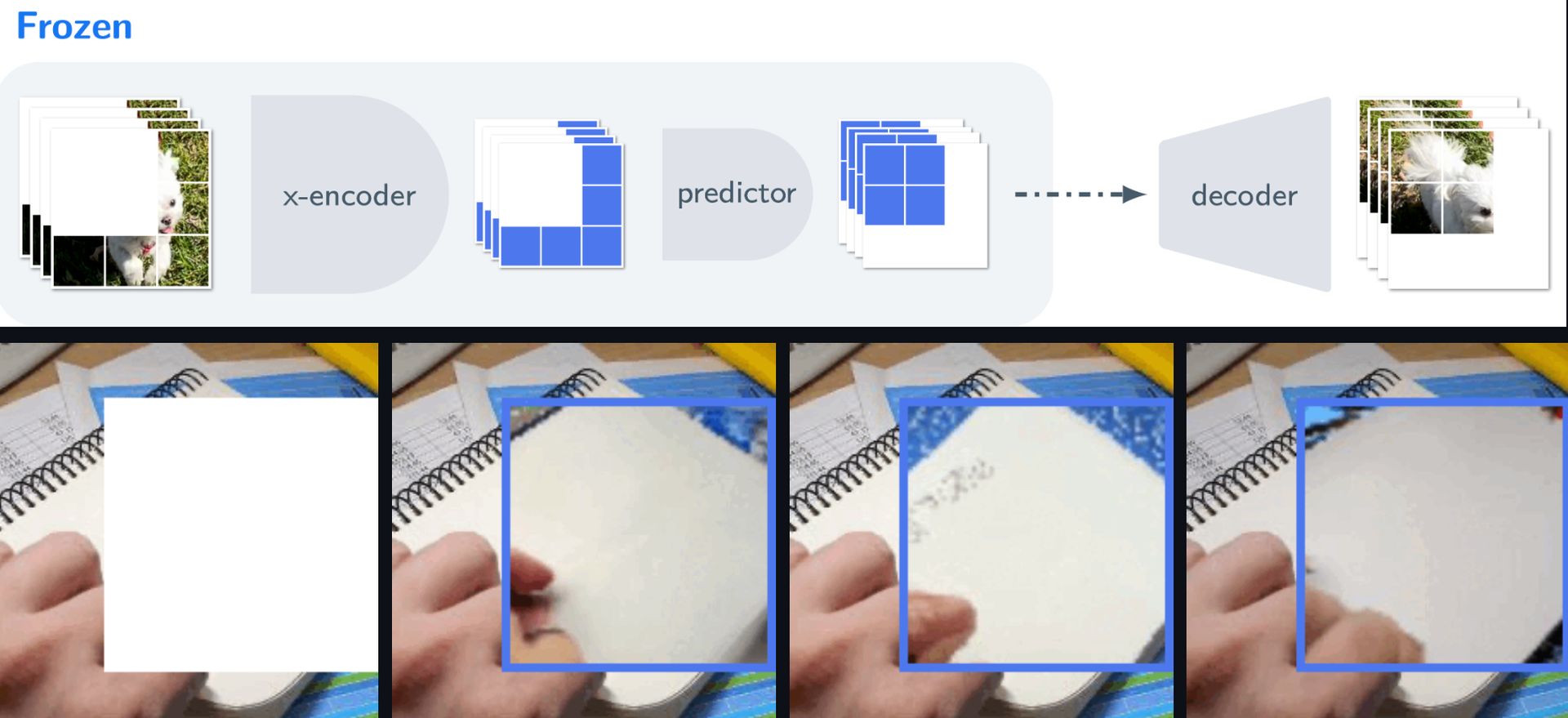
Is V-JEPA generative? Unlike OpenAI’s new text-to-video AI tool, Sora AI, Meta’s V-JEPA model is not generative. Unlike generative models that attempt to reconstruct missing parts of a video at the pixel level, the model focuses on predicting missing or masked regions in an abstract representation space. This means that the model does not generate new content or fill in missing pixels directly. Instead, it learns to understand the content and interactions within videos at a higher level of abstraction, enabling more efficient learning and adaptation across tasks.
Stay Ahead of the Curve!

Don't miss out on the latest insights, trends, and analysis in the world of data, technology, and startups. Subscribe to our newsletter and get exclusive content delivered straight to your inbox.

Seeing the bigger picture: Discover Meta's V-JEPA: A new model redefining video comprehension, efficiency, and adaptability in AI.
META’s the model model revolutionizes video comprehension, prioritizing holistic understanding over pixel-level details (Image credit)

What makes V-JEPA special is how it learns. Instead of needing lots of labeled examples, it learns from videos without needing labels. It’s like how babies learn just by watching and don’t need someone to tell them what’s happening. This makes learning faster and more efficient. It focuses on figuring out missing parts of a video in a smart way, instead of trying to fill in every detail. This helps it learn faster and understand what’s important in a scene.

Another cool thing about V-JEPA is that it can adapt to new tasks without needing to relearn everything from scratch. This saves a lot of time and effort compared to older methods that had to start over for each new task.

To get the code, click here and visit its GitHub page.

Seeing the bigger picture: Why is V-JEPA important?

Meta’s V-JEPA is a big step forward in AI, making it easier for computers to understand videos like humans do. It’s an exciting development that opens up new possibilities, such as:

  • Understanding videos like humans: V-JEPA represents a notable advancement in the field of artificial intelligence, particularly in the domain of video comprehension. Its ability to understand videos at a deeper level, akin to human cognition, marks a significant step forward in AI research.
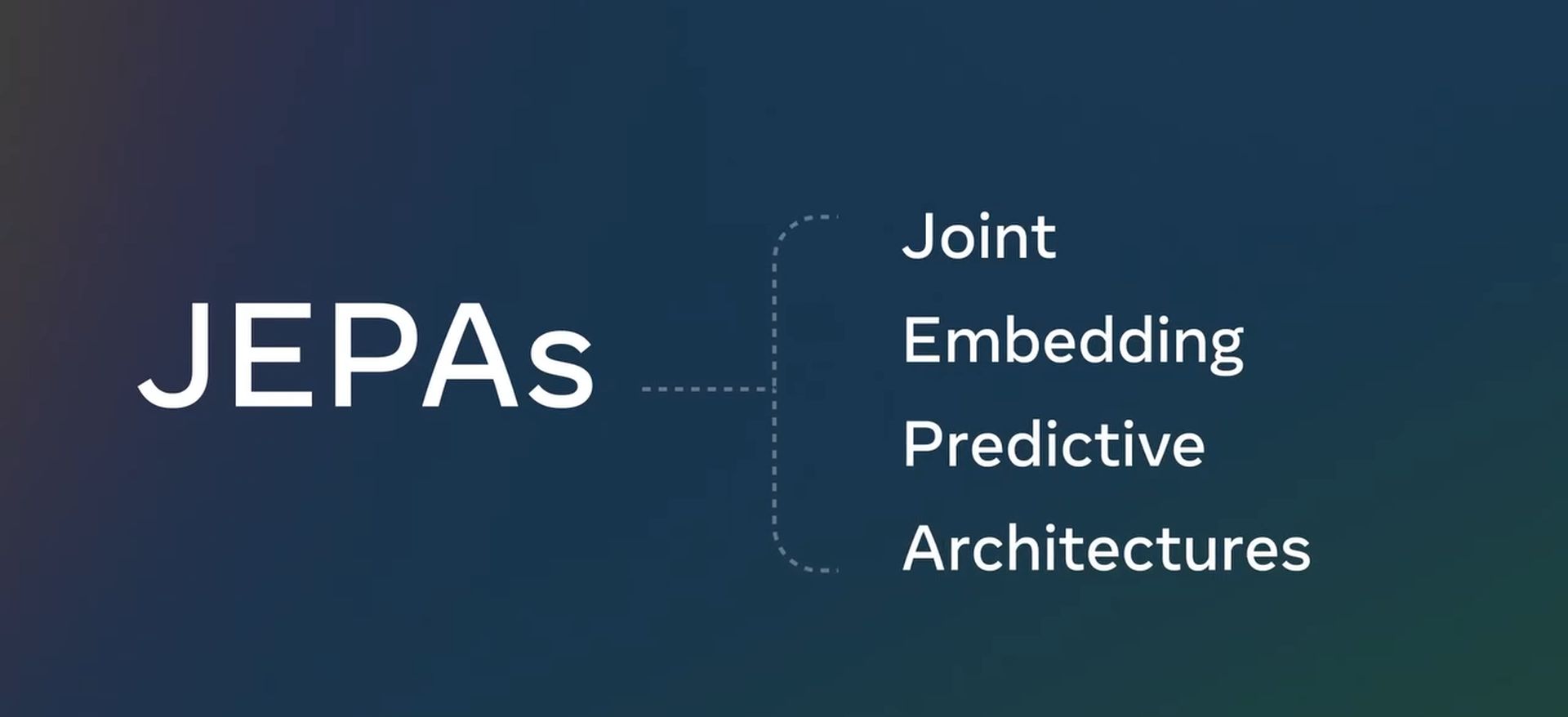
Seeing the bigger picture: Discover Meta's V-JEPA: A new model redefining video comprehension, efficiency, and adaptability in AI.
By predicting missing regions in videos using abstract representations, the model boosts efficiency and adaptability (Image credit)
  • Efficient learning and adaptation: One of the key aspects of the model is its self-supervised learning paradigm. By learning from unlabeled data and requiring minimal labeled examples for task-specific adaptation, V-JEPA offers a more efficient learning approach compared to traditional methods. This efficiency is crucial for scaling AI systems and reducing the reliance on extensive human annotation.
  • Generalization and versatility: V-JEPA’s capability to generalize its learning across diverse tasks is noteworthy. Its “frozen evaluation” approach enables the reuse of pre-trained components, making it adaptable to various applications without the need for extensive retraining. This versatility is essential for tackling different challenges in AI research and real-world applications.
  • Responsible open science: The model’s release under a Creative Commons NonCommercial license underscores Meta’s commitment to open science and collaboration. By sharing the model with the research community, Meta aims to foster innovation and accelerate progress in AI research, ultimately benefiting society as a whole.

In essence, Meta’s V-JEPA model holds significance in advancing AI understanding, offering a more efficient learning paradigm, facilitating generalization across tasks, and contributing to the principles of open science. These qualities contribute to its importance in the broader landscape of AI research and its potential impact on various domains.


Tags: Meta

Related Posts

The Atlantic uncovers millions of copyrighted songs in AI training data

The Atlantic uncovers millions of copyrighted songs in AI training data

June 16, 2026
Meta brings AI-powered photo editing and chat features to Facebook

Meta brings AI-powered photo editing and chat features to Facebook

June 16, 2026
AI Hallucinations in Software Engineering: GitHits Raises .75M to Build the “Google for Code”

AI Hallucinations in Software Engineering: GitHits Raises $1.75M to Build the “Google for Code”

June 16, 2026
OpenAI unveils first official partner program with 0M backing

OpenAI unveils first official partner program with $150M backing

June 15, 2026
Google files lawsuit over AI-assisted phishing operation abusing Gemini

Google files lawsuit over AI-assisted phishing operation abusing Gemini

June 15, 2026
ChatGPT hits 1 billion users as global AI adoption surges despite backlash

ChatGPT hits 1 billion users as global AI adoption surges despite backlash

June 12, 2026

LATEST NEWS

Tesla Cybercab specs show 293-mile estimated EPA range

Google Earth debuts browser-based flight simulator

Samsung unveils Galaxy Book 6 Edge with Snapdragon X2 Elite

The Atlantic uncovers millions of copyrighted songs in AI training data

Meta brings AI-powered photo editing and chat features to Facebook

EA launches advertising platform for in-game brand partnerships

BEST AI MODELS LEADERBOARD

See the best AI models, ranked by intelligence, benchmark results, speed and token price. Find the most suitable LLMs, Text-to-Image, Image Editing, Text-to-Speech, Text-to-Video and Image-to-Video  artificial intelligence model for your tasks and business.

LATEST TOOLS

Face-generator

Audiopen

Picwish

EssayChecker

MyMathSolver

GPT Subtitler

AI Tutor App

Fluency

Dreamhouse AI

Dresma

Dataconomy

COPYRIGHT © DATACONOMY MEDIA GMBH, ALL RIGHTS RESERVED.

  • About
  • Imprint
  • Contact
  • Legal & Privacy

Follow Us

  • News
    • Artificial Intelligence
    • Cybersecurity
    • DeFi & Blockchain
    • Finance
    • Gaming
    • Startups
    • Tech
  • Industry
  • Research
  • Resources
    • Articles
    • Guides
    • Case Studies
    • Whitepapers
    • AI Models Leaderboard
  • AI tools
  • Newsletter
  • + More
    • Glossary
    • Conversations
    • Events
    • About
      • Who we are
      • Contact
      • Imprint
      • Legal & Privacy
      • Partner With Us
No Result
View All Result
Subscribe

This website uses cookies to improve your experience. You can choose to accept or reject them. Visit our Privacy Policy.