Dataconomy
  • News
    • Artificial Intelligence
    • Cybersecurity
    • DeFi & Blockchain
    • Finance
    • Gaming
    • Startups
    • Tech
  • Industry
  • Research
  • Resources
    • Articles
    • Guides
    • Case Studies
    • Whitepapers
    • AI Models Leaderboard
  • AI toolsNEW
  • Newsletter
  • + More
    • Glossary
    • Conversations
    • Events
    • About
      • Who we are
      • Contact
      • Imprint
      • Legal & Privacy
      • Partner With Us
Subscribe
No Result
View All Result
  • AI
  • Tech
  • Cybersecurity
  • Finance
  • DeFi & Blockchain
  • Startups
  • Gaming
Dataconomy
  • News
    • Artificial Intelligence
    • Cybersecurity
    • DeFi & Blockchain
    • Finance
    • Gaming
    • Startups
    • Tech
  • Industry
  • Research
  • Resources
    • Articles
    • Guides
    • Case Studies
    • Whitepapers
    • AI Models Leaderboard
  • AI toolsNEW
  • Newsletter
  • + More
    • Glossary
    • Conversations
    • Events
    • About
      • Who we are
      • Contact
      • Imprint
      • Legal & Privacy
      • Partner With Us
Subscribe
No Result
View All Result
Dataconomy
No Result
View All Result

Halifax Bank to Introduce Wearable Sensor for Banking Security

byDan Gray
March 16, 2015
in FinTech, IT, News
Home Industry FinTech
Share on FacebookShare on TwitterShare on LinkedInShare on WhatsAppShare on e-mail
Google Preferred Source

Halifax bank has come up with a new wearable technology in place of biometrics to protect customer privacy. The wearable will use human heart beat as a unique signature for unlocking banking services.

As opposed to hard to remember security questions and easily forgeable fingerprints, the heartbeat sensor is way more secure.

Marc Lien, director of innovation and digital development at Halifax, told Wired: “The fundamental difference between a heartbeat pattern and fingerprint or iris scanning is that a heartbeat pattern cannot be replicated fraudulently.” He said that-  “The closed security loop at the heart of this technology prevents fraudsters from being able to steal the pattern and use it to access services.”

Stay Ahead of the Curve!

Don't miss out on the latest insights, trends, and analysis in the world of data, technology, and startups. Subscribe to our newsletter and get exclusive content delivered straight to your inbox.

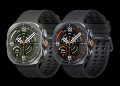
The technology uses technology called Nymi bands which monitor and store users heart-beat via an electrocardiogram (ECG). An electrocardiogram or ECG is the unique rhythm of a heartbeat and, unlike a text password or fingerprint, it is incredibly difficult to fake.Users must wear the Nymi on one wrist, and touch its top sensor with the opposite hand for it to work. The Nymi pairs with a smartphone via Bluetooth, using a companion app for Windows, Mac, iOS and Android. Removal of the wristband invalidates biometric authentication.

The concept is one of the latest in banking security. The Royal Bank of Scotland started letting customers access their accounts on an iPhone using Apple’s Touch ID technology. The service was available to anyone with an iPhone 5s, 6 and 6 Plus.

A  self-contained biometric password manager from EyeLock, Myris uses the individual iris signature as the key/ password. Qualcomm’s Sense ID is a supposedly sweat-proof fingerprint scanner that could potentially work even better than Apple’s Touch ID.

The Nymi band was introduced last year by the Toronto based firm as a method to make payments- the first wearable that worked with biometric scanners to verify NFC payments.

The Halifax system is currently at the proof-of-concept stage.

(image credit: Pete)

Tags: IoTWearable

Related Posts

Apple touchscreen MacBook could launch with M5 Pro chips

Apple touchscreen MacBook could launch with M5 Pro chips

June 29, 2026
Apple touchscreen MacBook could launch with M5 Pro chips

Apple touchscreen MacBook could launch with M5 Pro chips

June 29, 2026
OpenAI limits ChatGPT 5.6 access to government-approved users first

OpenAI limits ChatGPT 5.6 access to government-approved users first

June 26, 2026
Apple to skip M6 Pro and Max chips and launch M7 in 2027

Apple to skip M6 Pro and Max chips and launch M7 in 2027

June 26, 2026
IBM unveils world’s first sub-1nm chip with new nanostack architecture

IBM unveils world’s first sub-1nm chip with new nanostack architecture

June 26, 2026
Apple raises prices across Macs, iPads and home devices

Apple raises prices across Macs, iPads and home devices

June 26, 2026
Please login to join discussion

LATEST NEWS

Apple touchscreen MacBook could launch with M5 Pro chips

Apple touchscreen MacBook could launch with M5 Pro chips

OpenAI limits ChatGPT 5.6 access to government-approved users first

Apple to skip M6 Pro and Max chips and launch M7 in 2027

IBM unveils world’s first sub-1nm chip with new nanostack architecture

Apple raises prices across Macs, iPads and home devices

BEST AI MODELS LEADERBOARD

See the best AI models, ranked by intelligence, benchmark results, speed and token price. Find the most suitable LLMs, Text-to-Image, Image Editing, Text-to-Speech, Text-to-Video and Image-to-Video  artificial intelligence model for your tasks and business.

LATEST TOOLS

Autoppt

Otter.ai

Slideoo

Disney Pixar AI Generator

Codebay

Newo

BlackInk.AI

WatchMyCompetitor

TokkingHeads

Fellow.app

Dataconomy

COPYRIGHT © DATACONOMY MEDIA GMBH, ALL RIGHTS RESERVED.

  • About
  • Imprint
  • Contact
  • Legal & Privacy

Follow Us

  • News
    • Artificial Intelligence
    • Cybersecurity
    • DeFi & Blockchain
    • Finance
    • Gaming
    • Startups
    • Tech
  • Industry
  • Research
  • Resources
    • Articles
    • Guides
    • Case Studies
    • Whitepapers
    • AI Models Leaderboard
  • AI tools
  • Newsletter
  • + More
    • Glossary
    • Conversations
    • Events
    • About
      • Who we are
      • Contact
      • Imprint
      • Legal & Privacy
      • Partner With Us
No Result
View All Result
Subscribe

This website uses cookies to improve your experience. You can choose to accept or reject them. Visit our Privacy Policy.