Grammarly
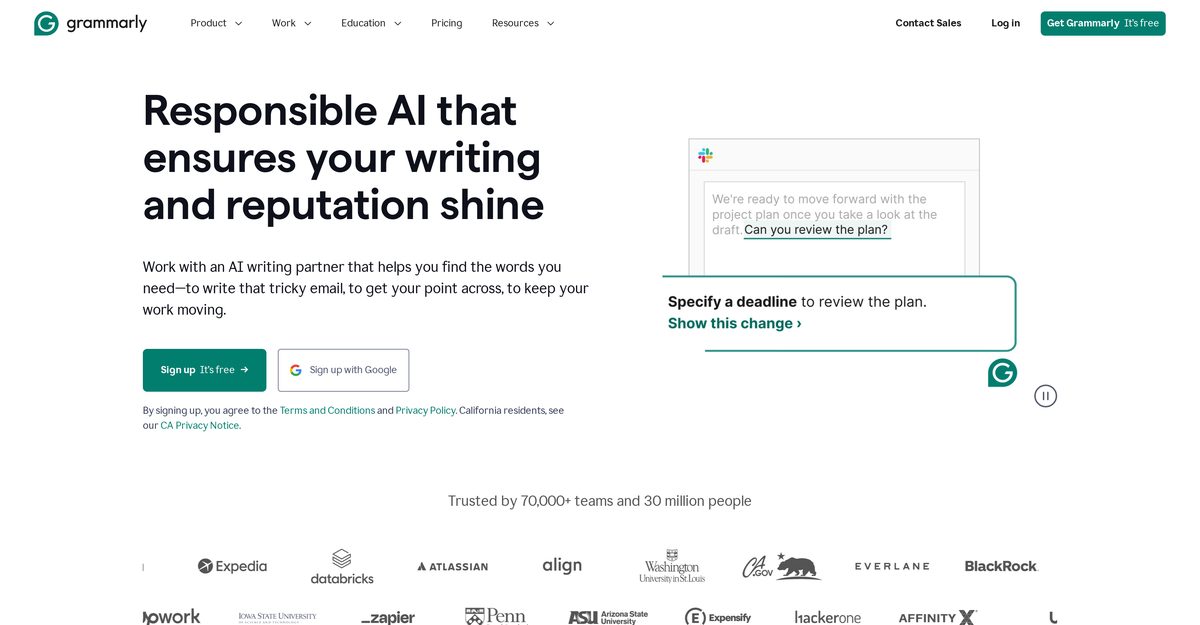
Grammarly is an AI-powered writing assistance tool that provides real-time suggestions for improving grammar, spelling, punctuation, clarity, conciseness, style, and tone across various writing contexts. It integrates seamlessly with over 500,000 apps and websites on platforms like Windows, Mac, iOS, and Android, making it ideal for students, professionals, and businesses in areas such as customer support, marketing, IT, sales, and HR. Key features include plagiarism detection, citation generation, sentence rewriting, brand style guides, and AI text generation with up to 2,000 prompts per month in Pro plans. Grammarly emphasizes user privacy, not selling data or using it for ads or third-party AI training, and offers free, Pro ($12/month annually), and Enterprise plans with enterprise-grade security.
Pros
- Real-time feedback on grammar, spelling, and punctuation
- Style and tone suggestions for clarity and conciseness
- Seamless integration with 500,000+ apps and websites
- Plagiarism detection and citation generator
- Tailored for students, professionals, and businesses
- Strong privacy and data protection policies
- Cross-platform support on desktop, mobile, and browser
Cons
- Limited offline capabilities
- False positives in grammar checks
- Inconsistent plagiarism detection
- Over-reliant on internet connection
- Premium plans are costly
- Lacks multi-lingual support
- No offline version available
- Limited advanced formatting features
Grammarly is an AI-powered online writing assistant that offers real-time feedback to help improve users' writing. It recognizes and corrects issues related to grammar, spelling, punctuation, clarity, style, and tone.
Grammarly's AI assists with numerous aspects of writing, including grammar, spelling, punctuation, clarity, style, and tone. It also aids in plagiarism detection and citation generation.
Grammarly's plagiarism detection works by comparing your text to millions of web pages to identify any similarities. This allows it to flag possible instances of plagiarism, encouraging original writing.
Grammarly integrates smoothly with over 500,000 apps and websites across multiple platforms, including Windows, Mac, iOS, and Android.
Yes, Grammarly is very suitable for professional use. It is designed to serve a range of users, including individuals, teams, businesses, and educational institutions. It is particularly helpful for teams working in customer support, marketing, IT, sales, and HR departments.
Yes, Grammarly offers solutions for businesses. It helps improve team communication, reduce time spent proofreading, and ensures brand consistency by aligning company-wide communications to a specific writing style.
Grammarly prioritizes user privacy and data protection. The company doesn't sell user data, use it for advertising, or provide it to third parties for training their AI models, ensuring your writing remains confidential.
Yes, Grammarly offers both a free version and a premium subscription. The premium plan includes advanced features such as stylistic suggestions, readability scores, and genre-specific writing style checks.
Yes, Grammarly does have a mobile app. It's available for both iOS and Android devices, providing writing assistance on-the-go.
Yes, you can use Grammarly within your current writing applications. It integrates with a vast array of apps and websites, removing the necessity of context switching.
Become a Contributor
Sign in to unlock these features:
- ⭐️ Rate this tool with a 1-5 star score
- ✍️ Write a detailed review for the community
- ❤️ Follow this tool to get important updates
Get started in seconds
[jnews_social_login_form]