GPT Radar
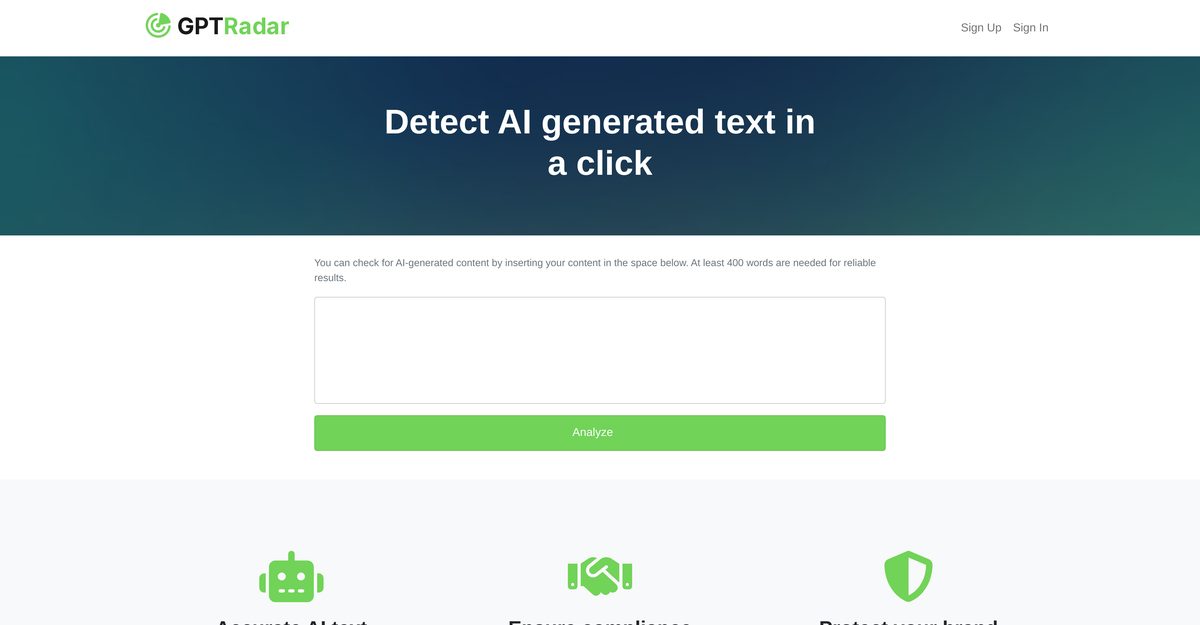
GPT Radar is an AI text detector powered by OpenAI's GPT-3 that analyzes text inputs of at least 400 words to determine if content is human-written or machine-generated, using metrics like perplexity, burstiness, and token probability distributions visualized in color-coded results and 3D graphs. It helps users comply with platform guidelines to avoid penalties from search engines like Google, manage brand reputation by regulating AI-generated texts, and uphold disclosure agreements for content writers. The tool operates on a pay-as-you-go model at $0.02 per credit (covering about 125 words), making it an affordable option from NeuralText, founded by Alessio Nittoli and Antonio Cappiello.
Pros
- Helps with guideline compliance
- Avoids Google content penalties
- Assists in disclosure adherence
- Useful for brand reputation management
- Regulates model generated texts
- Mitigates deceptive content risk
- Affordable 'Pay As You Go' cost
Cons
- Requires minimum 400 words
- Pay per content analysis
- No real-time detection capability
- No bulk analysis feature
- No API for integration
- No native mobile applications
- Limited to text content
- Not free to use
GPT Radar operates by utilizing the capabilities of OpenAI's GPT-3 to conduct complex analyses on textual content. It is capable of making precise determinations on whether the content is human-written or machine-generated.
The purpose of GPT Radar is to help users detect and analyze AI-generated content. This tool ensures compliance with guidelines, aids in brand reputation management and assists those who need to uphold certain disclosures or agreements related to AI-generated texts.
Given its use of the advanced GPT-3 from OpenAI, GPT Radar provides reliable results in detecting AI-generated text. However, it requires a minimum of 400 words to deliver competent analysis.
A minimum of 400 words is required to ensure reliable and competent analysis. This length likely provides the AI enough context to accurately detect and analyze content, distinguishing between human and machine-written text.
GPT Radar can aid in evidence compliance with guidelines by accurately detecting whether content is AI-generated. This assists in preventing potential penalties from platforms such as Google, which can penalize AI-generated content.
Yes, GPT Radar can aid in protecting a brand's reputation by managing the use of large language model generated texts. This minimizes any potential risk of being viewed as deceptive or unreliable due to the lack of proper disclosure.
The cost of using GPT Radar operates on a 'Pay As You Go' basis. The cost per credit is $0.02, with one credit equating to approximately 125 words.
GPT Radar is a product of NeuralText, brought to life by co-founders Alessio Nittoli and Antonio Cappiello.
OpenAI's GPT-3 is crucial to GPT Radar's operation. It plays a significant role in analyzing text and conducting complex calculations to detect if the content was written by a computer or a human.
Yes, GPT Radar has the capacity to differentiate between content written by a computer and a person. It uses advanced machine learning algorithms of OpenAI's GPT-3 for detailed analysis and accurate content detection.
Become a Contributor
Sign in to unlock these features:
- ⭐️ Rate this tool with a 1-5 star score
- ✍️ Write a detailed review for the community
- ❤️ Follow this tool to get important updates
Get started in seconds
[jnews_social_login_form]