Dataconomy
  • News
    • Artificial Intelligence
    • Cybersecurity
    • DeFi & Blockchain
    • Finance
    • Gaming
    • Startups
    • Tech
  • Industry
  • Research
  • Resources
    • Articles
    • Guides
    • Case Studies
    • Whitepapers
    • AI Models Leaderboard
  • AI toolsNEW
  • Newsletter
  • + More
    • Glossary
    • Conversations
    • Events
    • About
      • Who we are
      • Contact
      • Imprint
      • Legal & Privacy
      • Partner With Us
Subscribe
No Result
View All Result
  • AI
  • Tech
  • Cybersecurity
  • Finance
  • DeFi & Blockchain
  • Startups
  • Gaming
Dataconomy
  • News
    • Artificial Intelligence
    • Cybersecurity
    • DeFi & Blockchain
    • Finance
    • Gaming
    • Startups
    • Tech
  • Industry
  • Research
  • Resources
    • Articles
    • Guides
    • Case Studies
    • Whitepapers
    • AI Models Leaderboard
  • AI toolsNEW
  • Newsletter
  • + More
    • Glossary
    • Conversations
    • Events
    • About
      • Who we are
      • Contact
      • Imprint
      • Legal & Privacy
      • Partner With Us
Subscribe
No Result
View All Result
Dataconomy
No Result
View All Result

Research: GPS is optional when atoms do the tracking

University of Colorado physicists have built a compact atom interferometer that measures 3D acceleration using ultracold rubidium atoms and six synchronized lasers.

byEmre Çıtak
June 14, 2025
in Research
Home Research
Share on FacebookShare on TwitterShare on LinkedInShare on WhatsAppShare on e-mail
Google Preferred Source

Physicists at the University of Colorado Boulder have developed a pioneering quantum device capable of measuring acceleration in three dimensions. Using a cloud of ultracold atoms and advanced laser manipulation, the team has built a compact atom interferometer that may redefine how vehicles navigate—without relying on GPS.

A new kind of interferometer

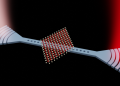
The study, titled “Vector atom accelerometry in an optical lattice”, was recently published in Science Advances. It introduces a sensor that uses six finely tuned lasers to suspend tens of thousands of rubidium atoms in space, then manipulate them to detect acceleration. This new type of atom interferometer, developed with the help of machine learning, can measure motion in three directions simultaneously—something previously thought impossible.

“Traditional atom interferometers can only measure acceleration in a single dimension, but we live within a three-dimensional world,” explained graduate student Kendall Mehling, a co-author on the paper. “To know where I’m going, and to know where I’ve been, I need to track my acceleration in all three dimensions.”

Stay Ahead of the Curve!

Don't miss out on the latest insights, trends, and analysis in the world of data, technology, and startups. Subscribe to our newsletter and get exclusive content delivered straight to your inbox.

Why atoms?

While current navigation tools rely on GPS and classical accelerometers, these traditional sensors degrade over time due to environmental factors and mechanical wear. Quantum systems based on atoms offer a potential alternative. As Mehling noted, “Atoms don’t age.”

How interferometry works

Interferometers have long been used in physics to measure subtle changes by splitting and recombining waves—often beams of light. This new interferometer applies that principle to matter itself. By cooling rubidium atoms to just a few billionths of a degree above absolute zero, the team creates a Bose-Einstein Condensate (BEC), a quantum state where atoms behave as a single wave-like entity.

These atoms are then placed in a superposition, allowing them to exist in two places at once. As laser pulses push the atoms along different paths, they effectively “record” acceleration through subtle changes in their behavior. When recombined, the resulting interference pattern reveals how the atoms moved.

“Our Bose-Einstein Condensate is a matter-wave pond made of atoms, and we throw stones made of little packets of light into the pond,” said physics professor Murray Holland. “Once the ripples have spread out, we reflect them and bring them back together where they interfere.”


AI is breaking the internet’s memory


AI-guided motion sensing

The precision of this device relies heavily on artificial intelligence. Holland’s team used machine learning to automate the complex process of adjusting the lasers needed to control the atoms. This computer-guided system allows for precise measurement of accelerations thousands of times smaller than Earth’s gravity.

Despite its sophistication, the apparatus is compact, fitting on a lab bench the size of an air hockey table. “Even though we have 18 laser beams passing through the vacuum system, the experiment is small enough that we could deploy it in the field one day,” said postdoctoral researcher Catie LeDesma.

Challenges and promise

Currently, the quantum device still trails classical sensors in performance. However, its long-term advantages—such as durability, accuracy, and the ability to function without satellite infrastructure—make it promising for applications in submarines, spacecraft, and remote terrestrial environments.

The project has already received significant support, including a $5.5 million grant from NASA through the Quantum Pathways Institute in 2023. The team is actively working to improve the sensor’s capabilities and expand its potential uses.

As Holland put it, “We’re not exactly sure of all the possible ramifications of this research, because it opens up a door.” While still in its experimental phase, this technology could fundamentally change how we think about motion, navigation, and the timeless reliability of atoms in a quantum world.


Featured image credit

Tags: GPS

Related Posts

Researchers unlock 20-fold enhancement in ultrafast laser experiments

Researchers unlock 20-fold enhancement in ultrafast laser experiments

June 3, 2026
NASA tests next-gen radiation-hardened space computer chip

NASA tests next-gen radiation-hardened space computer chip

May 29, 2026
Penn physicists use light-matter particles to boost AI chip speeds

Penn physicists use light-matter particles to boost AI chip speeds

May 29, 2026
Global AI spending to hit .59 trillion in 2026, says Gartner forecast

Global AI spending to hit $2.59 trillion in 2026, says Gartner forecast

May 28, 2026
New CHEEM framework helps AI learn new tasks without forgetting old ones

New CHEEM framework helps AI learn new tasks without forgetting old ones

May 27, 2026
Data centers raise local Arizona temperatures by 4 degrees, study finds

Data centers raise local Arizona temperatures by 4 degrees, study finds

May 27, 2026

LATEST NEWS

Why Telegram Mini Apps have become the optimal ecosystem for launching AI SaaS products

Crypto investors are watching one date closely in 2026

How Telegram Creators test post visibility before running growth campaigns

Does your AI clock in without you?

Why secure software delivery depends on better release management

Sony reveals God of War: Laufey for PS5

BEST AI MODELS LEADERBOARD

See the best AI models, ranked by intelligence, benchmark results, speed and token price. Find the most suitable LLMs, Text-to-Image, Image Editing, Text-to-Speech, Text-to-Video and Image-to-Video  artificial intelligence model for your tasks and business.

LATEST TOOLS

Veed.io

Paper Pilot

IsOn24

Magnific

DADABOTS

Rosebud AI

Prome

Pageon AI

Vyond

Centauri AI

Dataconomy

COPYRIGHT © DATACONOMY MEDIA GMBH, ALL RIGHTS RESERVED.

  • About
  • Imprint
  • Contact
  • Legal & Privacy

Follow Us

  • News
    • Artificial Intelligence
    • Cybersecurity
    • DeFi & Blockchain
    • Finance
    • Gaming
    • Startups
    • Tech
  • Industry
  • Research
  • Resources
    • Articles
    • Guides
    • Case Studies
    • Whitepapers
    • AI Models Leaderboard
  • AI tools
  • Newsletter
  • + More
    • Glossary
    • Conversations
    • Events
    • About
      • Who we are
      • Contact
      • Imprint
      • Legal & Privacy
      • Partner With Us
No Result
View All Result
Subscribe

This website uses cookies to improve your experience. You can choose to accept or reject them. Visit our Privacy Policy.