Dataconomy
  • News
    • Artificial Intelligence
    • Cybersecurity
    • DeFi & Blockchain
    • Finance
    • Gaming
    • Startups
    • Tech
  • Industry
  • Research
  • Resources
    • Articles
    • Guides
    • Case Studies
    • Whitepapers
    • AI Models Leaderboard
  • AI toolsNEW
  • Newsletter
  • + More
    • Glossary
    • Conversations
    • Events
    • About
      • Who we are
      • Contact
      • Imprint
      • Legal & Privacy
      • Partner With Us
Subscribe
No Result
View All Result
  • AI
  • Tech
  • Cybersecurity
  • Finance
  • DeFi & Blockchain
  • Startups
  • Gaming
Dataconomy
  • News
    • Artificial Intelligence
    • Cybersecurity
    • DeFi & Blockchain
    • Finance
    • Gaming
    • Startups
    • Tech
  • Industry
  • Research
  • Resources
    • Articles
    • Guides
    • Case Studies
    • Whitepapers
    • AI Models Leaderboard
  • AI toolsNEW
  • Newsletter
  • + More
    • Glossary
    • Conversations
    • Events
    • About
      • Who we are
      • Contact
      • Imprint
      • Legal & Privacy
      • Partner With Us
Subscribe
No Result
View All Result
Dataconomy
No Result
View All Result

Researchers have found a cleaner way to make hydrogen

Oregon State University have developed a material that can transform sunlight and water into clean energy

byEmre Çıtak
July 29, 2024
in Energy & Environment, Research
Home Industry Energy & Environment
Share on FacebookShare on TwitterShare on LinkedInShare on WhatsAppShare on e-mail
Google Preferred Source

A team of researchers at Oregon State University has created a groundbreaking material that can change sunlight and water into clean energy.

The discovery opens up new paths for producing hydrogen, a clean fuel that could help reduce harmful gases in the air.

Creating hydrogen from water with photocatalyst

The researchers made a special substance called a photocatalyst.

Stay Ahead of the Curve!

Don't miss out on the latest insights, trends, and analysis in the world of data, technology, and startups. Subscribe to our newsletter and get exclusive content delivered straight to your inbox.

This photocatalyst can split water molecules using sunlight to make hydrogen very quickly and well. Hydrogen is a clean fuel that can power cars and help make many useful things like fertilizers and plastics.

Usually, we get hydrogen from natural gas, which isn’t good for the environment. This new way of making hydrogen could be much cleaner.

The team worked together under Kyriakos Stylianou from the OSU College of Science. They used special materials called metal-organic frameworks (MOFs) to make their photocatalyst. MOFs are tiny structures made of metal ions and organic molecules.
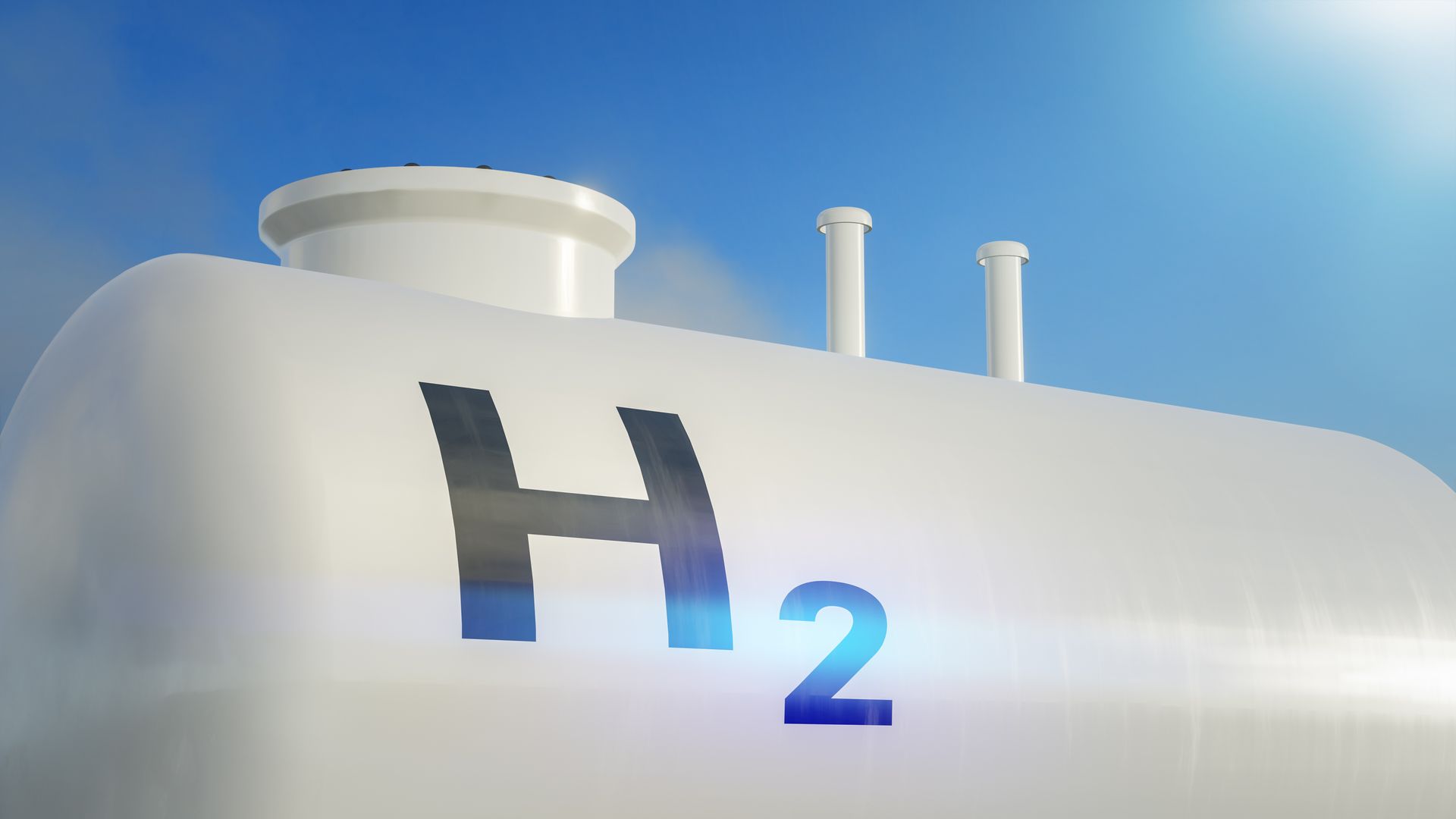
Creating hydrogen from water
The team created a photocatalyst that efficiently splits water molecules using sunlight to produce hydrogen (Image credit)

They have very small holes and can be designed in different ways to do different jobs.

In this case, the researchers used a MOF to make something called a metal oxide heterojunction. This is a mix of two materials that work well together. They named their creation RTTA.

How does the Water Splitting magic happen?

The RTTA photocatalyst is made of two main parts: Ruthenium oxide and titanium oxide.

The researchers added small amounts of sulfur and nitrogen to the titanium oxide to make it work better. When sunlight shines on RTTA, it can split water molecules into hydrogen and oxygen very quickly.

The team tested different versions of RTTA with different amounts of ruthenium oxide and titanium oxide. They found that one version, called RTTA-1, worked the best. This version had the least amount of ruthenium oxide.

RTTA-1 could make a lot of hydrogen very quickly. In just one hour, one gram of RTTA-1 produced over 10,700 micromoles of hydrogen. That’s a huge amount! It also used light very well.

Currently, making hydrogen the old way costs about $1.50 per kilogram. Making “green” hydrogen using renewable electricity costs about $5 per kilogram. The new photocatalyst method could help bring this cost down.

For every 100 light particles (called photons) that hit RTTA-1, 10 of them helped make hydrogen. This is called a 10% quantum yield, which is very good for this kind of process.

Why it works so well?

The researchers think RTTA-1 works so well because of how its different parts work together.

The metal oxides have special properties that help move electrons around. The surface of the material, which comes from the original MOF, also helps with this. When all these things work together, it makes hydrogen production happen very fast and well.


What is green computing, can it save our planet?


This study shows that using MOF-derived metal oxide heterojunctions as photocatalysts could be a great way to make hydrogen in the real world. It’s an important step towards making clean energy in a way that doesn’t harm the environment.

A cleaner way to make hydrogen

Right now, most hydrogen is made from natural gas in a process called methane-steam reforming. This process releases carbon dioxide, which is bad for the environment. The new photocatalyst method is much cleaner because it only uses water and sunlight.

Some people already make hydrogen using electricity and water, which is called electrocatalysis. But for this to be good for the environment, the electricity needs to come from renewable sources like wind or solar power. It also needs to be cheap to compete with the old way of making hydrogen.

Creating hydrogen from water
The breakthrough demonstrates a promising path for producing clean energy using abundant resources like water and sunlight (Image credit)

Stylianou, the lead researcher, says that water is a great source of hydrogen because there’s so much of it. Using sunlight to split water into hydrogen is a way to use the sun’s energy, which we have plenty of on Earth.

One possible issue is that ruthenium oxide, one of the materials used in the photocatalyst, is expensive. However, Stylianou points out that they only use a very small amount in their photocatalyst. If the catalyst works well and lasts a long time when used in real-world applications, the small amount of expensive material becomes less important.

This new photocatalyst is an exciting development in the world of clean energy. It shows that we can find new ways to make the fuels we need without harming the environment. As research continues, we might see more advances that make clean hydrogen production even better and cheaper.


Featured image credit: FP_atkwork/Freepik

Tags: FeaturedResearch

Related Posts

Faith in large employers is fading among UK workers

Faith in large employers is fading among UK workers

June 5, 2026
Army-funded scientists explore a new frontier in quantum physics

Army-funded scientists explore a new frontier in quantum physics

June 5, 2026
New MIT process could make lithium production cheaper and cleaner

New MIT process could make lithium production cheaper and cleaner

June 4, 2026
Researchers create AI worm that adapts attacks without human input

Researchers create AI worm that adapts attacks without human input

June 4, 2026
Researchers unlock 20-fold enhancement in ultrafast laser experiments

Researchers unlock 20-fold enhancement in ultrafast laser experiments

June 3, 2026
NASA tests next-gen radiation-hardened space computer chip

NASA tests next-gen radiation-hardened space computer chip

May 29, 2026

LATEST NEWS

Tesla Cybercab specs show 293-mile estimated EPA range

Google Earth debuts browser-based flight simulator

Samsung unveils Galaxy Book 6 Edge with Snapdragon X2 Elite

The Atlantic uncovers millions of copyrighted songs in AI training data

Meta brings AI-powered photo editing and chat features to Facebook

EA launches advertising platform for in-game brand partnerships

BEST AI MODELS LEADERBOARD

See the best AI models, ranked by intelligence, benchmark results, speed and token price. Find the most suitable LLMs, Text-to-Image, Image Editing, Text-to-Speech, Text-to-Video and Image-to-Video  artificial intelligence model for your tasks and business.

LATEST TOOLS

Face-generator

Audiopen

Picwish

EssayChecker

MyMathSolver

GPT Subtitler

AI Tutor App

Fluency

Dreamhouse AI

Dresma

Dataconomy

COPYRIGHT © DATACONOMY MEDIA GMBH, ALL RIGHTS RESERVED.

  • About
  • Imprint
  • Contact
  • Legal & Privacy

Follow Us

  • News
    • Artificial Intelligence
    • Cybersecurity
    • DeFi & Blockchain
    • Finance
    • Gaming
    • Startups
    • Tech
  • Industry
  • Research
  • Resources
    • Articles
    • Guides
    • Case Studies
    • Whitepapers
    • AI Models Leaderboard
  • AI tools
  • Newsletter
  • + More
    • Glossary
    • Conversations
    • Events
    • About
      • Who we are
      • Contact
      • Imprint
      • Legal & Privacy
      • Partner With Us
No Result
View All Result
Subscribe

This website uses cookies to improve your experience. You can choose to accept or reject them. Visit our Privacy Policy.