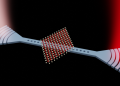
A team of physicists in China has demonstrated a 20-fold enhancement in ultrafast laser interactions by harnessing the quantum properties of light, achieving this without increasing the energy delivered to the target. The findings, published in Nature, have potential implications for how matter is probed at extremely short timescales.
Researchers led by Jian Wu at East China Normal University utilized a quantum light state known as bright squeezed vacuum (BSV) to trigger tunneling ionization in sodium atoms. Unlike conventional laser pulses that deliver photons at a steady rate, BSV generates extreme fluctuations in photon density. This results in brief bursts of very high instantaneous intensity, maintaining a low average energy.
The team discovered that a BSV pulse with an average energy of just 300 nanojoules produced the same nonlinear ionization effect as a conventional laser pulse with over 20 times greater effective intensity. Significantly, this enhancement occurred without an increase in average power, which minimizes the risk of thermal or structural damage to both the targets and optical components.
Nonlinear optical processes are influential in various fields, including high-harmonic generation and attosecond physics, which examines electron dynamics on timescales of one quintillionth of a second. Current experiments in these areas often operate near material damage limits. By manipulating the quantum statistical properties of light rather than merely increasing pulse energy, the researchers indicated that interaction strength could be fine-tuned independently of average power, paving the way for future attosecond experiments at lower energy costs and reduced collateral damage.
This work aligns with a broader trend in quantum optics that views quantum fluctuations as a valuable resource rather than noise. Although the technique is still experimental, it suggests a future where structured quantum states of light play an essential role in ultrafast optical technology, complementing traditional laser intensity. The study reflects a pivotal shift in the understanding and application of quantum light in high-precision laser interactions.