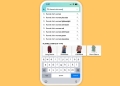
Microsoft announced Project Solara, a new software platform and associated hardware solutions aimed at creating agent-first experiences that enhance user interactions with computers. The initiative seeks to develop a diverse ecosystem of agent-first devices, transitioning the focus from traditional software applications to agent-driven intelligence applicable across various workflows and environments.
The platform is intended to enable a diverse set of specialized devices, starting with enterprise-oriented concepts. Project Solara will feature two initial device categories: a portable badge concept for on-the-go use and a stationary desk concept designed for office settings. These concepts are designed to provide seamless connectivity and interaction with agents tailored to user needs.
At the Build 2023 conference, Microsoft shared insights on how AI applications will evolve through three structures: AI operating beside applications as a helper, inside applications as an integral component, or outside applications by orchestrating workflows across multiple services and devices. These structures indicate a shift towards agents as a new programming and interaction technology.
The Applied Sciences Group at Microsoft is spearheading this initiative, indicating that as human-computer interaction evolves, users will benefit from specialized computers that simplify daily tasks. Through natural language dialogs with AI, the need for traditional interaction methods is diminished, allowing for more local and context-aware computing solutions.
Project Solara aims to reduce historical costs associated with specialization in computing, enabling rapid innovation in device development. The platform will support multiple agents addressing various organizational needs and tasks, reinforcing enterprise security, privacy, and user control as foundational elements.
Piloting for Project Solara will begin with industry leaders such as AccuWeather and Best Buy. Leading semiconductor partners MediaTek and Qualcomm are collaborating to deliver the initial device concepts, focusing on portability and practical applications for users across various industries.
The release will provide reference designs for new devices, enabling companies to customize solutions for specific environments, including healthcare, retail, and finance. Microsoft emphasized that Project Solara will unlock new computing opportunities, fostering an ecosystem where users can integrate agent-driven experiences effectively into their workflows.
“Project Solara is an important step in advancing agent-first experiences across a wide range of devices and form factors,” said Dino Bekis, Qualcomm Senior Vice President for Personal and Wearable AI. “We’re proud to partner with Microsoft to help accelerate this next era of intelligent, personalized computing.”
Overall, Project Solara is designed to elevate the role of agents in computing, delivering powerful interaction capabilities in tailored devices, thereby reshaping how users interact with technology in their daily lives.