Dataconomy
  • News
    • Artificial Intelligence
    • Cybersecurity
    • DeFi & Blockchain
    • Finance
    • Gaming
    • Startups
    • Tech
  • Industry
  • Research
  • Resources
    • Articles
    • Guides
    • Case Studies
    • Whitepapers
    • AI Models Leaderboard
  • AI toolsNEW
  • Newsletter
  • + More
    • Glossary
    • Conversations
    • Events
    • About
      • Who we are
      • Contact
      • Imprint
      • Legal & Privacy
      • Partner With Us
Subscribe
No Result
View All Result
  • AI
  • Tech
  • Cybersecurity
  • Finance
  • DeFi & Blockchain
  • Startups
  • Gaming
Dataconomy
  • News
    • Artificial Intelligence
    • Cybersecurity
    • DeFi & Blockchain
    • Finance
    • Gaming
    • Startups
    • Tech
  • Industry
  • Research
  • Resources
    • Articles
    • Guides
    • Case Studies
    • Whitepapers
    • AI Models Leaderboard
  • AI toolsNEW
  • Newsletter
  • + More
    • Glossary
    • Conversations
    • Events
    • About
      • Who we are
      • Contact
      • Imprint
      • Legal & Privacy
      • Partner With Us
Subscribe
No Result
View All Result
Dataconomy
No Result
View All Result

AI, creativity, and the challenge of attribution

Exploring the blurred lines between human and machine creativity, authorship, and accountability in the AI era

byElena Poughia
March 26, 2025
in Artificial Intelligence, Conversations
Home News Artificial Intelligence
Share on FacebookShare on TwitterShare on LinkedInShare on WhatsAppShare on e-mail
Google Preferred Source

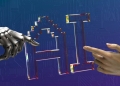
The rapid advancement of artificial intelligence has profoundly impacted creative industries, prompting discussions around creativity, authorship, and responsibility. In a recent interview, Alex Reben, an artist specializing in latent space art, and Chandra Rangan, CMO of Neo4j, explored how AI intersects with human creativity, its implications for intellectual property, and the challenges posed by deepfake content.

Who owns AI-generated art?

Alex Reben addresses a critical question: Who deserves credit when art is generated by AI—humans or machines? Drawing parallels to historical debates in photography, Reben highlights that technological evolution continuously reshapes our understanding of creativity. “Photography raised questions about creativity simply by pushing a button,” he explains. Similarly, artists who instruct teams to execute their vision without physically creating the artwork raise comparable concerns. “Is speaking to an AI different from directing a human crew?”

Reben argues that from a philosophical standpoint, AI-generated art remains a “gray area” without clear-cut answers. Legal definitions, intellectual property rights, and philosophical debates continue evolving as AI becomes increasingly sophisticated.

Stay Ahead of the Curve!

Don't miss out on the latest insights, trends, and analysis in the world of data, technology, and startups. Subscribe to our newsletter and get exclusive content delivered straight to your inbox.

Tackling deepfakes and misinformation

Chandra Rangan focuses on another pressing challenge: identifying deepfake content. Rangan emphasizes that while tools exist to detect AI-generated fakes, the process remains a “cat and mouse” game as technology rapidly advances. Recognizing individual deepfakes is complex, but detecting patterns of misinformation or fraud through AI-driven analysis could be more effective.

Neo4j, for example, partnered with Syracuse University to analyze social media data around the 2024 U.S. elections. Their research revealed hidden networks, exposing multiple seemingly independent entities as fronts for coordinated misinformation campaigns. AI’s ability to reveal such broader patterns is critical for combating misinformation at scale.

Staying ahead of AI

With AI’s rapid evolution, individuals worry about technology potentially replacing human jobs. Reben advises remaining informed through continuous engagement and experimentation with new AI technologies. Similarly, Rangan suggests that personal experience with AI fosters better understanding and reduces fear of being replaced. Awareness, he says, is crucial in adapting to AI-driven changes.

Control, regulation, and ethical use

The interview also tackles the nuanced issue of controlling AI. Both Reben and Rangan note the complexity of “control,” involving multiple stakeholders—individuals, organizations, and governments—across varying levels. Rangan underscores that control mechanisms could range from legislation and company self-regulation to individual accountability. The absence of clear answers calls for ongoing self-regulation, emphasizing education on responsible AI usage to ensure that the technology remains beneficial rather than detrimental.

In conclusion, AI’s intersection with creativity and information integrity presents profound philosophical and practical challenges. Ongoing dialogue, experimentation, and careful consideration of ethical implications remain essential as society navigates this transformative era.
Tags: Featured

Related Posts

Does your AI clock in without you?

Does your AI clock in without you?

June 3, 2026
Anthropic invites 150 more organizations into Project Glasswing

Anthropic invites 150 more organizations into Project Glasswing

June 3, 2026
Microsoft unveils Project Solara for an agent-first future

Microsoft unveils Project Solara for an agent-first future

June 3, 2026
OpenAI expands Codex with enterprise plug-ins and new Sites feature

OpenAI expands Codex with enterprise plug-ins and new Sites feature

June 3, 2026
Google will let websites opt out of AI search results

Google will let websites opt out of AI search results

June 3, 2026
Best AI game maker tools and guide to AI game development

Best AI game maker tools and guide to AI game development

June 2, 2026

LATEST NEWS

Why Telegram Mini Apps have become the optimal ecosystem for launching AI SaaS products

Crypto investors are watching one date closely in 2026

How Telegram Creators test post visibility before running growth campaigns

Does your AI clock in without you?

Why secure software delivery depends on better release management

Sony reveals God of War: Laufey for PS5

BEST AI MODELS LEADERBOARD

See the best AI models, ranked by intelligence, benchmark results, speed and token price. Find the most suitable LLMs, Text-to-Image, Image Editing, Text-to-Speech, Text-to-Video and Image-to-Video  artificial intelligence model for your tasks and business.

LATEST TOOLS

Veed.io

Paper Pilot

IsOn24

Magnific

DADABOTS

Rosebud AI

Prome

Pageon AI

Vyond

Centauri AI

Dataconomy

COPYRIGHT © DATACONOMY MEDIA GMBH, ALL RIGHTS RESERVED.

  • About
  • Imprint
  • Contact
  • Legal & Privacy

Follow Us

  • News
    • Artificial Intelligence
    • Cybersecurity
    • DeFi & Blockchain
    • Finance
    • Gaming
    • Startups
    • Tech
  • Industry
  • Research
  • Resources
    • Articles
    • Guides
    • Case Studies
    • Whitepapers
    • AI Models Leaderboard
  • AI tools
  • Newsletter
  • + More
    • Glossary
    • Conversations
    • Events
    • About
      • Who we are
      • Contact
      • Imprint
      • Legal & Privacy
      • Partner With Us
No Result
View All Result
Subscribe

This website uses cookies to improve your experience. You can choose to accept or reject them. Visit our Privacy Policy.