
Dataconomy
  • News
    • Artificial Intelligence
    • Cybersecurity
    • DeFi & Blockchain
    • Finance
    • Gaming
    • Startups
    • Tech
  • Industry
  • Research
  • Resources
    • Articles
    • Guides
    • Case Studies
    • Whitepapers
  • AI toolsNEW
  • Newsletter
  • + More
    • Glossary
    • Conversations
    • Events
    • About
      • About
      • Contact
      • Imprint
      • Legal & Privacy
      • Partner With Us
Subscribe
No Result
View All Result
  • AI
  • Tech
  • Cybersecurity
  • Finance
  • DeFi & Blockchain
  • Startups
  • Gaming
Dataconomy
  • News
    • Artificial Intelligence
    • Cybersecurity
    • DeFi & Blockchain
    • Finance
    • Gaming
    • Startups
    • Tech
  • Industry
  • Research
  • Resources
    • Articles
    • Guides
    • Case Studies
    • Whitepapers
  • AI toolsNEW
  • Newsletter
  • + More
    • Glossary
    • Conversations
    • Events
    • About
      • About
      • Contact
      • Imprint
      • Legal & Privacy
      • Partner With Us
Subscribe
No Result
View All Result
Dataconomy
No Result
View All Result

Welcome GPT-4o with Canvas: OpenAI’s new interface for writing and coding

Canvas opens in a separate window and aims to allow users to collaborate directly with ChatGPT on writing and coding tasks

byKerem Gülen
October 3, 2024
in Artificial Intelligence
Home News Artificial Intelligence
Share on FacebookShare on TwitterShare on LinkedInShare on WhatsAppShare on e-mail

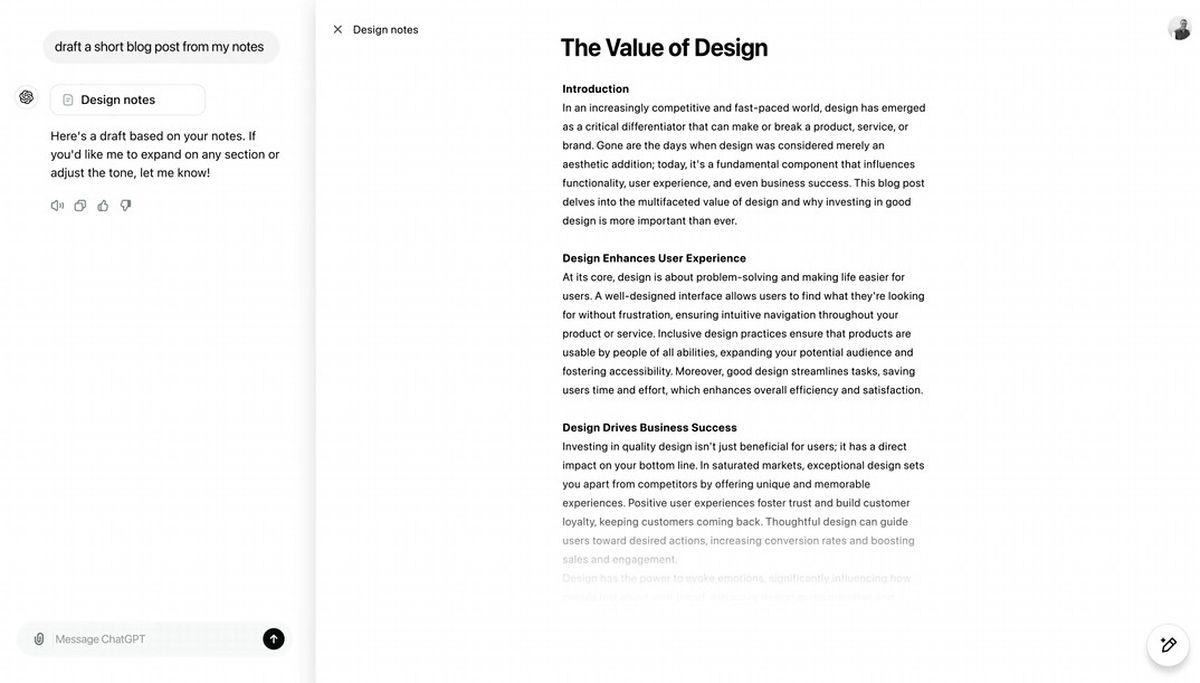
OpenAI has unveiled a new tool called “Canvas,” designed to enhance the collaboration between users and ChatGPT, especially for writing and coding projects. This new interface allows users to work on complex projects alongside ChatGPT, offering a more refined and interactive experience than the traditional chat format.

Canvas overview

Canvas opens in a separate window and aims to allow users to collaborate directly with ChatGPT on writing and coding tasks. Unlike simple conversation exchanges, Canvas is designed to provide detailed, inline feedback and editing suggestions, helping users improve their work more effectively.

Initially, Canvas is being rolled out to ChatGPT Plus and Team users, with Enterprise and Edu users gaining access next week. OpenAI plans to expand Canvas availability to all Free users once the beta phase concludes.
Stay Ahead of the Curve!

Don't miss out on the latest insights, trends, and analysis in the world of data, technology, and startups. Subscribe to our newsletter and get exclusive content delivered straight to your inbox.

Welcome GPT-4o with Canvas: OpenAI’s new interface for writing and coding
In Canvas, users have more control over their projects

Enhanced collaboration with ChatGPT

ChatGPT has long been a helpful tool for users working on writing and coding. However, the standard chat interface has limitations when tasks require extensive editing and revision. Canvas seeks to fill that gap by enabling deeper collaboration.

In Canvas, users have more control over their projects. They can highlight sections of text or code that need attention and receive targeted feedback from ChatGPT. The tool acts as a copy editor or code reviewer, providing inline suggestions that help refine the work.

Canvas also introduces a set of shortcuts to expedite common tasks. These include adjusting text length, changing reading levels, debugging code, and restoring previous versions of work.

Users can trigger Canvas manually by adding “use canvas” in their prompt or allow it to open automatically when ChatGPT detects a situation where it can be beneficial.
Welcome GPT-4o with Canvas: OpenAI’s new interface for writing and coding
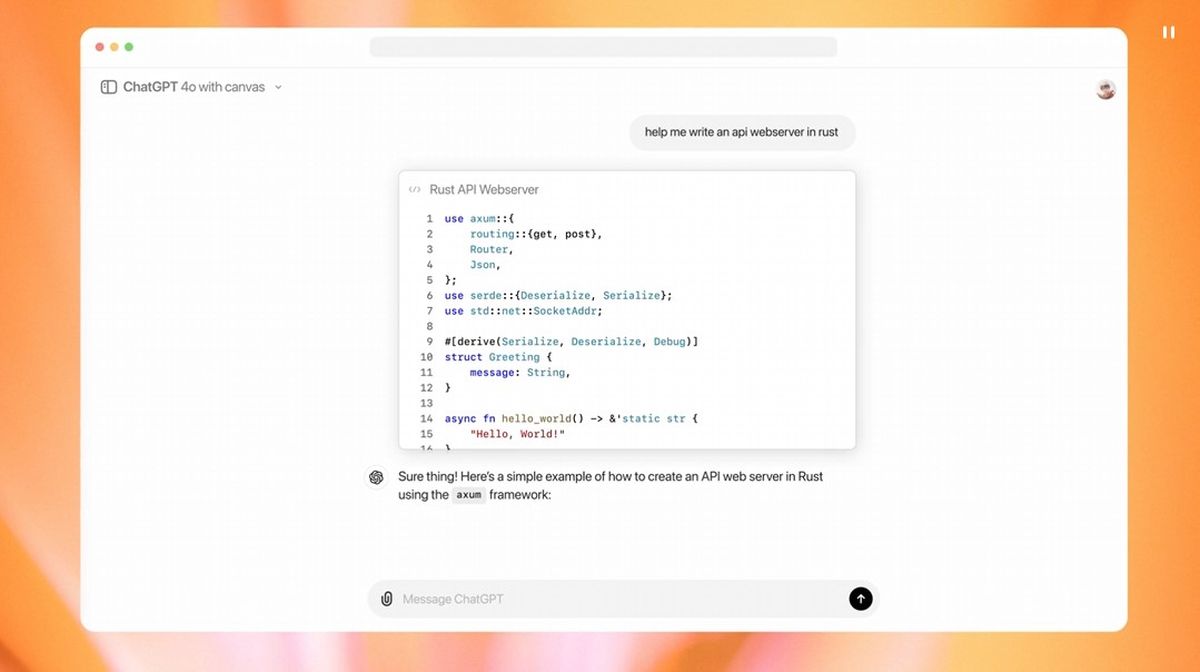
Canvas offers several shortcuts to streamline both writing and coding tasks

Features for writing and coding

Canvas offers several shortcuts to streamline both writing and coding tasks. For writers, the options include:

  • Suggest edits: Inline feedback to refine writing.
  • Adjust length: Make the text shorter or longer.
  • Change reading level: Adjust readability based on audience.
  • Add final polish: Grammar and clarity checks.
  • Add emojis: Enhance content with relevant emojis for added emphasis.

For coding tasks, Canvas introduces tools to make debugging and revisions more transparent:

  • Review code: Inline suggestions to improve the quality of the code.
  • Add logs: Insert print statements to aid in debugging.
  • Add comments: Increase code clarity with helpful comments.
  • Fix nugs: Identify and fix problematic code.
  • Port to another language: Convert code to various languages like Python, JavaScript, or C++.

The training behind canvas

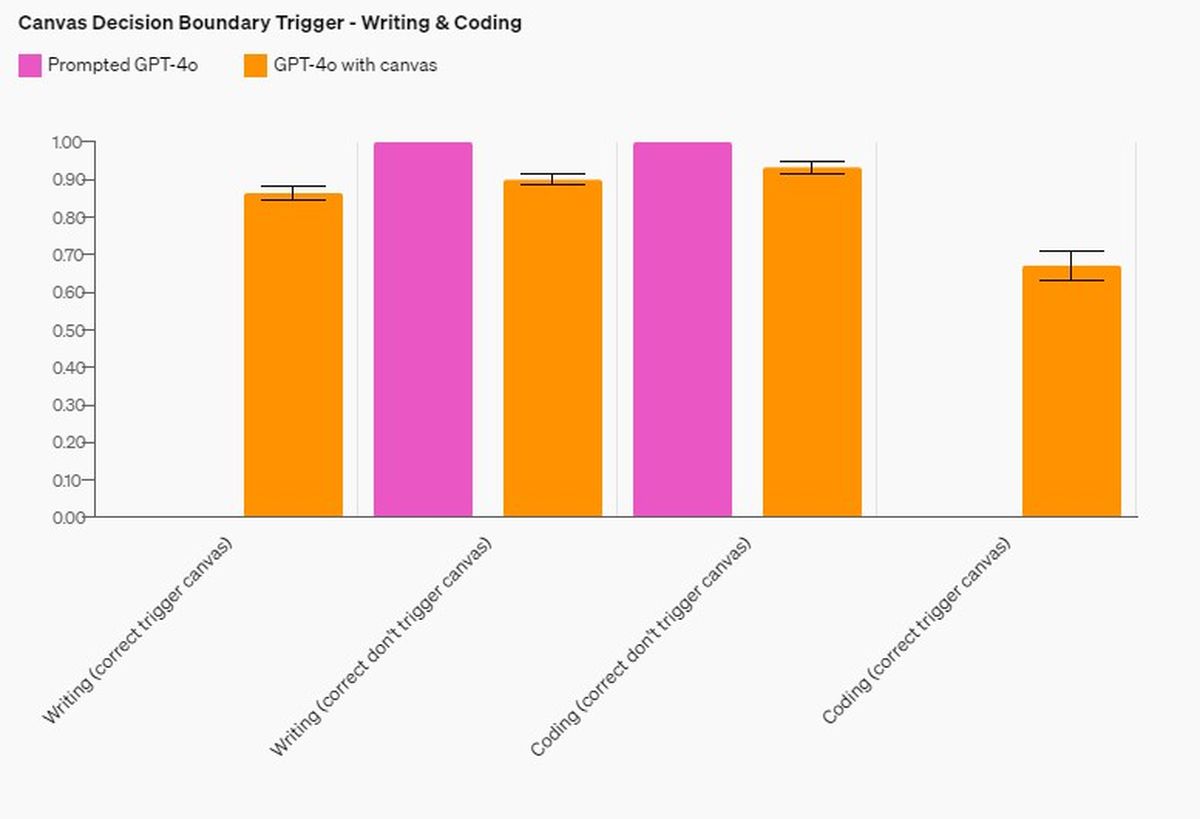
Canvas is powered by GPT-4o, a model that OpenAI has specifically trained to collaborate with users in more meaningful ways. The model is designed to recognize when a Canvas would be helpful and trigger it accordingly, whether for writing or coding tasks.
Welcome GPT-4o with Canvas: OpenAI’s new interface for writing and coding
The model is designed to recognize when a Canvas would be helpful and trigger it accordingly, whether for writing or coding tasks

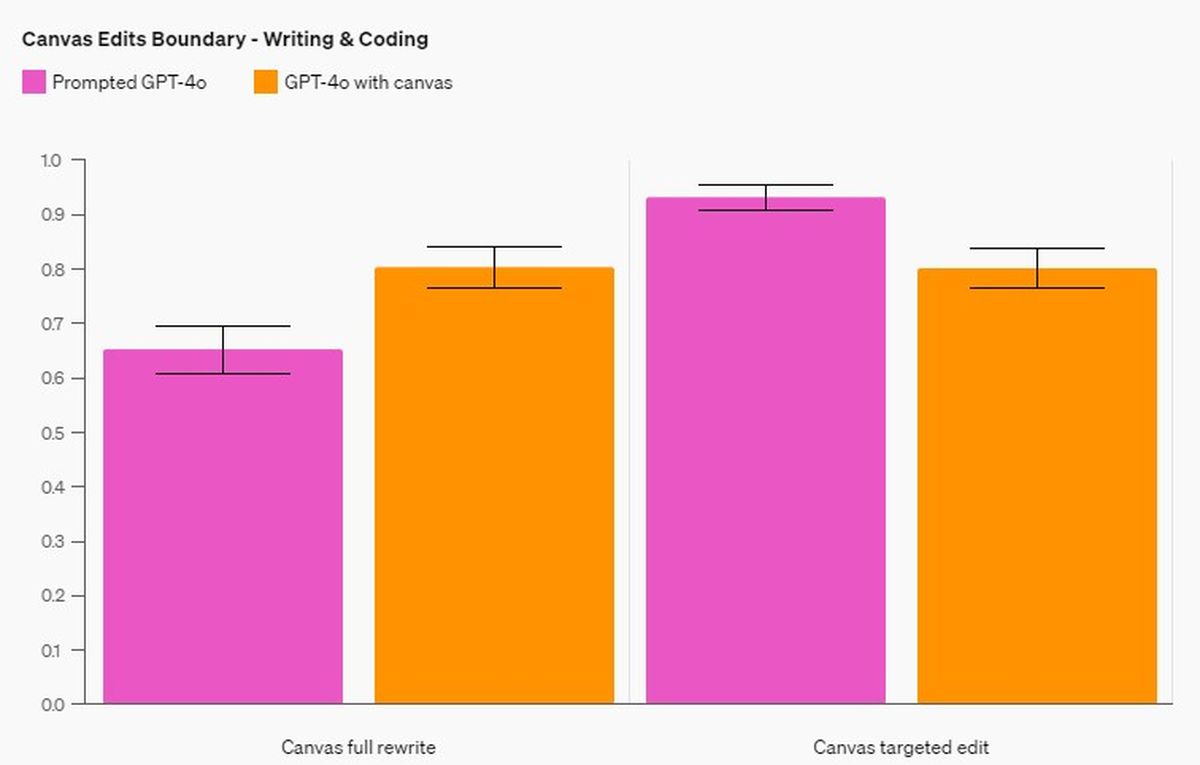
OpenAI researchers conducted extensive internal evaluations, focusing on refining how Canvas triggers and performs targeted edits versus full rewrites. Through training and human evaluation, the Canvas model has shown significant improvements in accuracy, comment quality, and editing performance compared to previous versions.
Welcome GPT-4o with Canvas: OpenAI’s new interface for writing and coding
OpenAI researchers conducted extensive internal evaluations, focusing on refining how Canvas triggers and performs targeted edits versus full rewrites

What’s next?

Canvas represents a significant step forward in how AI interacts with users, making it a more practical and powerful tool for complex writing and coding projects. Though still in beta, OpenAI plans to continually enhance Canvas’ capabilities based on user feedback.


Image credits: OpenAI

Tags: canvasFeaturedgpt-4oopenAI

Related Posts

OpenAI explores prioritizing sponsored ads in ChatGPT responses

OpenAI explores prioritizing sponsored ads in ChatGPT responses

January 2, 2026
OpenAI unifies teams to build audio device with Jony Ive

OpenAI unifies teams to build audio device with Jony Ive

January 2, 2026
Samsung Bixby gains Perplexity AI search powers in new update

Samsung Bixby gains Perplexity AI search powers in new update

December 29, 2025
Google NotebookLM introduces “Lecture Mode” for 30-minute AI learning

Google NotebookLM introduces “Lecture Mode” for 30-minute AI learning

December 26, 2025
ChatGPT evolves into an office suite with new formatting blocks

ChatGPT evolves into an office suite with new formatting blocks

December 26, 2025
Alibaba’s Qwen Code v0.5.0 transforms terminal into a full dev ecosystem

Alibaba’s Qwen Code v0.5.0 transforms terminal into a full dev ecosystem

December 26, 2025

LATEST NEWS

Airloom to showcase roller coaster style wind turbines at CES 2026

Samsung unveils Freestyle+ projector ahead of CES 2026

OpenAI explores prioritizing sponsored ads in ChatGPT responses

Apple Fitness+ teases major 2026 plans in new Instagram Reel

Leaked Samsung 20000mAh battery test reveals major swelling

OpenAI unifies teams to build audio device with Jony Ive

Dataconomy

COPYRIGHT © DATACONOMY MEDIA GMBH, ALL RIGHTS RESERVED.

  • About
  • Imprint
  • Contact
  • Legal & Privacy

Follow Us

  • News
    • Artificial Intelligence
    • Cybersecurity
    • DeFi & Blockchain
    • Finance
    • Gaming
    • Startups
    • Tech
  • Industry
  • Research
  • Resources
    • Articles
    • Guides
    • Case Studies
    • Whitepapers
  • AI tools
  • Newsletter
  • + More
    • Glossary
    • Conversations
    • Events
    • About
      • About
      • Contact
      • Imprint
      • Legal & Privacy
      • Partner With Us
No Result
View All Result
Subscribe

This website uses cookies. By continuing to use this website you are giving consent to cookies being used. Visit our Privacy Policy.