Dataconomy
  • News
    • Artificial Intelligence
    • Cybersecurity
    • DeFi & Blockchain
    • Finance
    • Gaming
    • Startups
    • Tech
  • Industry
  • Research
  • Resources
    • Articles
    • Guides
    • Case Studies
    • Whitepapers
    • AI Models Leaderboard
  • AI toolsNEW
  • Newsletter
  • + More
    • Glossary
    • Conversations
    • Events
    • About
      • Who we are
      • Contact
      • Imprint
      • Legal & Privacy
      • Partner With Us
Subscribe
No Result
View All Result
  • AI
  • Tech
  • Cybersecurity
  • Finance
  • DeFi & Blockchain
  • Startups
  • Gaming
Dataconomy
  • News
    • Artificial Intelligence
    • Cybersecurity
    • DeFi & Blockchain
    • Finance
    • Gaming
    • Startups
    • Tech
  • Industry
  • Research
  • Resources
    • Articles
    • Guides
    • Case Studies
    • Whitepapers
    • AI Models Leaderboard
  • AI toolsNEW
  • Newsletter
  • + More
    • Glossary
    • Conversations
    • Events
    • About
      • Who we are
      • Contact
      • Imprint
      • Legal & Privacy
      • Partner With Us
Subscribe
No Result
View All Result
Dataconomy
No Result
View All Result

Meet Aurora supercomputer, the world’s fastest computer

byEray Eliaçık
July 8, 2024
in Tech, Artificial Intelligence
Home News Tech
Share on FacebookShare on TwitterShare on LinkedInShare on WhatsAppShare on e-mail
Google Preferred Source

At Argonne National Laboratory in Illinois, the Aurora supercomputer stands at the forefront of high-performance computing and artificial intelligence. Developed by Intel and Hewlett Packard Enterprise, Aurora achieves exascale computing — performing a quintillion calculations per second. Quite impressive, right? Here is a closer look at it.

Exploring the Aurora supercomputer

The Aurora supercomputer, located at Argonne National Laboratory in Illinois, represents a pinnacle in high-performance computing (HPC) and artificial intelligence (AI), designed to drive scientific research forward across various disciplines.

Aurora was developed as part of a collaboration between Intel and Hewlett Packard Enterprise (HPE), with a primary goal of achieving exascale computing capabilities. Exascale computing refers to the ability to perform a quintillion (10^18) calculations per second, marking a significant leap in computational power.
Stay Ahead of the Curve!

Don't miss out on the latest insights, trends, and analysis in the world of data, technology, and startups. Subscribe to our newsletter and get exclusive content delivered straight to your inbox.

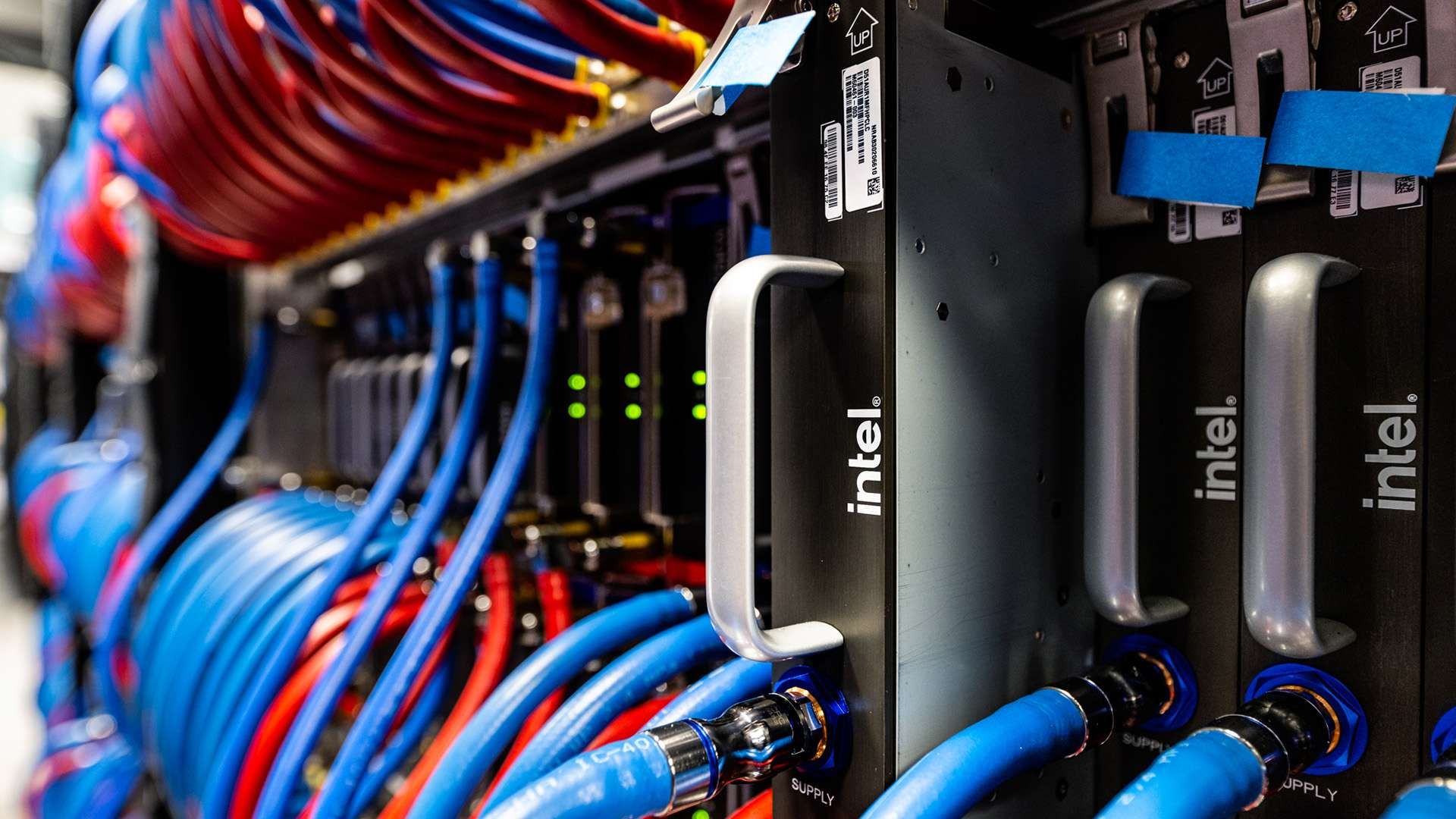
Discover the Aurora supercomputer at Argonne National Laboratory, achieving exascale computing with Intel and HPE technology
(Credit: Argonne National Laboratory)

Aurora supercomputer has achieved a processing speed of 1.012 exaflops, making it one of the fastest AI-centric supercomputers in the world. This capability allows researchers to handle immense amounts of data and complex simulations with unprecedented speed and accuracy. Here is its hardware configuration:

  • Compute nodes: Aurora consists of 10,624 compute nodes, each equipped with Intel Xeon CPU Max Series processors.
  • Graphics Processing Units (GPUs): It incorporates 63,744 Intel Data Center GPU Max Series units, forming one of the largest GPU clusters globally.
  • Interconnect: The supercomputer features an advanced Ethernet-based interconnect system, crucial for high-speed data transfer and communication between nodes.

Aurora supercomputer utilizes Intel’s advanced software stack, including the oneAPI development toolkit, which supports a range of programming languages and frameworks essential for AI and scientific computing.

AI optimization is a key focus, leveraging Intel’s Xe GPU architecture tailored for both AI and HPC tasks. This architecture enables efficient handling of complex neural network computations and deep learning algorithms.


What makes a computer “super”?


Applications and scientific impact

Aurora supercomputer significantly impacts scientific research by facilitating groundbreaking studies in climate science, materials science, energy storage, fusion energy, and neuroscience. In climate science, it accelerates simulations of complex climate patterns, aiding in understanding and predicting environmental changes crucial for addressing global challenges.
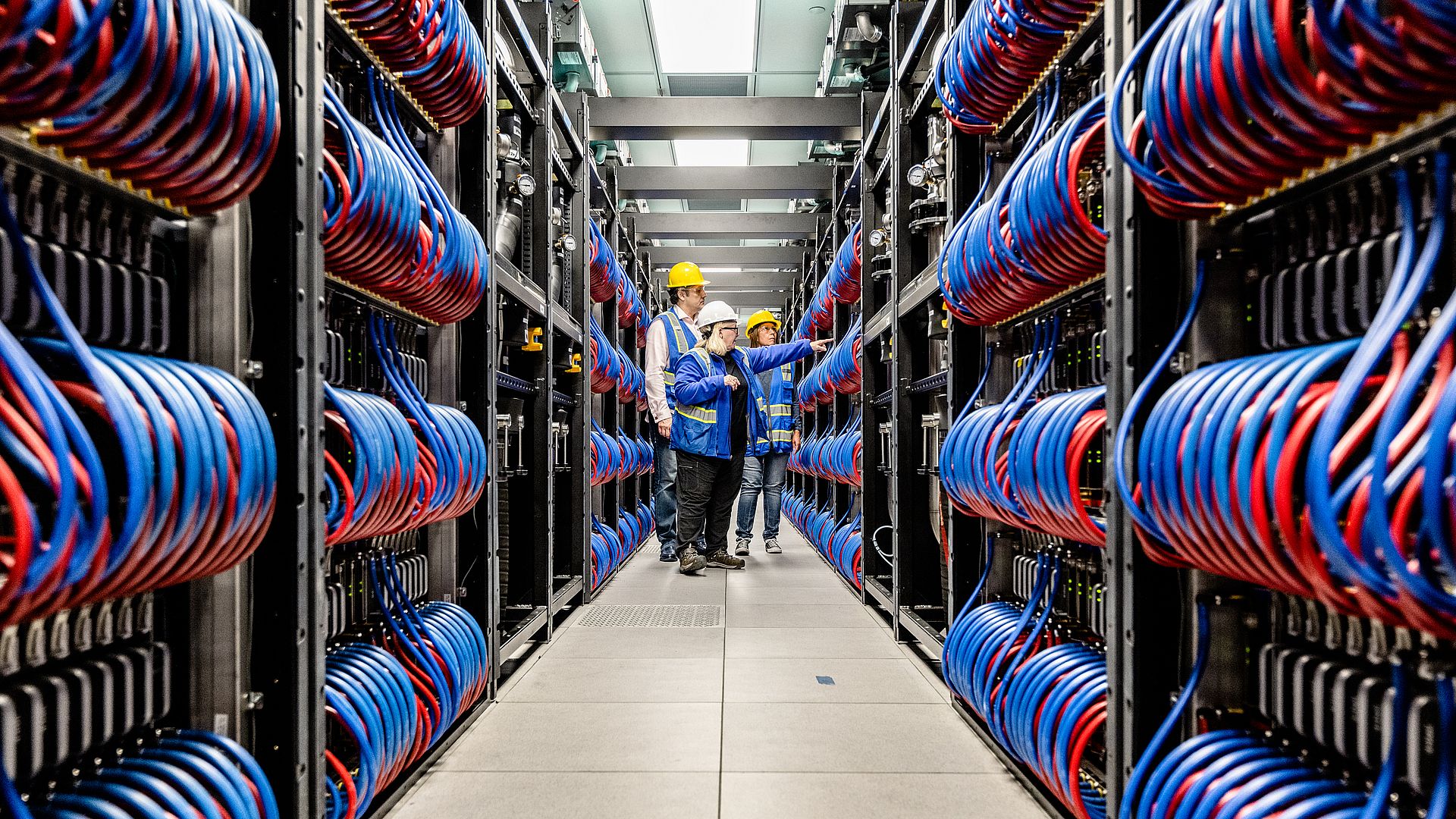
Discover the Aurora supercomputer at Argonne National Laboratory, achieving exascale computing with Intel and HPE technology
On May 13, 2024, at International Supercomputing Conference 2024, Intel, Argonne National Laboratory and Hewlett Packard Enterprise announced that the Aurora supercomputer has broken the exascale barrier (Credit: Argonne National Laboratory)

In materials science, Aurora enables detailed simulations to explore material behaviors and predict properties, essential for developing new materials for various applications from aerospace to biomedical engineering.

For energy storage and fusion research, Aurora enhances simulations to improve energy technologies and optimize fusion processes, contributing to sustainable energy solutions.

In neuroscience, Aurora’s high computational power allows for precise mapping of neural networks, advancing our understanding of brain function and supporting research into neurological disorders.

Impact on AI

Aurora supercomputer integrates advanced AI models with Intel’s Xe GPU architecture, enhancing capabilities in data analytics, pattern recognition, and predictive modeling across scientific disciplines. This integration accelerates scientific discovery by enabling researchers to process vast amounts of data and deploy sophisticated AI algorithms at scale.

Infrastructure and operation

Managed by Argonne National Laboratory, Aurora supercomputer operates under stringent security and operational protocols to ensure reliability, data protection, and continuous availability for researchers. Its robust infrastructure supports extensive computational capabilities, making it a cornerstone for high-performance computing and AI research.
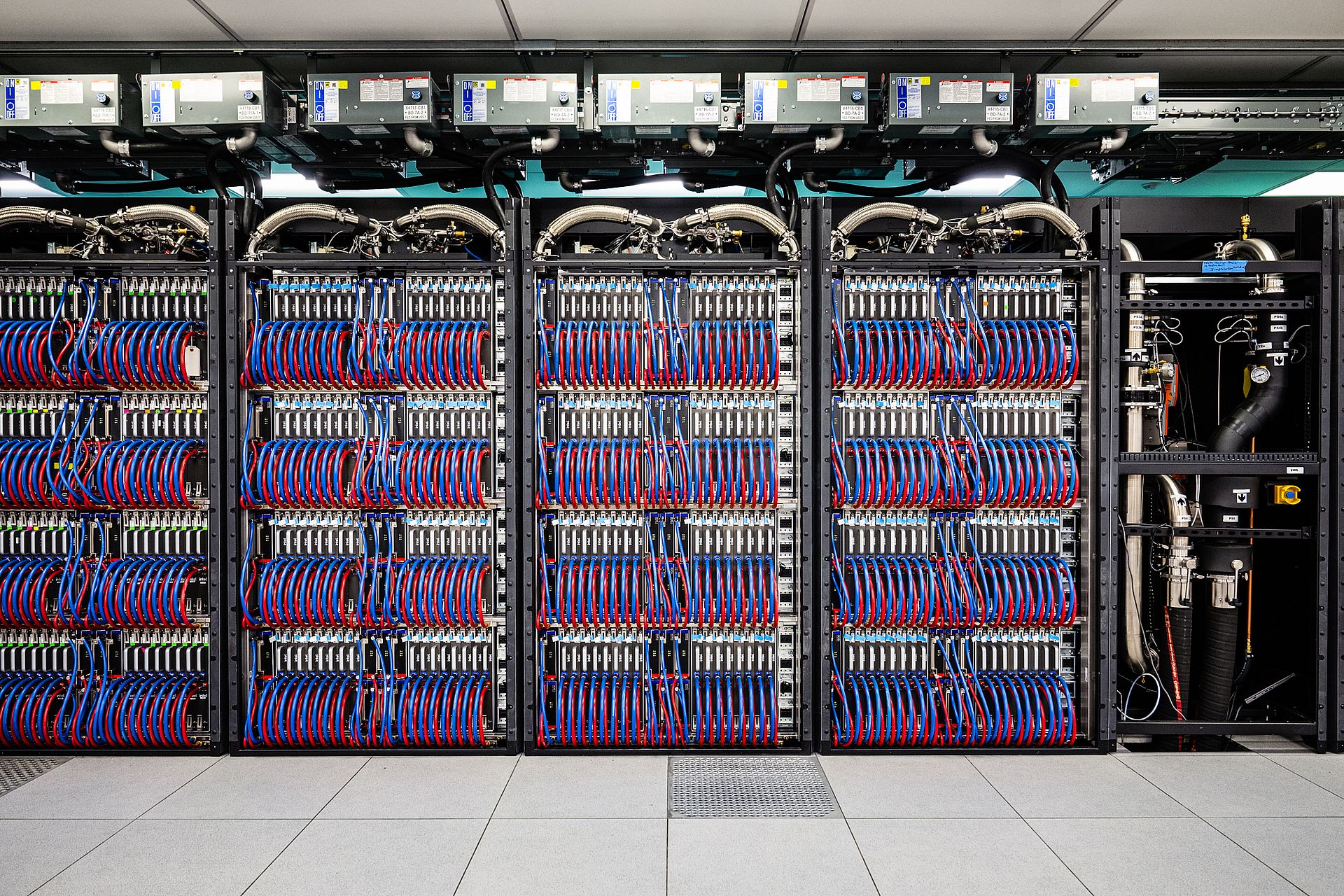
Discover the Aurora supercomputer at Argonne National Laboratory, achieving exascale computing with Intel and HPE technology
(Credit: Argonne National Laboratory)

Future

Future advancements in Aurora’s hardware and software technologies will further enhance its AI capabilities and support larger-scale simulations. Collaborative initiatives like the Unified Acceleration Foundation underscore Aurora’s commitment to open standards and global collaboration, driving innovation in AI and scientific research.

In conclusion, Aurora supercomputer represents a transformative leap in computational science, empowering researchers worldwide to tackle complex scientific challenges and accelerate the pace of discovery across various disciplines.


Featured image credit: Argonne Leadership Computing Facility

Tags: computerIntelSupercomputer

Related Posts

Advanced SEO services for high impact digital strategies

Advanced SEO services for high impact digital strategies

June 8, 2026
The 8 best website builders for small businesses on any budget

The 8 best website builders for small businesses on any budget

June 8, 2026
Why European workloads are leaving US cloud in 2026

Why European workloads are leaving US cloud in 2026

June 8, 2026
Being friendly to your AI might be the least eco-friendly thing you can do

Being friendly to your AI might be the least eco-friendly thing you can do

June 8, 2026
Jensen Huang says AI is expanding software demand rather than replacing jobs

Jensen Huang says AI is expanding software demand rather than replacing jobs

June 8, 2026
AMD brings good news to PC users

AMD brings good news to PC users

June 8, 2026

LATEST NEWS

Advanced SEO services for high impact digital strategies

The 8 best website builders for small businesses on any budget

Why European workloads are leaving US cloud in 2026

Being friendly to your AI might be the least eco-friendly thing you can do

Jensen Huang says AI is expanding software demand rather than replacing jobs

Halo: Campaign Evolved is now available for pre-order ahead of its July launch

BEST AI MODELS LEADERBOARD

See the best AI models, ranked by intelligence, benchmark results, speed and token price. Find the most suitable LLMs, Text-to-Image, Image Editing, Text-to-Speech, Text-to-Video and Image-to-Video  artificial intelligence model for your tasks and business.

LATEST TOOLS

Roboto AI

Pickaxe

Pfpmaker

MindPal

Syllaby

ScreenApp

FinanceBrain

GitHub Spark

Hints

VisionStory AI

Dataconomy

COPYRIGHT © DATACONOMY MEDIA GMBH, ALL RIGHTS RESERVED.

  • About
  • Imprint
  • Contact
  • Legal & Privacy

Follow Us

  • News
    • Artificial Intelligence
    • Cybersecurity
    • DeFi & Blockchain
    • Finance
    • Gaming
    • Startups
    • Tech
  • Industry
  • Research
  • Resources
    • Articles
    • Guides
    • Case Studies
    • Whitepapers
    • AI Models Leaderboard
  • AI tools
  • Newsletter
  • + More
    • Glossary
    • Conversations
    • Events
    • About
      • Who we are
      • Contact
      • Imprint
      • Legal & Privacy
      • Partner With Us
No Result
View All Result
Subscribe

This website uses cookies to improve your experience. You can choose to accept or reject them. Visit our Privacy Policy.