
There’s been growing interest across platforms like Spotify, YouTube, the MLOps Community podcast, and Times LA in the research and systems developed by Satish Bhambri, reflecting recognition from both academic and industry-facing media outlets. His impact in Applied AI spans high-impact academic publications, a recently formalized patent, and influence across global judging panels and technical boards. His decade-long research career bridges theoretical science and Artificial Intelligence, with a deep focus on building resilient, scalable systems.
A career rooted in research
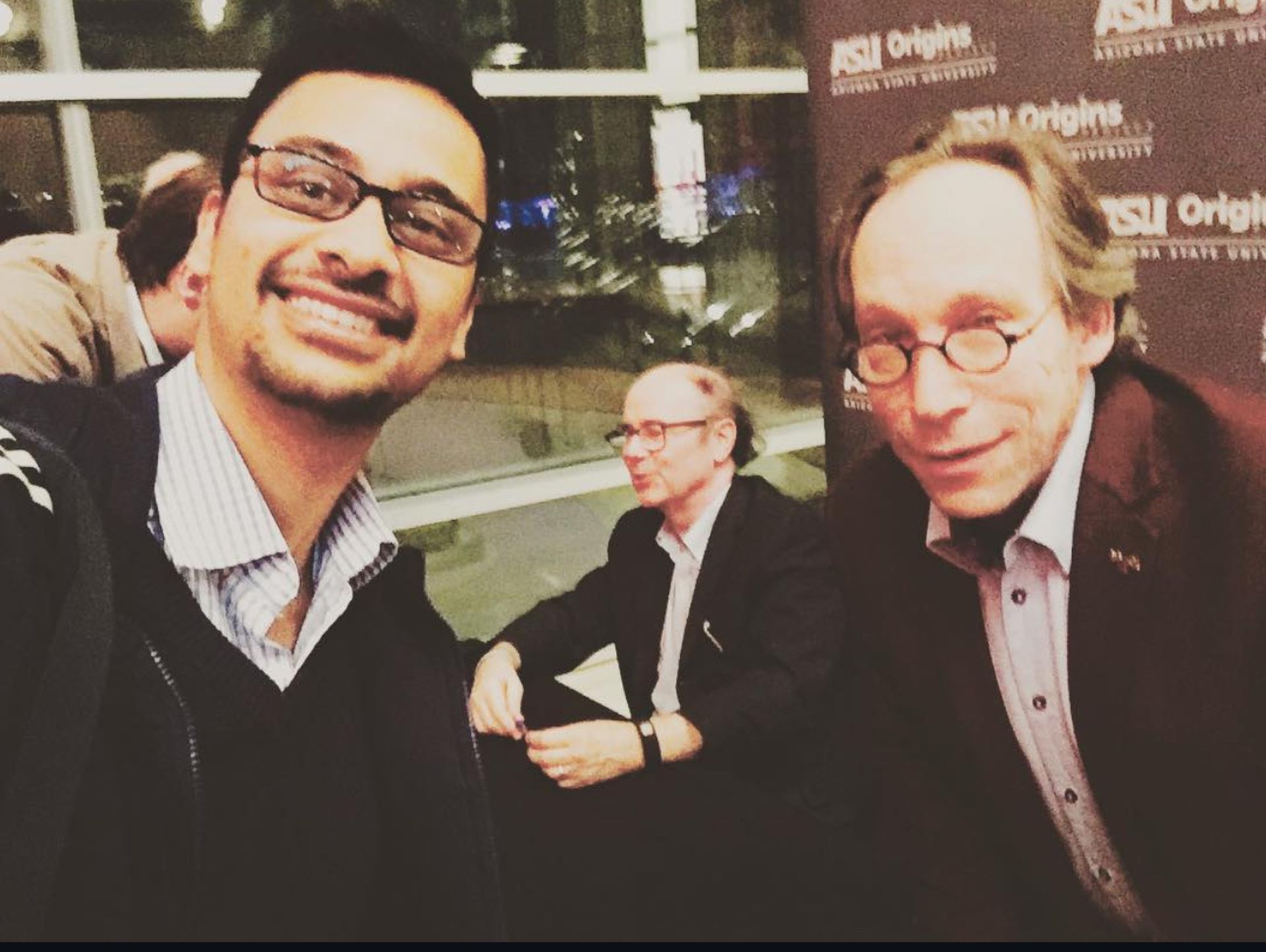
Bhambri’s path began with a foundation in computer science, a pivotal collaboration with leading astrophysicists such as Dr. Lawrence Krauss at Arizona State University’s School of Earth and Space Exploration (SESE) led him into AI in astrophysics, where his work contributed to the growing integration of machine learning within space science research programs. There, he contributed to algorithms that identified faint radio signals from distant galaxies and supported simulations exploring the role of dark matter in shaping cosmic structures, boosting the role of AI and machine learning in Astrophysics
This research included work on the SIGAME framework, which models early galaxy emissions. These projects demanded precision and efficiency, requiring novel algorithmic approaches under constrained computational budgets, lessons that later informed his engineering philosophy.
From quantum ideas to industry tools
In 2014, Bhambri published Quantum Clouds: A Future Perspective, a paper that introduced the concept of using quantum computing to restructure cloud infrastructure. The paper was archived and indexed by NASA’s Astrophysics Data System and the Harvard–Smithsonian Astrophysical Observatory, a distinction reserved for research of enduring relevance to foundational science and computation.
Nearly a decade later, that research momentum and his sheer work over years culminated in more than ten peer-reviewed papers in 2025 alone, a publication velocity uncommon outside full-time academic appointments , spanning machine learning, cybersecurity, and natural language processing. Several received Best Paper Awards at IEEE and Springer conferences. These publishers represent some of the most selective academic venues in applied sciences, with acceptance rates often under 20 percent.
Building systems that scale
At Walmart Labs, Bhambri serves as a senior data scientist in the personalization and ranking team, one of the toughest to get into, consisting of former professors and PhDs. His work, where he serves in a critical technical leadership capacity, influences more than 17 million daily users and over 535 million monthly visitors. His original contributions along with vision- language models, conversational agents, retrieval-augmented systems, and large-scale recommendation engines built with Transformers, BridgeVLM, LangChain, Vertex AI, and high-performance vector databases, include:
- Development of RAG Agents and conversational AI agents
- BridgeVLM, a visual-language model architecture, represents one of the earliest enterprise-scale applications of such multimodal systems in global retail environments.
- Automated assortment generation is now progressing toward formal publication and patent filing
These systems directly and critically shape digital retail experiences and set benchmarks for operational scale across Fortune 100-level environments.
Bhambri also holds a granted patent for an innovative grid optimization framework that combines deep learning, real-time IoT sensors, and adaptive control logic to boost reliability and efficiency, a clear example of socially relevant innovation grounded in technical rigor.
A recognized authority in scientific publishing
Bhambri’s research credibility is reinforced by his role as a reviewer for some of the world’s most prestigious AI and scientific publication venues, roles extended only through invitation to trusted domain experts to safeguard scientific integrity, like IEEE, Springer, Engineering Applications of Artificial Intelligence, and MethodsX.
These publishing houses rank among the most prestigious and selective scientific bodies in engineering and applied sciences, where acceptance rates often fall below 20% and award recognitions reflect the top 1–2% of submitted research globally.
Reviewer selection for such journals is intensely competitive and reflects a level of scholarly trust and technical judgment that few achieve.
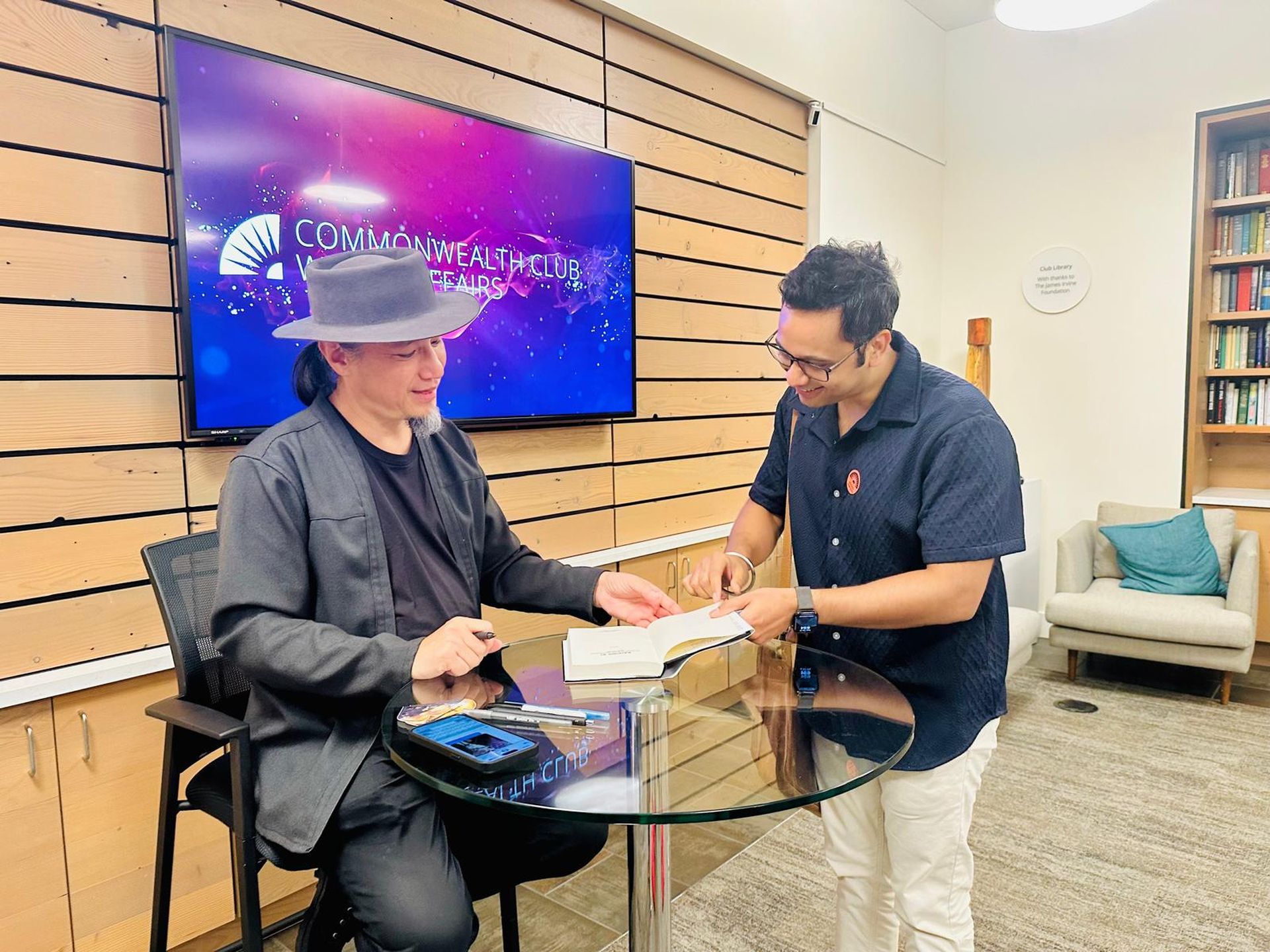
In recognition of his critical role and authorship of groundbreaking research, he was appointed Distinguished Fellow and Assessor by the Soft Computing Research Society (SCRS), positions held by fewer than 0.75 percent of professionals in the field. He evaluates senior-level applications and research submissions, positioning him as a decision-making authority influencing research direction and standards in global technical publishing.
Judging groundbreaking innovation
Bhambri’s expertise also extends to innovation evaluation. He has served as a judge at:
- Y Combinator Hackathons, where companies like Airbnb, Stripe, Coinbase, DoorDash, Instacart, Dropbox, and Reddit were launched. YC has a sub-1% acceptance rate, and judging roles are offered only to evaluators with strongest technical acumen and product judgment.
- NeurIPS is widely regarded as the most selective and influential conference in artificial intelligence and computational systems research worldwide. He served as a Program Committee member, a role reserved for experts trusted to vet foundational breakthroughs.
- DeepInvent is a selective innovation review platform evaluating enterprise-ready solutions with strong commercialization potential, where judges are chosen based on technical depth and industry impact. .
- Bhambri was extended an invitation to serve on the AI Advisory Board of Epic Solutions, in a mentor and strategic advisory capacity, reflecting industry demand for his expertise in applied AI systems.
In addition, he has served as a conference chair for the IEEE RCSM (Recent Trends in Computing and Smart Mobility) and received the Best Paper Award for his work on elliptic Galois cryptography for cloud data security at WCAIAA.
His judging experience also includes bilateral international innovation programs spanning Israel and India, where he evaluated enterprise-ready AI solutions with real-world deployment potential.
These judging roles firmly establish him as a globally recognized thought leader operating at the intersection of foundational research and enterprise-scale innovation.
Spotlighted in the global media
Owing to his critical role, research and elite judging roles,Bhambri was recently invited to appear on the MLOps Community Podcast, one of the most influential practitioner-led platforms in applied AI and machine learning systems, , where he spoke on the evolution of advanced AI models, from recurrent neural networks to transformers and RAGarchitectures. The episode streamed on Spotify, YouTube, and the MLOps platform, which collectively reach millions of practitioners. Spotify featured the episode for its intense engagement. His dual perspective, both research and deployment, has made him a standout voice on these platforms.

The conversation highlighted his decade-long contributions, including work on generative systems and personalization tools used at a massive scale. These features placed him among a small group of thought leaders actively shaping the direction of modern data infrastructure.
Strategic collaboration and mentorship
Bhambri is an active member of SHACK15, a Silicon Valley community of founders and innovators. There, he exchanges ideas with leaders across industry and academia, including executives, investors, and technical experts working at the edge of product innovation. These collaborations inform his ability to identify scalable, ethical, and practical approaches to problem-solving in real-world settings.
Beyond the lab: Real-world results
Bhambri’s research-led thinking found strong footing in enterprise environments. At Blue Yonder, he led predictive analytics for global logistics. His Risk-as-a-Service platform used natural language processing and statistical models to forecast disruptions and saved clients millions in avoided losses. His shipment pipeline improvements cut arrival prediction errors by 40 percent, while his sales optimization tools enhanced operational planning across large organizations.
Bridging research and application
In a field that often rewards narrow specialization, Bhambri brings interdisciplinary thinking to solve real-world problems. His systems operate at scale, maintain accuracy over time, and remain relevant across changing conditions. From decoding radio signals in space to powering billions of product recommendations on Earth, his work reflects sustained influence across scientific discovery, industrial systems, and global technology ecosystems.
To connect with Satish Bhambri or learn more about his research and publications, visit his LinkedIn profile.