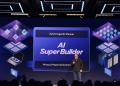
Bosch will unveil its AI extension platform at CES 2026 in Las Vegas to equip vehicles with an AI-powered cockpit that learns drivers’ routines, preferences, and context through a high-performance computing unit upgrade.
The automotive industry integrates software and artificial intelligence as core elements of driving and in-cabin experiences. Bosch advances this integration by developing the AI extension platform, designed specifically as an AI-enabled high-performance computing unit. This platform realizes an AI-powered cockpit, shifting the vehicle from a basic transport tool into an intelligent partner. The cockpit processes information across multiple vehicle domains and external technologies, resulting in a unified user experience for occupants.
Markus Heyn, member of the board of management of Robert Bosch GmbH and chairman of Bosch Mobility, states, “The new AI extension platform enables existing cockpit systems to be quickly and easily upgraded with advanced AI functions. This makes the driving experience more comfortable, intuitive, and safer for all vehicle occupants.” The platform supports retrofitting without altering current hardware or system architecture, allowing automakers to add capabilities efficiently.
Heyn further explains, “With Bosch’s new AI‑powered cockpit enables both drivers and car manufacturers to fully leverage the capabilities of modern automotive software. Thanks to the ‘AI extension platform’, new functions can be implemented in the vehicle much faster in the future.” This approach accelerates the deployment of software updates and features, aligning vehicle systems with evolving technological standards.
Market research institutes forecast that the market for AI-enabled in-vehicle infotainment solutions will reach approximately €17 billion by 2030. Bosch anticipates generating sales exceeding €2 billion from such IVI solutions by the end of the decade. The company targets a position among the top three providers in this sector, capitalizing on the platform’s compatibility with existing systems.
The first public demonstration of the AI-powered cockpit and AI extension platform occurs at CES 2026 in Las Vegas. This event showcases the platform’s operation in real-time, highlighting its integration and performance within a vehicle environment.
One application converts in-car downtime into productive periods by establishing the vehicle as a mobile office. Bosch collaborates with Microsoft to achieve this while maintaining driver safety. The integration incorporates Microsoft Foundry and cockpit-specific features, granting access to the Microsoft 365 productivity suite. Vehicle domains connect intelligently with Microsoft 365 applications to prioritize safety and reduce distractions.
For instance, a driver issues a voice command to join a Microsoft Teams call, prompting the system to activate adaptive cruise control proactively. This cross-domain interaction ensures productivity during journeys without increasing risk, as the AI coordinates communication tools with driving assistance systems seamlessly.
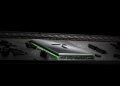
The AI extension platform centers on the NVIDIA DRIVE AGX Orin system-on-chip, providing the basis for complex AI applications in the cockpit. This compact unit delivers 150 to 200 tera-operations per second of compute power. It connects through power and Ethernet interfaces, with options for active air or liquid cooling to manage thermal demands effectively.
The platform employs the NVIDIA CUDA platform, an industry standard that permits automakers to incorporate their own AI models and agents. Development and deployment of AI features benefit from NVIDIA’s software suites, including the NVIDIA NeMo framework. This framework handles the end-to-end AI lifecycle, facilitating integration of applications like real-time sensor processing and vision-language models.
Core reasoning and speech functions rely on NVIDIA Nemotron models, supporting contextual understanding, multi-step reasoning, and natural conversational interactions. Users engage in dialogue that feels intuitive, as the system interprets intent and responds appropriately based on processed data.
Bosch utilizes Microsoft Foundry to design and manage the in-vehicle AI. This tool ensures a scalable AI assistant experience in the cockpit that remains continuously updated. Updates occur without hardware changes, keeping the system current with new AI advancements and user needs.
The platform’s design emphasizes simplicity in upgrades, using standard interfaces to link with existing cockpit infrastructure. Compute power from the NVIDIA DRIVE AGX Orin handles demanding tasks such as processing sensor inputs in real time, enabling the cockpit to adapt dynamically to occupant behaviors and environmental conditions.
Safety enhancements stem from the AI’s ability to interconnect domains, as seen in the Microsoft Teams example where voice commands trigger vehicle controls. Comfort improves through personalized adjustments to routines, while intuitiveness arises from natural language processing via Nemotron models.
Bosch positions the platform to address the growing demand for AI in infotainment, projecting substantial revenue from deployments across vehicle models. The CES 2026 unveiling provides automakers and stakeholders an initial view of these capabilities in action.