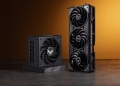
According to Financial Times, ByteDance, the Beijing-based parent of TikTok, plans to invest 160 billion yuan, approximately $23 billion, in artificial intelligence infrastructure in 2026 to narrow the gap with U.S. tech firms amid semiconductor restrictions. This marks an increase from 150 billion yuan allocated this year, with about half, or 85 billion yuan, dedicated to advanced AI processors, according to the Financial Times.
The planned expenditure highlights the investment disparity between Chinese and American technology companies. Microsoft, Alphabet, Amazon, and Meta together project spending between $350 billion and $400 billion on AI infrastructure in 2025, which surpasses ByteDance’s 2026 allocation.
U.S. export controls have blocked Chinese companies from acquiring Nvidia’s most advanced chips. As a result, these firms have focused on creating AI models that operate with reduced computational demands.
In early December, President Donald Trump stated that the United States would authorize Nvidia to export its H200 processor to approved customers in China. The H200 ranks below Nvidia’s highest-end products in performance.
Nvidia intends to start shipping H200 chips to China by mid-February, with the first batch consisting of 40,000 to 80,000 units. ByteDance has expressed interest in purchasing 20,000 H200 units initially, at an estimated cost of $20,000 per unit.
ByteDance has achieved prominence in consumer AI despite hardware limitations. Its Doubao chatbot holds the position of China’s leading AI assistant, recording 157 million monthly active users in August according to analytics firm QuestMobile.
Doubao expanded to 159 million monthly active users by October, exceeding rivals including DeepSeek. This growth draws from ByteDance’s proficiency in developing widely adopted mobile applications and its close linkage with Douyin, the Chinese version of TikTok.
ByteDance’s daily token usage, which gauges engagement with AI services, surpassed 30 trillion tokens in October. By December, this figure climbed to 50 trillion tokens, nearing Google’s reported 43 trillion tokens, based on data from Goldman Sachs and ByteDance executives.