Dataconomy
  • News
    • Artificial Intelligence
    • Cybersecurity
    • DeFi & Blockchain
    • Finance
    • Gaming
    • Startups
    • Tech
  • Industry
  • Research
  • Resources
    • Articles
    • Guides
    • Case Studies
    • Glossary
    • Whitepapers
  • Newsletter
  • + More
    • Conversations
    • Events
    • About
      • About
      • Contact
      • Imprint
      • Legal & Privacy
      • Partner With Us
Subscribe
No Result
View All Result
  • AI
  • Tech
  • Cybersecurity
  • Finance
  • DeFi & Blockchain
  • Startups
  • Gaming
Dataconomy
  • News
    • Artificial Intelligence
    • Cybersecurity
    • DeFi & Blockchain
    • Finance
    • Gaming
    • Startups
    • Tech
  • Industry
  • Research
  • Resources
    • Articles
    • Guides
    • Case Studies
    • Glossary
    • Whitepapers
  • Newsletter
  • + More
    • Conversations
    • Events
    • About
      • About
      • Contact
      • Imprint
      • Legal & Privacy
      • Partner With Us
Subscribe
No Result
View All Result
Dataconomy
No Result
View All Result

Meet ZEBRA- The Continuous Authentication Bracelet to Bolster Personal Security

byEileen McNulty
September 25, 2014
in News

Researchers at Dartmouth College have been working on a solution to work around the shortcomings of inactivity timeouts and other security risks that arise when a user does not log out.

Conventional authentication methods based on passwords, tokens or fingerprints perform one-time authentication and rely on users logging out once they are done. However risks arise when the user fails to log out, and inactivity timeouts prove ineffective if the timeout is too long or too short.
Zebra Watch Personal Authentication Internet of Things

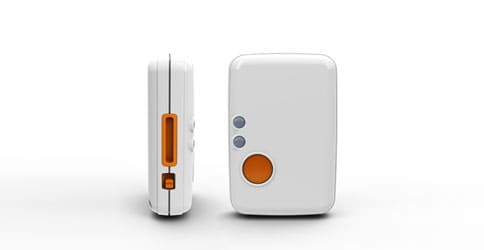
That’s where ZEBRA – or Zero-Effort Bilateral Recurring Authentication- comes in. The user wears the ZEBRA bracelet, loaded with a built-in accelerometer, gyroscope, and radio on his/her dominant wrist. The bracelet records the wrist movement, processes it, and sends it to the terminal which then compares the wrist movement with the inputs it receives from the user (via keyboard and mouse), and confirms the proximity of the user only if they correlate, enunciates a paper explaining the research.

In an email to Motherboard, Professor David Kotz explains, “ZEBRA bracelet could act as a second factor for initial authentication.” He believes that the device could be customised, in principle, to be integrated into a variety of devices.

Dartmouth PhD student Shrirang Mare added that next on the agenda is to project the authentication technique to tablets and smartphones. If the recent spate of celebrity hacking has taught us anything, it’s that current data security procedures are not robust enough. Perhaps ZEBRA could be the personal online security breakthrough we’ve been waiting for.

Source: Motherboard

Follow @DataconomyMedia

(Image credits: Flickr, Shimmer)

Stay Ahead of the Curve!

Don't miss out on the latest insights, trends, and analysis in the world of data, technology, and startups. Subscribe to our newsletter and get exclusive content delivered straight to your inbox.

Tags: internet of thingsIoTSecurityWearable TechWearables

Related Posts

Waterfall 2.0: AI brings back structured software development

Waterfall 2.0: AI brings back structured software development

November 14, 2025
Chinese hackers use Claude to run large scale cyberespionage

Chinese hackers use Claude to run large scale cyberespionage

November 14, 2025
Google expands Pixel call recording to global users

Google expands Pixel call recording to global users

November 14, 2025
Facebook levels up Marketplace with social features and AI support

Facebook levels up Marketplace with social features and AI support

November 14, 2025
NotebookLM gains automated research and wider file support

NotebookLM gains automated research and wider file support

November 14, 2025
Tesla is reportedly testing Apple CarPlay integration

Tesla is reportedly testing Apple CarPlay integration

November 14, 2025
Please login to join discussion

LATEST NEWS

Waterfall 2.0: AI brings back structured software development

Chinese hackers use Claude to run large scale cyberespionage

Google expands Pixel call recording to global users

Facebook levels up Marketplace with social features and AI support

NotebookLM gains automated research and wider file support

Tesla is reportedly testing Apple CarPlay integration

Dataconomy

COPYRIGHT © DATACONOMY MEDIA GMBH, ALL RIGHTS RESERVED.

  • About
  • Imprint
  • Contact
  • Legal & Privacy

Follow Us

  • News
    • Artificial Intelligence
    • Cybersecurity
    • DeFi & Blockchain
    • Finance
    • Gaming
    • Startups
    • Tech
  • Industry
  • Research
  • Resources
    • Articles
    • Guides
    • Case Studies
    • Glossary
    • Whitepapers
  • Newsletter
  • + More
    • Conversations
    • Events
    • About
      • About
      • Contact
      • Imprint
      • Legal & Privacy
      • Partner With Us
No Result
View All Result
Subscribe

This website uses cookies. By continuing to use this website you are giving consent to cookies being used. Visit our Privacy Policy.